
Automotive ecommerce solutions
Enhance your automotive business with our ecommerce solutions, including digital commerce platforms and online sales tools, to boost customer engagement and drive sales.
Results from work we have shipped
We turned traditional car leasing into a fully digital service: online search and booking, applications, contracts, invoices and document management, all in one place.
Shortlisting a software development partner?
The questions to ask in an RFP, three warning signs a vendor may not deliver, and a scoring matrix to compare contractors objectively.
Automotive ecommerce solutions we build
Transform your online presence with dynamic e-commerce platforms tailored to the automotive industry. Drive sales and customer engagement through modern marketplaces that attract new buyers while fostering dealer and merchant partnerships.
Interactive product listings with comparison toolsUser-friendly accessories catalogsAdvanced cost calculatorsReal-time inventory lookupOnline service appointment schedulingTest drive booking toolsLoan and finance calculatorsIntegrated FAQ and customer support systems
Ditch outdated spreadsheets for a smart, intuitive inventory system. Our custom inventory platforms simplify operations, ensuring you always have essential parts in stock. Manage, organise, and visualise your inventory from a single interface designed for efficiency.
Enhance visibility across your fleet with real-time data on vehicle location, fuel consumption, and maintenance needs. Using IoT, machine learning, and advanced analytics, our solutions improve vehicle safety, optimise maintenance schedules, and reduce operational costs.
Selling vehicles or parts online and the flow stalls?
Tell us where buyers drop off - catalogue, booking, checkout or payment - and we will scope the fix.
How we deliver automotive ecommerce?
The same delivery discipline on every engagement - from the first map to a handover your team runs.
We start with the journeys that make money: which vehicles, parts and services you sell, where buyers drop out today, and which systems hold the inventory, pricing and customer truth. The output is a scoped backlog with the commerce data model agreed.
Platform choice, integration contracts and the catalogue model are fixed before heavy build, alongside UX for search, comparison, booking and checkout. Decisions are written down with their trade-offs, so you can challenge them while changing course is still cheap.
The storefront goes up in working slices - catalogue first, then booking, then checkout and documents - each demonstrated on a staging environment against real inventory data. You see progress as software, not status reports, and can reprioritise between increments.
We run the cutover, watch the first real transactions, and tune what production traffic exposes. Then we hand over code, documentation and runbooks, train your team, and agree a support shape - from full ownership transfer to an ongoing development retainer.
What shapes the work
A vehicle is not a basket item. The transaction is high-value and document-heavy: a buyer moves from search to comparison to a finance decision to a contract, and every break in that chain sends them back to the showroom or to a competitor's site. Most automotive websites stop at the brochure stage. The commerce layer that takes a booking, a deposit, an application and a signature is the part that actually sells, and it is the part template platforms handle worst.
We design and build custom commerce platforms for automotive retailers, OEMs and mobility businesses: storefronts where vehicles, parts and services are genuinely transactable, with catalogue, search, booking, checkout, payment and the documents that follow handled in one flow. The point is to bridge online and offline rather than replace one with the other - a journey that starts on the site should finish at the dealership, or entirely online, without the customer re-entering data or the sales team losing context.
To see that flow live in production, read about the digital leasing flow we shipped.
The hard part of automotive commerce is rarely the storefront - it is the data underneath it. Vehicles need modelling down to trim, specification and individual stock unit; parts need fitment data so that search returns the component that fits this car, not a page of near misses. If the catalogue model is wrong, every feature built on top of it - search, comparison, calculators, merchandising - inherits the problem, which is why we treat catalogue design as an engineering discipline rather than a content task.
Inventory truth is the second discipline. A car sold on the forecourt must disappear from the site immediately; a booking slot taken by a phone call must not be sold online twice. We design real-time synchronisation with the systems that own stock and diaries, and we make the failure mode safe: when a feed goes stale, the storefront degrades to enquiry rather than selling what you no longer have.
Booking flows - test drives, service appointments, vehicle handovers - get the same treatment: slots come from the dealer's real calendar, confirmations write back, and reminders reduce the no-shows that make dealers distrust online booking.
Automotive checkout is not a card form. A parts order may be a straightforward payment, but a vehicle involves a deposit, often a finance or leasing application, a contract, an invoice and a folder of documents that both sides need to find again later. We build that whole chain as one flow: the customer applies, signs and pays without leaving the journey, and the business gets every document generated, stored and linked to the order automatically.
This is where our fintech background earns its place. The car leasing platform we built handles online search and booking, applications, contracts, invoices and document management in one place - commerce and finance in the same product, not a storefront bolted onto a paper process. Payment design covers the unglamorous cases too: failed payments, partial refunds on cancelled orders, deposits that convert into final invoices, and reconciliation your finance team can actually run.
Where regulation applies - identity checks on finance applications, mandates on recurring payments - we design the compliance steps into the flow rather than around it, so conversion does not die at the most sensitive moment.
For the payment and invoicing layer behind checkout in more depth, see billing and payment solutions.
The first technology decision is honest scoping of what a template platform can carry. Generic ecommerce engines are excellent at flat product lists and weak at vehicles: configurable specifications, one-of-a-kind stock units, finance-led checkout and document handling all fight the template. We typically build the automotive-specific core - catalogue model, booking, checkout and documents - as custom services, and buy rather than build the commodity parts such as payment processing, e-signature and search infrastructure.
We work in proven, hireable stacks - the car leasing platform runs on Java and Spring with a React front end - and we design integration contracts before heavy build: inventory feeds, pricing sources, CRM, payment providers and the dealer systems that remain the operational source of truth. The storefront consumes and writes back; it does not try to replace the systems your staff run the business on.
That boundary matters because the storefront is only half of a dealer's software estate; stock management, workshop scheduling and staff-facing tooling are a different discipline with different users.
For the back-office side of the same dealer business, see dealership management.
Launch is the point where the storefront starts generating evidence, and the first weeks decide whether the business trusts it. We stay on through that period: watching real transactions, fixing what production traffic exposes, and instrumenting the funnel so that every drop-off between search and signed contract is measurable rather than anecdotal. That telemetry becomes the storefront's own case for further investment. Operations then settle into a steady rhythm:
- Monitoring on inventory feeds and booking sync, so stale data is caught before a customer finds it
- Payment and invoice reconciliation checks your finance team can run without engineering help
- Conversion review on real funnel data, feeding a prioritised improvement backlog
- Security patching and dependency upgrades on a fixed cadence, not when something breaks
The engagement shape after launch is yours to choose: some clients take full ownership with their own team and call us back for new journeys; others keep a small retained team that ships improvements monthly. Either way the codebase, documentation and runbooks are written so the choice stays open.
We collaborated with WislaCode on a product strategy development project and gave the highest marks for this contractor. The WislaCode team delivered on time and with outstanding quality. I want to mention the team's transparency while running the project - everything was trackable, visible and manageable.
What is included in an automotive ecommerce engagement?
Every engagement is scoped as a production build, not a prototype: a storefront that takes real payments, real bookings and real documents from day one. A typical automotive ecommerce scope includes:
Discovery and catalogue modelling that maps vehicles, trims, parts and fitment data into a structure search and merchandising can actually use.
UX and UI design for listing, comparison, configuration and booking journeys, tested against how vehicle and parts buyers really shop.
Storefront and API development on a stack we run in production, with catalogue, search, basket and account functionality built to your domain.
Checkout, payment and document flows covering deposits, full payment, finance applications, contracts, e-signature and invoicing.
Integration with your inventory feeds, dealer systems, payment providers and CRM, so stock, prices and orders stay consistent everywhere.
QA across devices and payment scenarios, including failed payments, abandoned applications and document edge cases that break naive checkout flows.
Launch support with monitoring, analytics events on every funnel step and a documented runbook for the team who operates the store.
At handover you own everything: source code, infrastructure, integration credentials and documentation. No licence tied to us and no dependency on our team for routine changes, though we stay available when you need depth.
How much does automotive ecommerce development cost?
There is no useful flat figure: cost is driven by catalogue complexity (vehicles with trims and fitment data take more modelling than flat product lists), the number of systems we integrate, and how much of checkout involves finance and documents. We scope this in a short discovery and give you a fixed, itemised estimate before any build commitment.
How long does it take to launch an automotive ecommerce platform?
It depends on the scope of the first release, which we deliberately keep narrow: one transaction working end to end beats five half-built journeys. As a reference point, our car leasing platform - online search and booking, applications, contracts, invoices and document management - reached its first release in six months.
Can you build on our existing dealer systems and inventory feeds?
Yes, and we usually should: the storefront is rarely the system of record. We integrate with whatever holds your inventory, pricing and customer data, and design the commerce layer around those contracts rather than forcing a replacement of the systems your business already runs on.
How do we choose a partner when the storefront has to reach systems already in use?
Judge them on the integration answer, not the design portfolio. Ask which system will hold stock, price and customer once the storefront is live. Ask what happens when the dealer management system is unavailable halfway through a checkout. Ask how inventory arrives - a nightly file, a feed, an API - and what the platform does with a stale record. A team that cannot answer those in the first conversation will discover them in month three, at your expense. We put each of those contracts in writing during discovery, before any build commitment.
What EU rules apply to selling vehicles and parts online?
More than an automotive project usually plans for. If the site hosts third-party sellers it is an online marketplace under the Digital Services Act, Regulation (EU) 2022/2065, and Article 30 requires trader details to be obtained and checked before a listing goes live. Consumer-facing ecommerce is in scope of the European Accessibility Act, Directive (EU) 2019/882, binding since 28 June 2025. And data generated by a connected vehicle falls under Chapter II of the Data Act, Regulation (EU) 2023/2854, applicable since 12 September 2025, which gives the user access rights the platform has to be able to honour.
Can AI be added to a car retail storefront that already exists?
Yes, and the places it earns its keep are narrow. Search and fitment ranking benefit most, because they run on your own catalogue data and a wrong answer shows up immediately. Description generation and enquiry triage save real hours. Anything customer-facing that holds a conversation has to disclose that it is a machine: Article 50 of the AI Act, Regulation (EU) 2024/1689, has applied since 2 August 2026. We add these against the storefront you already have, and measure the ranking change against the old results before it reaches all traffic.
What does it take to sell parts online when fitment has to be exact?
The catalogue decides everything. Parts need fitment data linking a component to the vehicles it genuinely fits, down to engine variant and production window, or search returns near misses and the returns rate pays for it. That data usually arrives from several suppliers in different shapes, so the first engineering task is one normalised model with an explicit rule for conflicts. At checkout the payment page itself is now in scope: PCI DSS v4.0.1 requirements 6.4.3 and 11.6.1 have been mandatory since 31 March 2025 and require every script on the page to be authorised and inventoried, with tamper detection on what reaches the browser.

Large-scale migration from a legacy internet banking system to a modern microservices-based architecture, with stronger scalability, security and user experience, while keeping customer trust intact.
View case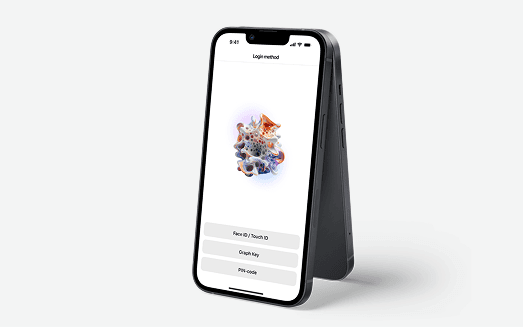
Moving from standard banking with a basic set of functions to a digital bank where everything can be done online.
View case
An AI-driven solution that optimises medical sales representative routes and improves field efficiency, using deep learning over visit patterns to predict the best routes.
View caseThis was a very task-heavy project, mostly exploration and R&D-driven. However, by the end of WislaCode, we were left with a detailed roadmap consisting of clear milestones - able to be converted into tangible KPIs - and some neat ideas of what actionable are next. Integrating...
We collaborated with WislaCode on a route-to-market optimisation project. Working with WislaCode was effective, transparent and predictable, which is especially critical for AI and ML projects. We provided them with six months of anonymised data, and within just three weeks...
Working with WislaCode Solutions has been a great experience! We needed an Android SDK developed under a tight timeline, and their team delivered a flexible, user-friendly solution that integrated seamlessly into our ecosystem. Their transparent approach, proactive...
Ready to take the showroom fully online?
Share your inventory, markets and payment needs and we will map the storefront build.