
Legacy core banking systems integration
Legacy core integration through adapters and orchestration, so new channels ship without a core rewrite.
Results from work we have shipped
Large-scale migration from a legacy internet banking system to a modern microservices-based architecture, with stronger scalability, security and user experience, while keeping customer trust intact.
Shortlisting a software development partner?
The questions to ask in an RFP, three warning signs a vendor may not deliver, and a scoring matrix to compare contractors objectively.
Integration work we deliver
We analyse your current core banking system and implement modernised solutions to improve performance, scalability, and user experience without disrupting critical operations.
By introducing middleware and APIs, we ensure reliable communication between your legacy system and new applications, enabling simpler workflows and faster service delivery.
We handle complex data migration tasks, ensuring accuracy, security, and minimal downtime. Our solutions enable smooth synchronization across systems to support real-time operations.
We develop custom modules to enhance the capabilities of your legacy core banking systems, supporting features like digital payments, mobile banking, and customer self-service platforms.
We ensure your legacy system adheres to the latest compliance standards, including KYC, AML, and data privacy regulations, safeguarding your institution from risks and penalties.
Through in-depth performance assessments and optimisations, we help legacy systems handle modern workloads and ensure operational stability.
A core that cannot be touched, channels that must move?
Describe the core and the channels around it and we will scope the integration boundary.
How we deliver core banking integration?
The same delivery discipline on every engagement - from the first map to a handover your team runs.
A short audit characterises the core as it actually behaves: interfaces, batch windows, file exchanges, data semantics and vendor constraints. The output is an interface inventory and a costed, sequenced plan - the document every later decision traces back to.
We architect the adapter and middleware layer: which core functions are exposed, as what contracts, with which synchronisation pattern per entity, and where the source of truth sits during transition. Reconciliation and rollback are designed here, not improvised later.
Adapters, synchronisation and migration tooling are built in phases, each ending with something live behind the boundary. Dual-run periods and reconciliation reports prove the new path against the legacy one on real workloads before any traffic commits to it.
Cutover runs as rehearsed, reversible steps with the legacy path serving in parallel. Your team takes the layer with runbooks, monitoring, the regression suite and the reconciliation evidence - and operates it without depending on us.
What shapes the work
When a decades-old core starts blocking change, the tempting conclusion is that the core must go. We argue for the opposite order: change everything around it first. A full rewrite concentrates the bank's entire risk into a single multi-year programme - every account, balance and regulatory obligation in motion at once - and pays back only at the very end. A boundary takes risk in small, recoverable doses and returns value with every adapter that goes live.
Practically, the boundary is a thin layer of adapters and orchestration placed in front of the core. Behind it, the core carries on doing the job it has proven at for decades. In front of it, channels, products and partners integrate against contracts the bank controls. The two sides stop sharing fate: a vendor change freeze no longer stalls the roadmap, and a redesigned mobile journey no longer waits for a core release.
That boundary is the whole subject of this page: the adapters, middleware, data migration and synchronisation that keep the core serving customers while everything around it modernises. It is deliberately narrower than a full modernisation programme - a contained scope a bank can approve, fund and verify.
For the channel and product layer this boundary carries, see digital banking solutions.
The difficulty is rarely the core's documented API - it is everything around it. Decades of operation accumulate undocumented behaviour: batch jobs with implicit ordering, file exchanges that downstream systems quietly depend on, fields repurposed several times over, and validation rules that exist only in production. An integration that respects the manual but not the reality fails at its first month-end. In practice, four things bite most often:
- Batch windows that collide with real-time expectations
- Data quality drift accumulated over decades of workarounds
- Vendor change freezes that dictate the delivery calendar
- Undocumented consumers that break the day an interface changes
The deeper constraint is that boundary errors are financial errors. A mistranslated amount or a missed synchronisation is not a bug ticket - it is a customer seeing the wrong balance, and possibly a regulator seeing it too. So we treat the core as a system to be observed and characterised before it is changed, and the first adapter ships carrying its own reconciliation and telemetry - at this boundary, the cheapest incident is the one a bank detects before its customers do.
The adapter layer is an anti-corruption boundary: core data models stay on the core side, and everything in front speaks clean, versioned contracts. We decide deliberately what the layer translates, what it orchestrates across multiple core calls, and what it refuses to expose - because every core concept that leaks through becomes a dependency the bank pays for on every future change.
Synchronisation is the decision with the longest consequences. Event streams or change data capture suit customer-facing state that must be fresh; scheduled batch remains the correct answer for settlement-aligned data; and for every entity we fix a single source of truth for the transition period, so dual-write ambiguity never arises. Reconciliation runs as first-class production software that proves the layer is honest, rather than a spreadsheet someone checks when something looks wrong.
Middleware choices follow the bank's estate, not fashion: message brokers and orchestration where flows are long-lived and must survive restarts, plain synchronous APIs where they are not. Built this way, the layer outlives the first project - the next channel, partner or product plugs into the same contracts instead of starting another bridge from scratch.
We also package this boundary work as a reusable engagement shape - see the integration layer.
Cutover is a sequence of small moves that can each be undone, never a single weekend event. We shift one journey or customer segment at a time, keep the old route open behind it, and agree in advance what must be true before the next move - and what triggers a step back. A customer should never notice which system answered them; the only visible change is that new things start shipping faster.
Data moves under the same discipline. Mappings and cleansing rules are fixed before the first record leaves the old system, and every migration stage emits reconciliation reports your own teams can audit. The two paths then run side by side on real transactions, compared at the checkpoints that matter - balances, postings, month-end - and the old one is retired only when the numbers agree.
Risk committees and regulators see the same artefacts the engineers work from: migration runbooks, reconciliation evidence, rollback rehearsal results. Prepared as part of delivery rather than reconstructed after it, that material is what turns a cautious steering committee into an approving one - and it is the difference between a migration that stalls at sign-off and one that ships.
We ran this kind of migration for a bank with over 1.5 million users - read the migration in production.
Every engagement starts with a fixed-scope core boundary audit that produces the interface inventory, the synchronisation design, the migration sequence and a costed delivery plan. That plan is yours either way - you can hand it to any vendor. From there the engagement continues into phased delivery, each phase putting a concrete slice of the boundary - an adapter, a synchronisation flow, a migration stage - into production.
Pricing follows the drivers the audit makes explicit: how many interfaces and batch dependencies the boundary must respect, the state of the data, how long dual-run and reconciliation must hold, and the compliance evidence your regulator expects. We quote per phase against those drivers. No fixed figure survives contact with an unaudited core, so we do not invent one up front - we make the cost model transparent instead.
The run phase belongs to the boundary itself. Core patches and vendor releases can change behaviour the contracts depend on, so reconciliation stays on as routine work, monitoring sits at the seams where mismatches first surface, and the regression suite re-runs when either side changes. Your engineers run the layer after handover; we stay involved only as long as you want.
Working with WislaCode Solutions has been a great experience! We needed an Android SDK developed under a tight timeline, and their team delivered a flexible, user-friendly solution that integrated seamlessly into our ecosystem. Their transparent approach, proactive communication, and commitment to quality made the collaboration smooth...
What is included in a core integration engagement?
A production core integration is scoped work with named deliverables, not an open-ended consulting arrangement. Each engagement covers the boundary end to end - from the audit that maps it to the runbooks your team operates it with.
A core boundary audit documenting every interface, batch job, file exchange and undocumented behaviour the integration has to respect.
An adapter and middleware layer that exposes core functions as versioned, documented APIs new channels consume without touching core code.
A data migration and synchronisation design with field-level mappings, cleansing rules and a fixed source of truth for every entity.
A rehearsed cutover sequence with per-step exit criteria and a tested route back, so no traffic move is ever a one-way door.
Reconciliation jobs and reports run as production software, giving your auditors and risk teams evidence rather than assurances.
A regression and performance suite that exercises the boundary against realistic core workloads before any customer traffic moves.
Runbooks, boundary monitoring dashboards and handover sessions, so your engineers operate the layer without depending on ours.
Everything above is built to be handed over: code, runbooks, reconciliation evidence and test suites belong to the bank from day one, and the engagement ends with your team running the boundary, not renting it.
Do we have to replace our core to launch modern digital services?
Usually not. The core is often the most reliable system a bank owns; the real constraint is the absence of a clean boundary around it. Adapters and orchestration let new channels ship against stable, versioned APIs while the core keeps serving. A replacement only becomes the right call when the boundary audit shows the core itself can no longer meet the bank's obligations - that is a finding to reach, not an assumption to start from.
How long does a legacy core integration take?
It depends on measurable drivers: the number of interfaces and batch dependencies at the boundary, the state of the data, how long dual-run and reconciliation must hold, and your risk and compliance approval cadence. The boundary audit turns those into a sequenced plan with dates you can hold us to. As a reference point, our migration for a bank with over 1.5 million users reached its first release in six months.
Can you work alongside our core vendor and internal IT team?
Yes - that is the normal shape of this work. The vendor keeps ownership of the core, your IT team keeps ownership of operations, and we build and prove the boundary between them. Vendor constraints and change-freeze calendars are mapped into the plan during the audit, and the handover assumes your engineers run the layer long-term, with us on call only as deeply as you want.
Which questions actually test a partner's core integration experience?
Ask about the undocumented parts, because that is where the work is. What do they do about a batch job with implicit ordering that three downstream systems quietly depend on. How do they find a field that has been repurposed twice. What is their answer when the core's documented API and its production behaviour disagree. And how do they prove a migration - parallel running against real records until the outputs agree is the only answer that survives contact with an auditor. A partner who answers with a platform name rather than a method has not done this before.
How is a core integration kept compliant and auditable?
By treating the boundary as regulated infrastructure from the first sprint. Article 8 of DORA, Regulation (EU) 2022/2554, requires ICT assets supporting critical functions to be identified and mapped, so the interface inventory the audit produces is not documentation for its own sake - it is the map the regulation asks you for. Every adapter carries a versioned contract, every data movement carries lineage back to the core record, and the cutover sequence is written so each step can be undone. Where we are the ICT third party, the arrangement carries the Article 28(3) terms your outsourcing register needs.
Can reporting and analytics be built off a legacy core without destabilising it?
Yes, and the rule is that analytics never queries the core directly. We take data off it on the core's own terms - change capture, or the batch extracts it already produces - land it in a store built for reading, and put the reporting and any models on that copy. The core keeps its transaction budget and analysts stop competing with the bank's working day. Where models run on customer data, Article 22 of the GDPR limits decisions based solely on automated processing, and creditworthiness models fall under Annex III of the AI Act, Regulation (EU) 2024/1689, so the line between a dashboard and a decision has to be drawn deliberately.
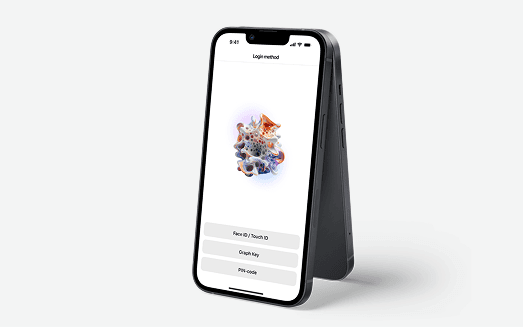
Moving from standard banking with a basic set of functions to a digital bank where everything can be done online.
View case
A consumer banking super app in a regulated market had to launch at scale inside a fixed regulatory and competitive window. We owned the integration architecture and mobile delivery.
View case
A private, on-premise WislaSearch deployment that turns a logistics operator's scattered operational knowledge into instant, cited answers - without anything leaving their network.
View caseThis was a very task-heavy project, mostly exploration and R&D-driven. However, by the end of WislaCode, we were left with a detailed roadmap consisting of clear milestones - able to be converted into tangible KPIs - and some neat ideas of what actionable are next. Integrating...
We collaborated with WislaCode on a product strategy development project and gave the highest marks for this contractor. The WislaCode team delivered on time and with outstanding quality.
We collaborated with WislaCode on a route-to-market optimisation project. Working with WislaCode was effective, transparent and predictable, which is especially critical for AI and ML projects. We provided them with six months of anonymised data, and within just three weeks...
Modernising around the core without a rewrite?
Tell us what the core runs and we will map adapters, data sync and a staged path.