
Super app development
Super app development for regulated banking, lending and payment platforms. We design the integration architecture, build the mobile product, and launch it at scale.
Results from work we have shipped
Choosing a mini-app or super-app platform to build on?
Score any vendor on seven criteria – SDK openness, runtime portability, FINMA and DORA fit – with the exact question to put to each one.
Modules a super app usually carries
Identity capture, KYC and KYB, and account opening across one or several providers. The audit trail a regulator expects is produced as part of normal onboarding, not assembled afterwards.
In-app payments, peer-to-peer, account-to-account and card top-ups. Reconciliation closes the loop with the ledger so the books match without manual work.
Pre-approved offers, in-app application, decisioning, disbursement and repayment. The credit and reporting integrations sit behind the screens, where most of the work is.
Virtual and physical card issuance, freeze and unfreeze, tokenisation and push provisioning. The issuer integration is the part that makes the card feel instant.
Embedded utility payments, mobility, telco and retail, integrated through partner APIs. The complexity stays in the backbone instead of leaking into the user flow.
Support tooling, fraud and risk consoles, and the reporting feeds your finance and compliance teams need. The super app is only as good as the team running it.
Bring us the launch ambition. We bring the architecture.
Tell us the modules and the deadline, and we will map the first phase.
How we deliver super app development?
The same delivery discipline on every engagement - from the first map to a handover your team runs.
We map the existing systems, the partner landscape, the regulatory constraints and the launch ambition, then write a phased scope that fits the deadline rather than ignoring it.
A named solution architect designs the integration backbone, the identity model and the rollout machinery. The mobile shell, the back end and the integration layer are designed together, not in three separate threads.
We deliver module by module with feature flags and staged exposure from the first internal release. Each module is testable on its own and inside the full app, so a problem in one does not block the rest.
Staged rollout, monitoring on the backbone as well as the client, a defined rollback, and a handover. New modules and partners then run through the same backbone, so the second year costs less than the first.
What shapes the work
A super app puts banking, lending, payments, identity and partner services behind a single mobile product. The user opens one app and reaches what used to be five. The mobile shell is the visible part. The integration architecture behind it is the part that decides whether the super app ships and whether it scales.
Each module the user sees is backed by an adapter to the right provider, partner or core banking surface. The orchestration between modules carries the shared identity, the common authentication, the unified error handling and the audit trail that makes the whole product defensible. Get that backbone right and the third module is faster than the second. Get it wrong and every new module is a custom build that slows the whole app down.
This is why super app development is led by an architect, not assembled from a pile of mobile developers. The decisions that matter, where identity lives, what is real-time, how a partner module is isolated, are made once, early, and written down. Everything after that is cheaper because of them.
A super app in a regulated market is judged by both the regulator and the user from day one. The launch has to pass both at once, on the same launch, in front of an audience that may number in the millions.
We plan for these before public launch:
- Operational resilience: failure modes, dependency mapping, recovery time objectives and incident channels.
- Audit trail: every regulated decision logged, retained to the longest applicable rule.
- Third-party risk: providers and partners run as a documented chain in line with EBA outsourcing guidelines and DORA.
- Launch stageing: feature flags, geo-staged exposure, and a rollback that does not freeze new sign-ups.
- Scale rehearsal: load and resilience tests sized for the launch ambition, not the soft-launch numbers.
We have shipped this at scale: a banking super app reached 1.5M+ installations with 150x online-lending growth in a year and 8x growth in financial transactions over two years. The modular architecture was reused for partner banks in the same group, so the second launch cost less than the first.
For the broader programme behind a super app, see banking software development; for the customer-facing channel on its own, see mobile banking app development.
The mobile shape depends on the module catalogue. A wide catalogue often suits a native shell with shared cross-platform modules, so most code is written once while the deepest device features stay native. Where regulated features cut deep into the platform - secure enclave, payment hardware, OS-level biometrics - full native on both platforms is the right call despite the slower update cadence.
The backbone is where the real choices are. An API gateway, an identity broker, an event bus and a feature-flag system are not optional extras on a super app, they are the load-bearing layer. We design them around your existing core rather than replacing it, so the super app can launch without waiting for a core migration that may take years.
A super app does not have to launch with every module at once, and the ones that try usually slip. We start with a thin shell and the two or three anchor modules that carry the proposition, get them to production behind the real integrations, then add modules on a release train rather than a single launch date.
Each new module ships behind a feature flag, so a partner service or a lending flow can go live for a cohort, prove itself, and widen without a full release. That cadence keeps the regulator, the partners and your own team moving at a pace they can support, and it makes the launch date a start line rather than a cliff edge.
A single sign-in across banking, lending, payments and partner services is the point of a super app, and it is also what an attacker values most. One compromised session now reaches every module the user can. That concentration of risk is manageable, but only when it is treated as an architectural concern from the first design, not a hardening pass before launch.
- Device binding and strong authentication at the identity layer, with step-up checks on sensitive actions instead of friction everywhere.
- Module isolation, so a compromised partner integration is contained instead of traversing into core banking surfaces.
- Session and token policy designed once and enforced by the backbone, not re-implemented by each module.
- Fraud signals gathered across modules, because a pattern that is invisible inside one module is often obvious across three.
Because the backbone already carries authentication, sessions and the audit trail for every module, this work belongs with the architect who owns the integration design. Threat modelling and security review run alongside the build, module by module, so the evidence your security team and your regulator ask for exists before the launch conversation starts.
Most super apps do not start from zero. There is usually an existing mobile banking app with a live user base, sometimes several across brands or markets. The job is not only building the new product but moving people onto it without churn, support load or a regulatory gap between the old journey and the new one.
We treat migration as its own workstream on the programme map. The old and new apps run in parallel for a planned period, with account linking so a returning user keeps their history, mandates and saved payees rather than starting again. Where the rules allow, existing verification carries over instead of forcing a full re-onboarding, because every extra step here is measured in lost users. Cohorts move on the same staged machinery the modules use: invite, observe, widen.
The old app is retired deliberately, not abandoned. We define sunset criteria up front, keep critical journeys available until the cohorts have moved, and plan store listings, deep links and support scripts so the change reads as an upgrade rather than a disruption. The migration ends when the data says it has, not when the launch calendar does.
We ran this pattern for a bank with over 1.5 million users - see the migration case.
Working with WislaCode Solutions has been a great experience! We needed an Android SDK developed under a tight timeline, and their team delivered a flexible, user-friendly solution that integrated seamlessly into our ecosystem. Their transparent approach, proactive communication, and commitment to quality made the collaboration smooth...
What is included in a super app engagement?
A super app engagement is a production programme, not a set of screens and endpoints. A typical scope covers the integration backbone, the evidence a regulator expects and the rollout machinery that decides whether the product launches and keeps scaling.
Architecture decision records from a named solution architect, covering where identity lives, what runs in real time and how each partner module is isolated.
The integration backbone itself - API gateway, identity broker, event bus and feature flags - designed around your existing core rather than replacing it.
Test coverage on the money paths - payments, lending and reconciliation - so the books match the ledger without manual work.
Rollout machinery built in from the first internal release: feature flags, geo-staged exposure and a rollback that does not freeze new sign-ups.
Load and resilience tests sized for the launch ambition rather than the soft-launch numbers, rehearsed before any cohort widens.
Monitoring across the backbone and the client, with failure modes, dependency mapping, recovery time objectives and incident channels agreed before public launch.
An audit trail for every regulated decision, retained to the longest applicable rule, and a third-party chain documented to EBA outsourcing guidelines and DORA.
Everything in that scope is owned by your team at handover - source code, tests, runbooks and documentation, in your repositories and your cloud from the start. The super app is yours to run and extend, not a black box.
What makes super app development different from a normal mobile build?
A normal app talks to one or two back ends. A super app hosts many regulated and partner services behind one identity and one navigation, so the integration backbone matters more than the screens. Getting the backbone right is what lets the super app grow without rewrites.
Is a super app the right shape, or are separate apps better?
Separate apps win where the services share no customer, no identity and no commercial logic, because a single shell then adds coordination cost for nothing. A super app wins where one identity, one wallet or one credit relationship spans the services, since that is where the cross-sell and the data actually come from. The honest test is whether a user of one service would ever want the second in the same session, and if the answer is no you are paying for architecture you will not use. We will say so on the first call.
Can a super app run on our existing core banking system?
Yes. The integration backbone is designed around your core, not as a replacement. Where the core has gaps for what the super app needs, such as real-time balances or modern APIs, we design adapters and orchestration that fill the gap without replacing the core.
How long does a super app launch take?
Our reference launch reached public release in 9 months from a standing start, with a 25-plus person squad assembled in roughly two weeks. The number depends on the existing platform, the regulated modules in the first phase, and the partner landscape. We size it on the programme map.
What should we look for in a partner for super app architecture?
Look past the shell at the backbone: how identity, entitlements, payments and the module boundary are designed, how a new module is added without releasing everything else, and how a partner service is isolated when it fails. Ask what happens when the fifth module arrives, because that is where a design that looked fine at two falls over. Our reference super app passed 1.5M+ installations and grew online lending 150x in a year on that backbone, and the modularity is what let a second deployment reuse it rather than rebuild it.
Can modules be exposed to partner banks later?
Yes. That is the white-label case, and it is what the modular architecture is for. A partner bank can adopt one or several modules through the same backbone without taking the whole product. The reuse is what made the second deployment cheaper than the first.
How do you handle launch at very high volume?
We design the rollout machinery into the first internal release: feature flags, geo-staged exposure and traffic shaping. A super app with millions of expected users launches as a series of controlled steps, not a single moment, with load and resilience tests sized for the real ambition.
How do you balance launch speed with the regulatory timeline?
We plan the regulatory conversations into the programme map from the first call, with realistic lead times for filings and reviews. The build runs in parallel with the regulatory track rather than stacked behind it, which is how a super app reaches launch in months rather than years.
Who owns the code and the architecture at the end?
You do. Source code, the integration backbone, tests, runbooks and documentation are handed over, and code ownership transfers cleanly. The super app runs in your repositories and your cloud from the start.
What does super app development cost?
It is sized by the module catalogue in the first phase, the regulated integrations behind it and the partner landscape, not by a rate card. The programme map at the start of the engagement produces the sizing, so the cost conversation happens against a concrete scope.
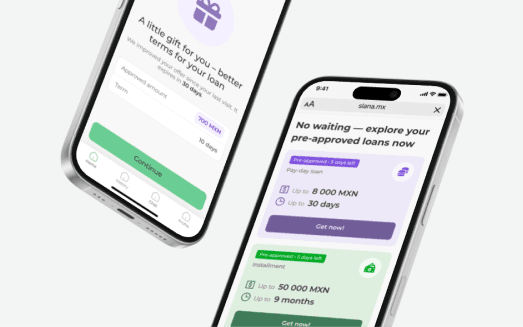
$lana (Monetech), a regulated multi-country consumer credit platform, needed its compliance and data integrations online inside a tight regulatory window. We owned the integration architecture and delivered.
View case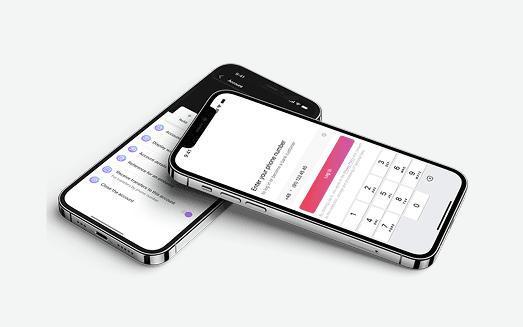
Large-scale migration from a legacy internet banking system to a modern microservices-based architecture, with stronger scalability, security and user experience, while keeping customer trust intact.
View case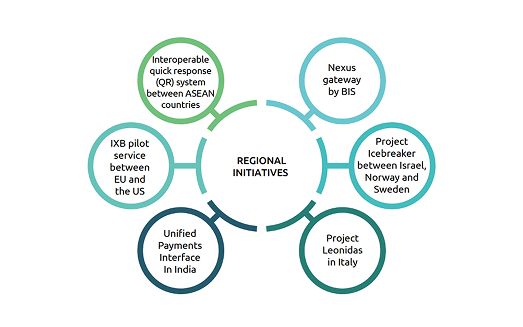
A strategy for a fintech product's market entry and growth, delivering the architecture, technology and investment plan, with a roadmap for the analysed markets.
View caseThis was a very task-heavy project, mostly exploration and R&D-driven. However, by the end of WislaCode, we were left with a detailed roadmap consisting of clear milestones - able to be converted into tangible KPIs - and some neat ideas of what actionable are next. Integrating...
We collaborated with WislaCode on a product strategy development project and gave the highest marks for this contractor. The WislaCode team delivered on time and with outstanding quality.
We collaborated with WislaCode on a route-to-market optimisation project. Working with WislaCode was effective, transparent and predictable, which is especially critical for AI and ML projects. We provided them with six months of anonymised data, and within just three weeks...
Planning a super app launch at scale?
Tell us where the programme sits, and we will map the integration architecture and the first phase.