
Data analytics solutions development
WislaCode offers expert data analytics solutions development, transforming raw data into actionable insights. Our services enhance business intelligence and support data-driven decision-making for measurable growth.
Results from work we have shipped
An AI-driven solution that optimises medical sales representative routes and improves field efficiency, using deep learning over visit patterns to predict the best routes.
Shortlisting a software development partner?
The questions to ask in an RFP, three warning signs a vendor may not deliver, and a scoring matrix to compare contractors objectively.
Analytics capabilities we deliver
Understand what has happened in your business. We analyse historical data-like sales volume or customer behaviour to reveal trends and patterns critical for informed decision-making.
Discover why events occurred. By examining causal relationships, we uncover the factors driving key trends. For instance, we can pinpoint whether a surge in sales stems from marketing efforts or external influences.
Forecast future trends with precision. Utilising advanced machine learning models, we enable businesses to anticipate market shifts, demand spikes, and potential vulnerabilities, such as cyber threats.
Make smarter, proactive decisions. Our prescriptive analytics solutions not only predict future scenarios but also recommend optimal actions, such as resource allocation or investment strategies, ensuring competitive advantage.
Reports describe last month - decisions need next week?
Show us the data you sit on and we will scope the step from dashboards to decisions.
How we deliver analytics solutions?
The same delivery discipline on every engagement - from the first map to a handover your team runs.
We start by listing the decisions the business needs to make faster or better, then trace each one back to its data: which systems hold it, who owns it, and what state it is in. The output is a scoped plan, not a slideware vision.
Management and analytics specialists design the pipeline, storage and semantic layer for the ladder stage your decisions actually need - descriptive foundations sized so predictive work can land later without a rebuild. Every technology choice is justified against your volumes, team skills and budget.
Pipelines and validation go in first, then descriptive dashboards reach real users early, so quality issues surface while they are cheap to fix. Predictive and prescriptive features ship only once the data beneath them has proven reliable in daily use.
You receive the platform in production: monitored pipelines, documented definitions, dashboards in daily use and a team trained to extend them. We transfer code, infrastructure and credentials into your accounts and stay on for support only if you choose.
What shapes the work
Most companies that come to us already have reports. What they do not have is a reliable answer to the question a manager is actually asking on a Tuesday afternoon: what changed, why, and what should we do about it. That gap is the real product of an analytics engagement - not charts, but answers arriving where decisions are made, at the moment they are made.
We frame every engagement on the analytics ladder. Each rung - descriptive, diagnostic, predictive, prescriptive - answers a more valuable question than the last, and each demands more of the data underneath it. The expensive mistake is jumping rungs: commissioning forecasts while the historical record is still inconsistent, or buying a prescriptive engine when nobody trusts last month's numbers. Diagnosing which rung your decisions actually need, and which rung your data can currently support, is the first thing we do.
That diagnosis keeps budgets honest. Sometimes the highest-return project is unglamorous descriptive work that finally makes one number mean the same thing in every meeting.
The hard part of analytics development is rarely the analytics. It is the years of operational data sitting in CRMs, ERPs, spreadsheets and third-party tools, each with its own identifiers, time zones and ideas about what a customer is. Until that estate is mapped and reconciled, every chart built on top of it is an argument waiting to happen. The foundation problems we meet most often:
- The same metric computed three different ways in three departments
- Source systems that silently change schemas and break downstream reports
- History too thin or too dirty to support any predictive work
- Nobody accountable when a number on a dashboard turns out wrong
We treat these as engineering problems with engineering answers: validated ingestion pipelines that fail loudly rather than load quietly, a semantic layer that pins each definition in one place, and explicit data ownership written down per source. This work is invisible in a demo and decisive in month six, when the business has started making real commitments on what the platform says.
There is no single analytics stack, and a vendor who proposes one before seeing your data is selling a preference. The decisions that matter are sequencing decisions: batch or streaming ingestion, warehouse or lakehouse storage, an off-the-shelf BI front end or visualisation built into your own product. We make each call against three constraints - the volume and shape of your data, the skills of the team who will run the platform after us, and the budget rung you are buying.
Machine learning enters the picture at the predictive rung, and only when the foundations can feed it: models trained on inconsistent history produce confident nonsense. For route optimisation work we have used deep learning over visit patterns; for many clients a well-specified statistical forecast does the job at a fraction of the complexity. Choosing the simplest method that answers the question is a discipline, not a compromise.
We also bias towards managed services over self-hosted infrastructure where data volumes allow, because the total cost of an analytics platform is dominated by the people who keep it running, not the licences.
Where the model layer itself is the product rather than one rung of the ladder, that work belongs with our AI and ML development services.
The top rung of the ladder is not a report at all. Prescriptive analytics earns its keep when the recommendation arrives inside the workflow where the decision happens - a planner's schedule, a manager's approval queue, a rep's morning route - already shaped into an action someone can take or decline. That is decision support, and it changes how a system has to be engineered: latency, explanation and trust in the output start to matter as much as accuracy.
We built exactly this for a major pharmaceutical distributor: a system that learns from visit patterns and GPS data to predict the best routes for medical sales representatives, turning historical field data into each day's working plan. The proof of concept stood in three weeks, the solution was delivered in six, and the client - in Julia Dvornikova's words on this page - saw measurable gains in field efficiency.
Engagements at this rung include a feedback loop: the system records which recommendations were followed and what happened next, so the analytics improve on real outcomes rather than assumptions.
The full story is in our case study on optimising medical sales representative routes with AI.
Analytics work prices on three drivers: how many source systems must be connected and cleaned, which rung of the ladder you are buying, and how far the outputs reach into your operations. A descriptive platform over two clean systems is a different engagement from prescriptive decision support across a field organisation. We scope against those drivers in a short discovery, then staff a compact team - management and analytics, developers, UI/
Launch is the midpoint, not the end. Pipelines run unattended only because someone built monitoring, alerting and a recovery path for every failure mode; dashboards stay trusted only because data quality checks run on every load. We hand over with runbooks and training so your team operates the platform, and we stay for support or the next rung only when that earns its place.
Cost control is also an architecture concern: we design storage and compute so the monthly bill scales with use, and document where the levers are.
For telemetry analytics embedded in daily field operations, see our GPS monitoring solution for sales agents.
We collaborated with WislaCode on a route-to-market optimisation project. Working with WislaCode was effective, transparent and predictable, which is especially critical for AI and ML projects. We provided them with six months of anonymised data, and within just three weeks, they delivered a proof of concept that already showed...
What is included in an analytics engagement?
We scope an analytics engagement as a production system from day one: data flows that run unattended, definitions the business can trust, and outputs wired into the decisions they exist to support.
A data source audit that maps every system, owner and quality issue feeding the analytics estate, with a remediation plan.
Ingestion and transformation pipelines that move data from source systems into a governed store, with validation and alerting on every run.
A semantic layer that fixes shared definitions of revenue, customer and conversion so every dashboard answers from the same numbers.
Dashboards and reports designed around the decisions each team actually takes, not around the tables the warehouse happens to hold.
Predictive and prescriptive models where the data supports them, validated against held-out history before any decision relies on their output.
Role-based access, audit trails and data-protection controls applied across the stack before any sensitive data reaches a report.
Documentation, runbooks and training that let your analysts extend the platform without calling us for every new metric.
Everything we build ships with source code, infrastructure definitions and documentation in your repositories. At handover your team owns the pipelines, the models and the dashboards outright - we stay only as long as you want us to.
How long does a data analytics project take?
The drivers are the number and condition of your source systems and how far up the analytics ladder the scope goes. We size this in discovery, which ends with a dated, staged plan rather than a guess. Tightly scoped proofs of concept are measured in weeks; multi-source platforms are phased over months, with the first dashboards arriving well before the final stage.
Do we need machine learning to get value from analytics?
Not necessarily. Descriptive and diagnostic analytics on a sound data foundation often deliver the largest early returns, because they fix the numbers the business already argues about. Machine learning becomes the right tool at the predictive and prescriptive stages, and only once your historical data is consistent enough to support it. We will tell you plainly which side of that line your case sits on.
What do you need from us to get started?
Three things: read access to the systems that hold your data, or representative extracts; the handful of decisions you want the analytics to support; and a named owner per data source who can answer questions about it. With those in place discovery starts immediately, and the audit can run inside your infrastructure if your compliance requires it.
What should we look for in a team building a regulated analytics platform?
Ask how they will treat the data layer before they show you a dashboard, because a dashboard built on inconsistent history is only a faster way to argue about numbers. Ask where the pipeline runs, who can see raw data, what is logged, and how any figure on a screen traces back to the record that produced it. In a European institution that last one is not optional: lineage is what turns a management report into something you can put in front of a supervisor.
Is a custom analytics build better than an off-the-shelf BI tool?
A packaged BI tool is the right answer more often than vendors admit, and where your sources are few and clean we will say so. Custom work earns its cost when data has to be reconciled across systems that disagree, when the calculation itself is your intellectual property, or when the platform has to run inside your own boundary with access controlled per field. That call is made in discovery against your actual sources rather than against a preference.
What does building a secure analytics platform actually involve?
Discovery maps the sources, their owners and their condition, and ends with a dated staged plan. The build starts with the data foundation, meaning ingestion, reconciliation and lineage, then the models and the surfaces on top, with the first dashboards deliberately arriving before the final stage so the business has something to react to. Where a question can be answered before a platform exists, we prove it first: for a pharmaceutical distributor the route optimisation proof of concept stood up in three weeks on historical field data, and the full solution followed in six.
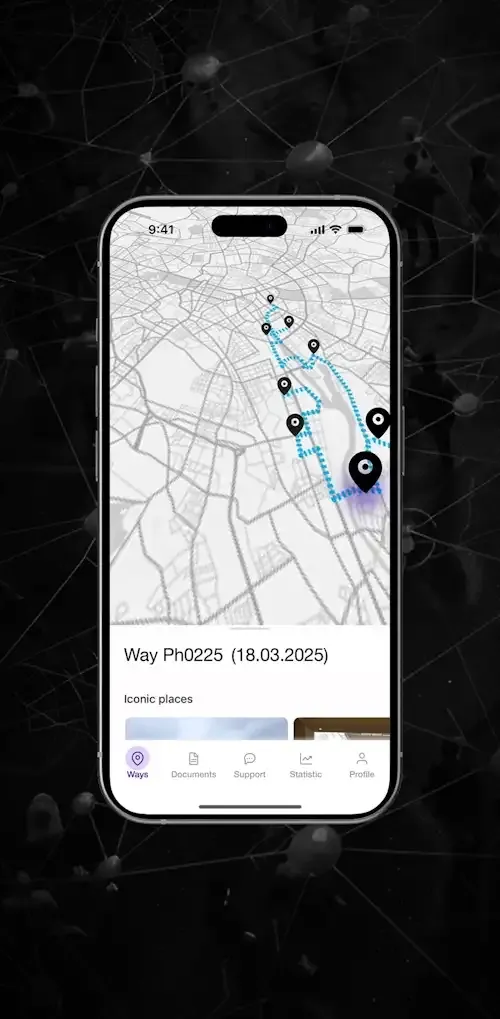
A data-driven GPS monitoring and routing system that helps sales teams work with higher efficiency and lower operating costs.
View case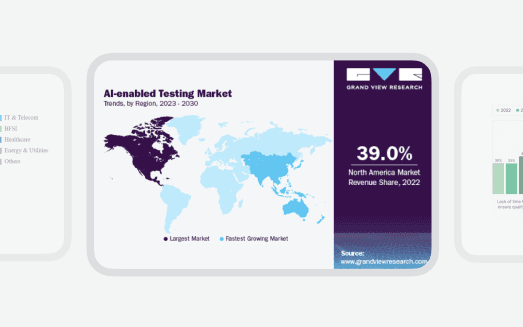
WislaCode helped Verysell Group Applied AI Lab explore the current state and future of AI testing, turning uncertainty into clear, actionable insights.
View case
WislaSearch is an AI-powered search assistant that centralises fragmented data, indexes and retrieves the right information instantly, and keeps everything inside your own secure infrastructure.
View caseWe've been working with WislaCode since July 2025. What started as enhancing the loyalty program in our GlobalTips guest app grew into a broader partnership where they now handle significant frontend development across our guest app, staff app, and web products.
This was a very task-heavy project, mostly exploration and R&D-driven. However, by the end of WislaCode, we were left with a detailed roadmap consisting of clear milestones - able to be converted into tangible KPIs - and some neat ideas of what actionable are next. Integrating...
We collaborated with WislaCode on a product strategy development project and gave the highest marks for this contractor. The WislaCode team delivered on time and with outstanding quality.
Ready to climb from reporting to prediction?
Name the decision you want data to make and we will plan the pipeline behind it.