
Legacy system modernisation
WislaCode offers comprehensive legacy system modernisation services, transforming outdated software into modern, efficient applications. Our application modernisation solutions enhance performance, scalability, and security, ensuring your business stays competitive as you scale.
Results from work we have shipped
Large-scale migration from a legacy internet banking system to a modern microservices-based architecture, with stronger scalability, security and user experience, while keeping customer trust intact.
Shortlisting a software development partner?
The questions to ask in an RFP, three warning signs a vendor may not deliver, and a scoring matrix to compare contractors objectively.
Modernisation paths we deliver
We reimagine your mobile app’s architecture for greater flexibility, scalability, and maintainability. WislaCode experts select optimal technologies, redesign solution logic, and implement new architecture tailored to your needs.
Take your app to the next level by migrating it to modern platforms. Whether moving between on-premises, cloud, or hybrid environments, we ensure a smooth transition, integrating custom features and guiding you on effective platform management.
Migrate your mobile app to new environments with confidence. WislaCode identifies the optimal migration path, prepares legacy systems, ensures data integrity, and validates the functionality of your updated app.
Simplify app management with containerisation. Using tools like Docker and Kubernetes, we transform complex applications into manageable, scalable containers, enabling rapid deployment, replication, and migration.
WislaCode refines your app’s code, addressing vulnerabilities and performance issues. By improving code quality and conducting rigorous testing, we deliver a clean, efficient, and reliable app ready for modern demands.
Enhance your app with new features, refreshed designs, or custom integrations. Whether it’s a quick upgrade or a long-term renovation, WislaCode ensures your software aligns with your business objectives and user expectations.
Legacy system blocking every change you plan?
Walk us through the estate and we will scope renovate, replatform or rebuild, with the risk priced in.
How we deliver modernisation?
The same delivery discipline on every engagement - from the first map to a handover your team runs.
We audit the legacy system before proposing anything: code quality, data state, integration points, infrastructure costs and the undocumented behaviour users rely on. The output is an honest picture of what exists - including the parts nobody currently understands.
Renovate, replatform or rebuild - we argue the decision per component, in writing, with cost, risk and timeline for each option. You approve a target architecture and a staged plan before any production work begins on your system.
We refactor, containerise and rebuild in increments, moving users and data in controlled waves while the legacy system stays live. Every wave is reconciled against the source and every stage carries a rehearsed rollback, so no single step can take the business down.
Once the new system has carried real production load, we complete the cutover, decommission the legacy estate and hand over code, pipelines, runbooks and documentation - with a support period while your own team takes full ownership.
What shapes the work
Legacy systems rarely fail loudly. They keep processing transactions, which is exactly why they survive: nobody wants to touch the thing that works. The cost accumulates elsewhere. Every new feature takes longer because it has to thread through code nobody fully understands. Every integration becomes a custom workaround. Every security review produces a longer list of exceptions. The system is not broken - it is rigid, and rigidity is what loses to competitors who ship monthly.
The trigger for modernisation is usually external: a platform reaching end of support, a compliance requirement the old stack cannot meet, a partnership that demands integrations the architecture cannot absorb, or the moment the last engineer who truly understands the codebase resigns. By that point the safe-looking option - doing nothing - has quietly become the riskiest one, because every year adds data, users and integrations to the eventual migration.
Our work is to turn that situation back into an engineering problem: map what exists, decide what each part should become, and move there in stages that never put live operations at risk. The rest of this page describes how we make those decisions and run that migration.
There is no single modernisation recipe - there are three paths with very different cost and risk profiles, and choosing the wrong one wastes a year. We make the decision explicit at the start of every engagement, argued in writing against your actual codebase and team, not in the abstract.
- Renovate: refactor and re-architect in place when the business logic is sound but the structure resists change.
- Replatform: move to cloud or containers with limited code change when the environment, not the code, is the constraint.
- Rebuild: replace components outright when understanding and untangling the old code costs more than rewriting it.
In practice the answer is rarely uniform across a system. A typical outcome is a mix: rebuild the components that carry the product roadmap, replatform the parts that simply need a cheaper and safer home, renovate what sits in between, and retire what nothing actually uses - the audit almost always finds some. The path decision is revisited at each stage gate, because the first migration waves teach you things no audit can.
Where the legacy estate is a core banking platform, regulatory and integration constraints change the calculus - that variant is covered in legacy core banking systems integration.
The hardest constraint in modernisation is not technical but operational: the legacy system is live, with users and data on it, and the business cannot pause while a replacement is built underneath. A big-bang cutover concentrates all of that risk into a single night, which is why we avoid it wherever the system's scale allows. We migrate in stages instead.
A staged migration means old and new run in parallel for a defined period. Users move in controlled waves, data is reconciled against the source after every wave, and each stage has a rehearsed rollback - so a problem affects one group of users, not the whole base. The legacy system is retired only after the new one has carried real production load, never before.
This is the playbook we ran for a leading bank with over 1.5 million users: a legacy internet banking system replaced by a microservices architecture, migrated in stages with customer trust intact, and a first release in six months.
The full account of that programme is in the staged 1.5M+ user migration case.
Monolith to microservices is the headline move, but in a modernisation it is a means, not the goal. We decompose a legacy system along the seams the audit reveals - components that change at different speeds, scale under different loads or belong to different teams. Where no such seams exist, splitting only swaps one tangle for a distributed version of the same tangle, so the component stays whole on modern infrastructure instead. Every technology choice is argued the same way: from the workload, not from fashion.
Containerisation with Docker and Kubernetes is usually the first practical step, because it turns hand-tended servers into reproducible deployments and makes every later move cheaper. On-premises estates moving to cloud get reengineered rather than lifted and shifted - resource-heavy components are redesigned to use managed services, integrations are reset, and gaps in the legacy solution are closed with purpose-built features. Serverless earns its place for spiky, event-driven workloads where paying per execution beats running idle servers.
Whatever the stack, the target architecture is documented before the build starts: service boundaries, data ownership, integration contracts and the deployment environment, so every later decision has something to be checked against.
If the destination is a multi-tenant product platform rather than a modernised internal system, see cloud-native SaaS development.
A modernisation engagement opens with the audit and path decision, which is a small, bounded piece of work: it produces the target architecture, the staged plan and an estimate per stage. From there you commit stage by stage, not to an open-ended programme. Cost is driven by the size of the estate, the state of the data, the number of integrations and how long old and new must run in parallel - the audit makes each of those drivers visible before you spend on the build.
Delivery shape follows the path: a renovation typically runs as a stable cross-functional team working through a prioritised backlog, while a rebuild runs as scoped stages with acceptance criteria and a gate before each wave. After cutover we stay through a hypercare period - monitoring the new system, tuning performance and decommissioning the legacy estate - while your team takes over operations.
The working style is the one Mikhail Krasnov, Executive Chairman of Verysell Group, credits in his review: transparency, on-time delivery and outstanding quality across projects - which matters more in modernisation than anywhere else, because you are trusting us with the system your business already runs on.
We collaborated with WislaCode on a product strategy development project and gave the highest marks for this contractor. The WislaCode team delivered on time and with outstanding quality. I want to mention the team's transparency while running the project - everything was trackable, visible and manageable.
What is included in a modernisation engagement?
A modernisation engagement is a production delivery, not an advisory exercise. The scope below is what our team builds, tests and operates with you, from the first audit of the legacy estate to its formal retirement.
A legacy estate audit covering code, data, integrations and the undocumented behaviour the business depends on, mapped before anything is changed.
A written path decision - renovate, replatform or rebuild per component - with cost, risk and timeline argued for each option.
Target architecture design: service boundaries, data model, integration contracts and the cloud or container environment the modernised system will run in.
A staged migration plan that moves users and data in controlled waves, with a rehearsed rollback at every stage.
Refactoring, containerisation and build pipelines delivered with automated tests that guard the new system's parity against legacy behaviour.
Data migration with reconciliation checks, so every record in the new system is verified against the source before cutover.
Parallel-run and cutover support: we monitor the new system against the old until the legacy estate is formally retired.
Everything transfers at handover: source code, infrastructure definitions, pipelines, migration tooling, runbooks and documentation. Your team can operate, extend or re-tender the modernised system without depending on us.
How is a legacy modernisation engagement priced?
We do not price modernisation off a rate card alone, because the effort sits in the unknowns of the legacy estate. The audit phase exists to expose them: it converts the system into a staged plan with an estimate per stage, so you approve costs wave by wave instead of underwriting one large fixed bid on incomplete information.
How long does a modernisation project take?
Timelines follow the chosen path and the migration plan. Replatforming a contained system is a shorter exercise than a staged rebuild of a large estate, and the parallel-run period adds time deliberately, because it is the risk control. As a reference point from our own work, the digital banking migration described on this page reached its first release in six months.
Do we have to freeze feature development while the system is modernised?
No, but the change flow has to be managed: features landing in the legacy system must be replicated in the new one, which extends the parallel-run. We usually agree a routing rule - new capabilities are built on the new platform where possible, and a short change-control list protects the components that are mid-migration.
Should we rewrite from scratch or modernise what we have?
A full rewrite is proposed more often than it is right. It restarts the clock on everything the legacy system already knows, including the undocumented rules that quietly keep the business working, and it usually needs a feature freeze nobody can afford. Modernisation trades that for a longer parallel run: the estate is decomposed, the components carrying the most risk move first, and the old system keeps serving until the new one has proved itself. We recommend a rewrite only where the legacy platform cannot be decomposed at all, and we show you the cost of both paths before you choose.
What are the real risks in a modernisation programme, and how do you contain them?
Three bite in practice: business rules that exist only in the old code, data that does not migrate as cleanly as the schema suggests, and a parallel run that stretches because features keep landing on both sides. The audit surfaces the first two before anyone commits, and the change-control routing keeps the third from drifting. Nothing is cut over until it has run in parallel and reconciled against the legacy output, which looks slower on a plan and is faster in practice.
How do you choose the right approach for our particular estate?
The audit maps each component against how often it changes, how much risk it carries and how tightly it is coupled, then assigns a path per component instead of one strategy for the whole estate. Some parts are rehosted, some replatformed, some rebuilt, and some left alone deliberately, because modernising a stable component nobody touches is spending without a return. You receive that map as a staged plan with an estimate per stage, and you approve it wave by wave.
Does the platform stay compliant while the migration runs?
That is a design constraint rather than a phase at the end. In the EU it also has a name: DORA, Regulation (EU) 2022/2554, has applied since January 2025, and Article 8 requires a financial entity to identify and document its ICT-supported business functions and the dependencies between them, which a half-migrated estate makes harder unless the map is maintained as you go. We keep the dependency map, the audit trail and the reconciliation evidence current through the parallel run, so the state of the system can be described at any point in it.
Can new capability, including AI, be added as part of the modernisation?
Yes, and it is often the reason the business agrees to fund the work at all. Once a component has a clean interface, adding a model, an analytics feed or a new channel stops being a special project. We sequence it so new capability lands on components that have already moved, which keeps the legacy freeze short and gives the programme something visible early instead of a long stretch of invisible plumbing.
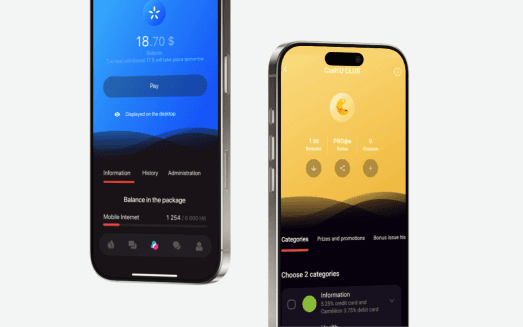
A consumer banking super app in a regulated market had to launch at scale inside a fixed regulatory and competitive window. We owned the integration architecture and mobile delivery.
View case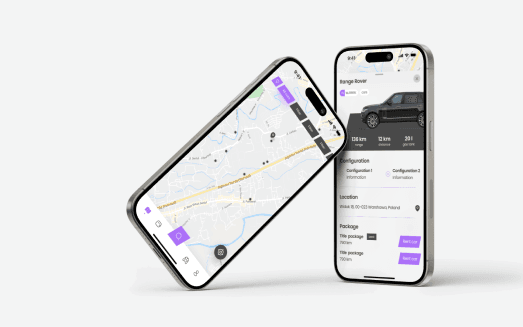
A design concept for a carsharing launch - a progressive web app approach, prototyped to be convenient for customers and efficient to run.
View case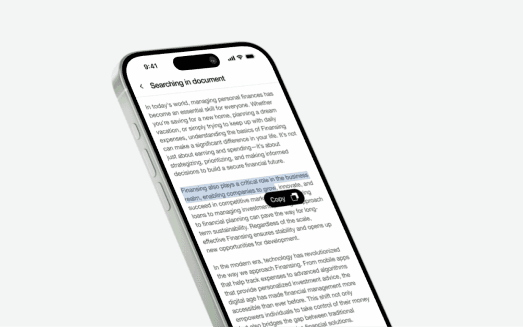
WislaSearch is an AI-powered search assistant that centralises fragmented data, indexes and retrieves the right information instantly, and keeps everything inside your own secure infrastructure.
View caseWe've been working with WislaCode since July 2025. What started as enhancing the loyalty program in our GlobalTips guest app grew into a broader partnership where they now handle significant frontend development across our guest app, staff app, and web products.
This was a very task-heavy project, mostly exploration and R&D-driven. However, by the end of WislaCode, we were left with a detailed roadmap consisting of clear milestones - able to be converted into tangible KPIs - and some neat ideas of what actionable are next. Integrating...
We collaborated with WislaCode on a route-to-market optimisation project. Working with WislaCode was effective, transparent and predictable, which is especially critical for AI and ML projects. We provided them with six months of anonymised data, and within just three weeks...
Time to retire the legacy without the downtime?
Show us what the system carries today and we will map a staged migration that never stops the business.