
Cloud‑native development (SaaS)
WislaCode offers expert cloud native development services, specialising in SaaS application development to deliver scalable and secure cloud-based software solutions tailored to your business needs.
Results from work we have shipped
PushMaster is an enterprise-grade push notification server for reliable, multi-channel message delivery across web and mobile.
Shortlisting a software development partner?
The questions to ask in an RFP, three warning signs a vendor may not deliver, and a scoring matrix to compare contractors objectively.
Cloud-native services we provide
We collaborate to define a practical roadmap. Activities include feasibility assessment, requirements definition, architecture selection (single‑tenant, multi‑tenant or hybrid), technology stack recommendations, timelines and milestones, and security controls appropriate to your risk profile.
We handle end‑to‑end build: analysis and planning to define scope and frameworks UI/UX design aligned with your brand and accessibility needs development across front end, back end and operational services quality assurance to validate reliability, performance and security
For cloud transitions, we plan and execute migrations without data loss or disruption. This includes system assessment, target architecture selection, detailed migration runbooks, application and data moves, and post‑migration verification.
We create APIs and connectors for smooth data exchange with your internal systems and third‑party services. Work includes requirements analysis, data mapping and transformation, and rigorous pre‑deployment testing.
We provide ongoing support to keep environments secure and high‑performing: performance monitoring, timely fixes and updates, incremental features, and enablement for your teams.
Taking a product multi-tenant without runaway cloud costs?
Tell us the workload and the tenancy model and we will scope the cloud-native architecture.
How we deliver cloud-native products?
The same delivery discipline on every engagement - from the first map to a handover your team runs.
Discovery establishes what the platform must do commercially before anything technical is chosen: who the tenants are, how isolated they must be, what you run today, and which constraints - compliance, integrations, data residency - bound the design. The output is a roadmap with options and honest trade-offs.
We fix the decisions that are expensive to change: tenancy model, service boundaries, data ownership, and the container and orchestration platform. Each is recorded with its reasoning, so the architecture survives team changes. Infrastructure is defined as code before the first feature is built.
Delivery runs in short iterations on a CI/CD pipeline with automated testing, image scanning and policy checks built in, so every merge is releasable. Zero-downtime deployment is the default from the first sprint, because retrofitting it later means rebuilding the release process under pressure.
Launch is a transfer, not a finish line. You receive the repositories, infrastructure definitions, pipelines, dashboards and runbooks, with your engineers trained to operate them. Whether you run the platform yourselves or retain us, nothing about it depends on undocumented knowledge in our heads.
What shapes the work
A SaaS business stands or falls on one ratio: what it costs to serve the next customer. Cloud-native architecture is how that ratio gets engineered. One codebase and one platform serve every tenant; onboarding a new customer becomes configuration rather than a deployment project; a release ships to everyone at once, without downtime. Built well, the platform compounds - each customer makes the next cheaper to serve. Built as a hosted monolith with customer-specific forks, every sale adds operational drag that engineering never claws back.
That is why we treat cloud-native as an engineering discipline, not a hosting decision. The properties that make SaaS economics work - tenant isolation, elastic scaling, automated zero-downtime releases, per-tenant cost visibility - are cheap to design in and brutally expensive to retrofit. So they are settled first, in discovery, as written architecture decisions: which tenancy model fits your customers and your risk profile, where the service boundaries sit, what the data layer owes each tenant. The technology stack follows from those answers, never the other way round.
All of it rests on the server-side engineering underneath - the APIs, data layers and asynchronous processing that carry every tenant.
Cloud-native failures are rarely exotic. The same patterns appear in most post-mortems we are brought in to read, and almost all of them trace back to sequencing - the team built the easy parts first and deferred the decisions that were expensive to change.
- Services cut along team boundaries instead of business domains, multiplying coordination instead of removing it
- Tenant isolation deferred until the first enterprise security questionnaire arrives
- Autoscaling on the stateless tier while the database stays a fixed-size bottleneck
- Costs discovered at invoice time because nothing was tagged per service or per tenant
The counters are unglamorous. Service boundaries get decided against the domain model and recorded, so a future team knows why they sit where they do. Isolation, quotas and rate limits go into the first release, when they cost days, not into release twenty, when they cost a re-architecture. The data layer is load-tested as seriously as the application tier. And tagging goes in with the first deploy, because a bill you cannot attribute is a bill you cannot reduce.
We choose the stack for how it behaves at three in the morning. Containerised services orchestrated by Kubernetes, infrastructure defined as code, API-first integration, and Kafka where load arrives in spikes rather than queueing politely - every one of these is boring in the best sense: failure modes are documented, tooling is mature, and engineers who know them are hireable on the open market. A component earns its place by what it does for the platform's operability, not by what it adds to the pitch deck.
We hold ourselves to the same standard we sell. PushMaster, our enterprise-grade push notification server, delivers messages across web and mobile channels and was built in Java on HTTP/
The full story of Kubernetes and Kafka in production is in the PushMaster case study.
The most useful early question in a cloud migration is not how to move but what each workload deserves. We assess the estate workload by workload and assign each a disposition: rehost where the economics already work, re-platform onto a managed equivalent where the operational gain is obvious, rebuild only where the system is core to the product and worth the investment. Treating the estate as one undifferentiated block is how migrations balloon - the disposition map keeps effort proportional to value.
Before anything moves, the destination is made ready. Account structure, network topology, identity and security guardrails are defined as code - the landing zone - so every workload arrives into governance instead of having it bolted on afterwards. Sequencing then respects data gravity: applications move close to the data they depend on, and chatty integrations move together so latency does not surprise anyone. Where part of the estate stays where it is for a while, that hybrid period gets an owner, a budget and an exit date, so it remains a phase rather than becoming the architecture.
If the application itself needs rebuilding before it can move well, start with application modernisation - the path from legacy to cloud.
Engagements start with a short, fixed-scope discovery that produces the architecture decision record, a roadmap with milestones, and an estimate you can interrogate line by line. The build then runs as a dedicated team - developers, UI/
After launch, the question is who runs the platform, and both answers are supported. Some clients take operations in-house: we hand over runbooks, dashboards and alert policies, then train their engineers until the handover is real rather than ceremonial. Others retain the team that built the platform to carry it onwards, which keeps context where the decisions were made. Either way, the exit criteria are agreed at the start of the engagement rather than negotiated at the end, so the choice stays genuinely yours.
We collaborated with WislaCode on a product strategy development project and gave the highest marks for this contractor. The WislaCode team delivered on time and with outstanding quality. I want to mention the team's transparency while running the project - everything was trackable, visible and manageable.
What is included in a cloud-native engagement?
Every engagement is scoped to production, not to a proof of concept. Whatever the size of the first release, these are the deliverables and disciplines a cloud-native build with WislaCode includes.
A written architecture decision record covering tenancy model, service boundaries, data ownership and target cloud, agreed before serious code is committed.
Infrastructure as code for every environment, so development, staging and production are reproducible from the repository rather than from anyone's memory.
CI/CD pipelines with automated tests, container image scanning and policy checks, making every merge a deployable and auditable artefact.
Tenant isolation proven, not just designed: automated tests that attempt cross-tenant access run in the pipeline, so every release re-verifies the boundary.
Observability wired in before launch - metrics, structured logs and distributed tracing, attributable per tenant so you can see exactly who an issue affects.
Where an existing system is in scope, decommissioning of the source environment once the move is verified, so you stop paying for two estates.
Per-tenant cost attribution that ties infrastructure spend to customers and features, giving commercial teams real numbers for pricing and packaging decisions.
At handover everything is yours: the repositories, infrastructure definitions, pipelines, runbooks and cloud accounts. Your team can run, change and extend the platform without WislaCode in the loop - or keep us in it by choice.
What’s the practical difference between “cloud‑native SaaS” and simply hosting software in the cloud?
Hosting software in the cloud typically means lifting and shifting an application to a cloud provider. Cloud‑native SaaS is designed for the cloud from the outset: loosely coupled microservices or well‑bounded modules, API‑first integration, automated CI/CD, and infrastructure as code. It emphasises elasticity (scale up/down), resilience (multi‑AZ/region strategies), and observability for rapid diagnosis. Multi‑tenant architecture with strong tenant isolation and RBAC helps you serve many customers efficiently while protecting data. DevSecOps practices: automated testing, security scanning, and policy enforcement - are part of the delivery pipeline, not bolted on. The result is faster iteration, improved reliability, and better cost control compared with simply running a monolith on virtual machines. In short, cloud‑native SaaS is a delivery and operating model that enables continuous improvement, whereas basic “cloud‑hosted” often replicates on‑premise constraints in a new location.
How do you choose between microservices, serverless, and a modular monolith for a new SaaS product?
We begin with product goals, expected change frequency, team size, and operational constraints. A modular monolith can be ideal early on: fewer moving parts, simpler debugging, and faster iteration. As domains stabilise and scaling needs change, we can create microservices. This gives clear boundaries and allows for independent scaling or release schedules. Serverless functions are great for event-driven tasks, asynchronous processing, and sudden demand spikes. They help cut down on operational overhead. We also consider data ownership, transactional boundaries, and latency requirements to prevent accidental distributed complexity. Our bias is towards simplicity first, use microservices and serverless where they add measurable value (resilience, scalability, speed of change). Whatever the architecture, we implement CI/CD, automated testing, and observability from day one, so refactoring or decomposition can proceed safely as your product and traffic evolve.
What does multi‑tenancy mean for security and performance in a SaaS platform?
Multi-tenancy allows several customers (tenants) to use the same application and infrastructure. Their data and access remain strictly separate. We implement tenant isolation through a combination of identity and access controls (RBAC/ABAC), per‑tenant encryption contexts, and guardrails at the data and service layers. Performance is addressed with pooled resources, per‑tenant quotas and rate limiting, and autoscaling policies that protect overall stability. Where regulatory or performance needs require it, we support hybrid models, shared app plane with dedicated data stores, or fully siloed deployments, for higher isolation. Observability is multi‑tenant aware, enabling you to attribute usage, errors, and latency per tenant, and to implement fair‑use policies. This approach ensures you gain the cost and operational efficiencies of multi‑tenancy without sacrificing security or quality of service for any customer.
How do you embed security (DevSecOps) without slowing delivery?
We integrate security checks into the standard developer workflow and CI/CD. That includes dependency scanning (SCA), static and dynamic analysis (SAST/DAST), container image scanning, and policy as code for infrastructure and Kubernetes. Secrets management and least‑privilege IAM reduce blast radius, while branch protection, signed builds, and provenance controls strengthen supply‑chain integrity. Threat modelling guides prioritised mitigations so effort maps to actual risk. We automate evidence collection - test results, policy outcomes, change records to simplify audits. Quality gates are tuned to block only high‑risk issues while surfacing lower‑risk findings in backlog reports. This balance keeps velocity high and raises your security baseline continuously. Post‑deployment, we monitor with runtime protection, anomaly detection, and rapid patching processes, ensuring security remains effective as the platform and its threat landscape change.
How do you measure reliability and user experience for a cloud‑native SaaS?
We co‑define service level objectives (SLOs) that reflect user expectations - availability, latency, error rate, and quality of critical journeys. Distributed tracing and structured logging expose bottlenecks across services; real‑user monitoring (RUM) and synthetic tests measure front‑end performance globally. Error budgets inform release pace and prioritise remediation over feature work when needed. We track deployment health (change failure rate, time to restore), use canary/blue‑green strategies to de‑risk releases, and rely on feature flags for safe rollouts. UX telemetry (task success, time on task, drop‑off) guides iterative design improvements. These signals, presented in clear dashboards, enable product and engineering teams to make evidence‑based trade‑offs - balancing speed, reliability, and user satisfaction, while maintaining a predictable operating posture.
What’s your approach to cloud costs and avoiding vendor lock‑in?
We implement cost visibility from day one: per‑service and per‑tenant tagging, budgets, and alerts. Autoscaling, rightsizing, and lifecycle policies reduce waste; caching and queueing smooth demand spikes. We evaluate serverless versus container workloads based on utilisation and predictability, not fashion. For portability, we favour open standards - OCI images, Kubernetes, Terraform and avoid unnecessary proprietary coupling at the core of the architecture. When managed services offer clear advantages, we encapsulate them behind well‑defined interfaces or use cross‑cloud abstractions so replacement remains feasible. Regular architecture reviews consider total cost of ownership (run, change, and risk). This FinOps‑informed approach ensures your platform remains economically efficient while keeping credible strategic options open as your product and markets evolve.
How long does it take to build a cloud-native SaaS platform?
Timelines are driven by the tenancy model, the integration count, whether an existing system must migrate, and the compliance evidence your market requires - so we make them explicit in discovery rather than quoting a number cold. As a reference point from our own work, PushMaster, our enterprise-grade push notification server built on Kubernetes with Kafka, went from architecture to production in six months. Discovery produces a milestone plan engineering has actually signed up to, and we sequence releases so a working slice of the platform reaches production early: real usage teaches you more about scaling behaviour and tenant needs than any further month of planning.
How is a cloud-native development engagement priced?
We price from scope, which is established in a short, fixed-scope discovery - the cheapest place in the whole engagement to change your mind. Discovery produces the architecture decision, a milestone roadmap and an estimate built from named deliverables rather than a single headline number. The build phase is then priced around a dedicated team sized to that roadmap. The drivers that genuinely move cost are consistent across SaaS builds: how strong the tenant isolation must be, how many integrations the platform touches, whether a migration is in scope, and what compliance evidence your market demands. We surface these in discovery deliberately - every one of them is cheaper to plan for than to discover mid-build. Support after launch is a separate, optional agreement.
Can you build alongside our in-house development team?
Yes, and it is often the fastest configuration. We work in your repositories and your cloud accounts, share one pipeline and one review process, and split work along the architecture's service boundaries so two teams are never editing the same component. Your engineers keep the domains they know best; we carry the cloud-native platform work - tenancy, scaling, deployment automation, observability - and transfer it as we go rather than in a single handover event. On one engagement delivered this way, working beside the client's own developers, the first production release shipped within four months. Enablement is part of the engagement rather than an extra: the goal is a team that can operate and extend the platform with or without us.
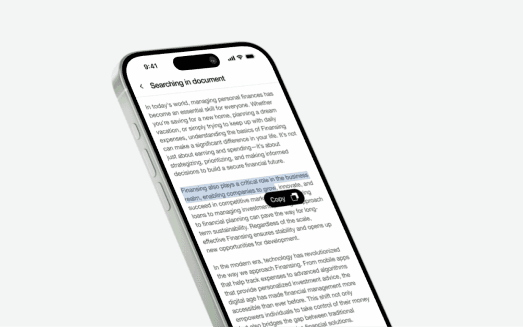
WislaSearch is an AI-powered search assistant that centralises fragmented data, indexes and retrieves the right information instantly, and keeps everything inside your own secure infrastructure.
View case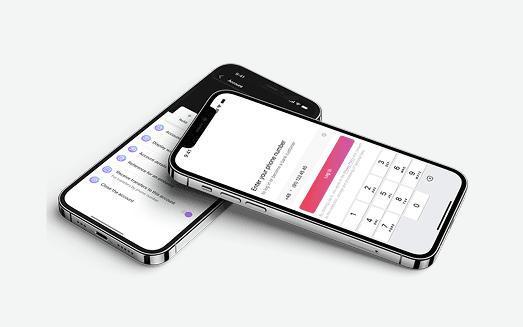
Large-scale migration from a legacy internet banking system to a modern microservices-based architecture, with stronger scalability, security and user experience, while keeping customer trust intact.
View case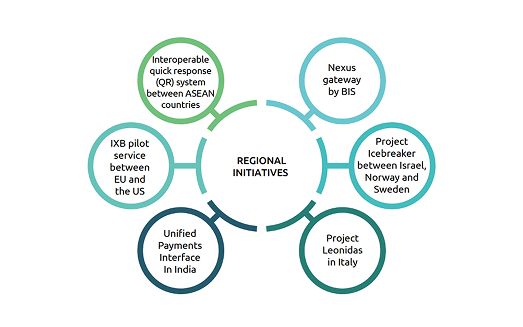
A strategy for a fintech product's market entry and growth, delivering the architecture, technology and investment plan, with a roadmap for the analysed markets.
View caseThis was a very task-heavy project, mostly exploration and R&D-driven. However, by the end of WislaCode, we were left with a detailed roadmap consisting of clear milestones - able to be converted into tangible KPIs - and some neat ideas of what actionable are next. Integrating...
We collaborated with WislaCode on a route-to-market optimisation project. Working with WislaCode was effective, transparent and predictable, which is especially critical for AI and ML projects. We provided them with six months of anonymised data, and within just three weeks...
Working with WislaCode Solutions has been a great experience! We needed an Android SDK developed under a tight timeline, and their team delivered a flexible, user-friendly solution that integrated seamlessly into our ecosystem. Their transparent approach, proactive...
Building SaaS that has to scale on demand?
Describe the growth you expect and we will plan containers, tenancy and cost control around it.