
Dealership management solutions
Expert dealership management solutions development, providing automotive dealer software to enhance operations, customer satisfaction, and profitability.
Results from work we have shipped
We turned traditional car leasing into a fully digital service: online search and booking, applications, contracts, invoices and document management, all in one place.
Shortlisting a software development partner?
The questions to ask in an RFP, three warning signs a vendor may not deliver, and a scoring matrix to compare contractors objectively.
Dealership management capabilities
We develop modules that enable dealership staff to efficiently manage leads, track sales activities, and analyse customer behaviour. This allows dealerships to provide personalised offers and an improved user experience, fostering loyalty and driving repeat business.
Our solutions simplify inventory tracking for vehicles and spare parts by organising data such as models, specifications, pricing, and availability. Dealerships can optimise stock levels, avoid overstock or shortages, and make informed decisions on sales and leasing.
We implement tools to handle all financial aspects of dealership operations. This includes billing, invoice generation, financial reporting, and management of accounts payable and receivable. Additionally, commission calculation is streamlined for better transparency and efficiency.
Our service modules help dealerships organise and schedule service appointments, generate accurate repair estimates, and maintain detailed vehicle inspection records. This ensures a smooth workflow for service teams and improves customer satisfaction with transparent and reliable servicing.
Dealer operations spread across too many tools?
Walk us through your sales, stock and service workflow and we will scope one system that holds it.
How we deliver dealership management systems?
The same delivery discipline on every engagement - from the first map to a handover your team runs.
We start with your processes, not our templates: how leads arrive, how vehicles move from acquisition to sale, how service is booked and billed, where money and data currently leak. The output is a scoped module plan, a data inventory and an estimate you can hold us to.
We design the data model and integration map before any screens: one record of customers, vehicles and money, bounded modules over it, and APIs towards accounting and manufacturer systems. An architecture review closes the phase so no decision stays implicit.
Delivery runs in short releases your staff actually use. Each release lands in the live dealership with its data in place, so feedback comes from real operations rather than demo sessions, and value arrives long before the project ends.
Go-live follows a cutover plan agreed with each department, with the old system retired only once the numbers match. We stay on afterwards for monitoring, fixes and the steady improvements that months of live operation surface.
What shapes the work
Dealerships rarely lack software; they lack one system. Leads live in a CRM, stock in spreadsheets, invoices in an accounting package, service bookings in a calendar - and nothing reconciles. The cost shows up as rekeyed data, missed follow-ups, vehicles sold but still advertised, and month-end reporting that takes days. A dealership management system earns its keep by holding one record of every customer, vehicle and transaction, and making every department work against it.
That is the scope this page covers: customer and sales management, vehicle and parts inventory, finance and accounting, and service and maintenance scheduling, built as one platform rather than four tools with imports between them. Sales sees service history when negotiating a trade-in; service sees the warranty terms sales agreed; finance sees both without asking anyone. Permissions, audit trails and approval steps sit on top, so a discount, a write-down or a goodwill repair is always attributable to someone. The single record is the product - the modules are views onto it.
For the customer-facing storefront that feeds this pipeline, see automotive e-commerce.
The difficulty is not any single module - it is that every entity crosses departments. A vehicle is stock to inventory, margin to finance, a workshop object to service and a relationship to sales. Model those as four separate records and the system fights the business from its first week; model them as one lifecycle and most features become queries instead of workarounds. The hard parts are predictable:
- Used vehicles, where every unit is unique, with its own history, condition and accumulated costs
- Commission and margin rules that differ by brand, vehicle age and salesperson
- Service scheduling constrained by parts availability, workshop capacity and courtesy cars
- Finance records that must survive an audit, not merely produce an invoice
These are data-model decisions, not interface decisions, and they are cheap to get right early and expensive to repair later. Getting the vehicle lifecycle right - acquired, prepared, advertised, reserved, sold, delivered, serviced - determines whether every later feature is straightforward. That is why our discovery starts with how your dealership actually moves vehicles and money, sitting with sales, service and accounting before anyone designs a screen.
We build dealer platforms as a modular core: one database of record with bounded modules for sales, inventory, finance and service, rather than microservices for their own sake or a monolith nobody dares change. Java and Spring on the server with a React front end is the stack behind our car leasing platform, and it suits a dealer system's real workload: contracts, invoices and stock movements that must commit exactly once and stay queryable years later.
Integration discipline matters more than framework choice. A dealership system that cannot exchange data with your accounting package, your manufacturers' systems and your marketing channels just becomes another silo, so every module exposes an API from the start, and documents - contracts, invoices, inspection records - are generated and stored as first-class data rather than email attachments.
Data migration is part of the architecture, not an afterthought: we plan how customer, vehicle and transaction history leaves your current tools before deciding how the new schema stores it, because a clean model that cannot absorb your history is a clean model you cannot use.
See how contracts, invoices and document management came together in our car leasing platform case.
What custom dealership software costs is mostly a function of decisions you make, not surprises you discover. A single-site dealer launching with sales and inventory is a different build from a multi-brand group that needs manufacturer feeds, inter-branch stock transfers and consolidated accounts from day one - and the condition of the data in your current DMS and spreadsheets moves migration effort more than any feature does. We put numbers against your specific configuration during scoping, and if those numbers show an off-the-shelf DMS would cover your requirements for less, the report says so rather than burying it.
The team behind the build combines analysts, engineers, designers and testers, and its composition shifts with the work: analyst-heavy in discovery, developer-heavy mid-build, tester-heavy in the run-up to each release. We usually advise starting with the module that hurts most, typically sales or inventory, proving it in daily use, then extending to finance and service on a roadmap the architecture already anticipates.
Fixed-scope phases keep the budget honest: each phase ends with a module your staff are already using use, not a demo, so you can stop, pause or continue with the value already banked.
A dealership management system goes live into a working business, so launch is an operations exercise: data migrated and reconciled against your old records, staff trained by role rather than by feature list, and a cutover plan that never leaves sales or the workshop without a system during trading hours. We rehearse that cutover on a copy of your real data before the day it counts.
After launch we stay accountable for the platform as it meets reality: monitoring and alerting on the workflows that earn money, a support channel with agreed response expectations, and a release rhythm for the corrections the first months of live use always surface. Your team owns the data and the roadmap; ours keeps the system fast, secure and current.
The most valuable post-launch work is usually small: a field added to the appraisal form, a commission rule corrected, a report finance no longer builds by hand. We budget for that stream deliberately, because a system that stops changing stops matching the dealership.
When dealer data should become dashboards, forecasting and KPIs, see analytics and BI solutions.
We collaborated with WislaCode on a product strategy development project and gave the highest marks for this contractor. The WislaCode team delivered on time and with outstanding quality. I want to mention the team's transparency while running the project - everything was trackable, visible and manageable.
What is included in a dealership management engagement?
The engagement is sequenced so a dealership moves from its current patchwork of tools to one platform without ever trading blind; these are the deliverables along the way.
Discovery across sales, service, inventory and accounting, producing a process map and a scoped module plan with agreed priorities.
A data model for customers, vehicles, parts and transactions that covers the full vehicle lifecycle from acquisition through sale to servicing and resale.
Module-by-module delivery of CRM and sales pipeline, vehicle and parts inventory, finance and accounting, and service scheduling, each released into daily use.
Integrations with your accounting package, manufacturer systems and marketing channels, built on documented APIs rather than one-off connectors.
Migration of customer, vehicle and financial history from your existing tools, reconciled against source records before cutover.
Role-based permissions, audit trails and training, so every discount, write-down and goodwill repair is traceable and every user knows their workflow.
Documentation, monitoring and a support agreement that carry the platform from launch into steady, owned operation.
At handover the platform is yours: source code, infrastructure access, the data model and operational documentation transfer to your team, with our engineers available for support rather than required for survival.
How long does it take to build a dealership management system?
It depends on how many modules you launch with, the integrations involved and the state of the data being migrated - exactly what the scoping phase pins down. As a reference point, our car leasing platform, covering search, booking, applications, contracts and invoicing, reached its first production release in six months.
Can you migrate data from our current DMS and spreadsheets?
Yes, and we treat it as part of the build, not a final chore. Migration is planned during architecture: customer, vehicle and financial history is mapped to the new model, then checked against your source records before the old tools are switched off.
Do we have to replace all our systems at once?
No. The platform is modular, so a sensible path is to start with one area, run it alongside the existing tools through stable integrations, and extend module by module as each one proves itself in daily use. The architecture is designed for that path from the start.
A custom dealership platform or an off-the-shelf DMS?
Buy where your process is ordinary and build where it is the business. A packaged system is a good answer to standard sales, stock and service at a single-brand site, and a poor one for a group with manufacturer feeds, inter-branch stock transfers and consolidated accounts, because those end up encoded around the product instead of in it. We are happy to integrate a package for you. What we will not do is pretend that a product with a hundred configuration screens is the same thing as software that matches how the group actually trades.
What should we ask a developer before commissioning a dealership platform?
Three things that expose depth quickly. How they model a vehicle that is stock to inventory, margin to finance, a workshop object to service and a relationship to sales - a system that keeps four separate records fights the business from its first week. How the migration is validated against your own records before anything is switched off. And what the cutover looks like on a trading day, because a dealership cannot be without a system while the showroom is open. We rehearse that cutover before the real one, on copied data.
Can machine learning improve stock and pricing decisions?
Where the history is clean enough to learn from, yes: days-to-sell prediction, reconditioning spend against realised margin, and which units to move between branches are the cases that pay back first. The honest constraint is that most dealer data is not ready. The same vehicle recorded three different ways across sales, service and accounting teaches a model your inconsistency rather than your market. So the first step is the data model, which is worth doing whether or not a model ever runs on top of it.
What does a dealership platform have to record for compliance?
More than the sale. A dealer accepting cash of EUR 10,000 or more is an obliged entity under Article 2(1)(3)(e) of Directive (EU) 2015/849, so identification and record-keeping belong inside the transaction rather than in a folder in the back office. Customer data carries the GDPR obligations, including storage limitation under Article 5(1)(e), which means retention has to be a rule the system enforces and not an intention. Where the dealership arranges finance, the pre-contractual disclosure has to come out of the platform in the form the lender and the regulator expect.
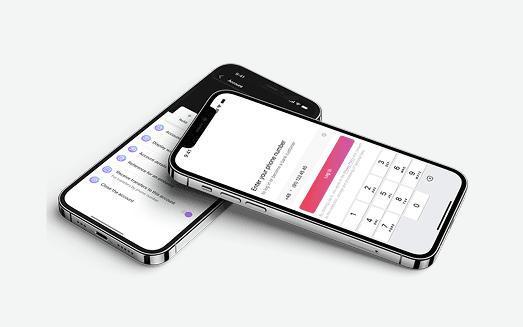
We've been working with WislaCode since July 2025. What started as enhancing the loyalty program in our GlobalTips guest app grew into a broader partnership where they now handle significant frontend development across our guest app, staff app, and web products.
This was a very task-heavy project, mostly exploration and R&D-driven. However, by the end of WislaCode, we were left with a detailed roadmap consisting of clear milestones - able to be converted into tangible KPIs - and some neat ideas of what actionable are next. Integrating...
We collaborated with WislaCode on a route-to-market optimisation project. Working with WislaCode was effective, transparent and predictable, which is especially critical for AI and ML projects. We provided them with six months of anonymised data, and within just three weeks...
Want one platform running the whole dealership?
Point at the processes that hurt most - CRM, inventory, finance or service - and we will plan the rollout.