
Web software development
Frontends, server-side builds, PWAs and custom web platforms.
Results from work we have shipped
A progressive web app for independent and cooperative workouts in the gym, built for maximum accessibility.
Shortlisting a software development partner?
The questions to ask in an RFP, three warning signs a vendor may not deliver, and a scoring matrix to compare contractors objectively.
Services in this area
Named sub-services with their own pages and engagement shapes.
Custom web solutions and application development for fintech, banking and integration-heavy platforms. Built inside your stack and handed over working.
See the service 02Progressive web app developmentProgressive Web App (PWA) development services for fintech, lending and B2B2C platforms. Offline-capable, installable, fast to update.
See the service 03Server-side developmentSee the service 04Web frontend developmentSee the serviceWeb products we build
Our team excels in crafting responsive and lightweight PWA that merge the strengths of mobile apps and websites. Designed to boost user engagement and conversions, our PWAs are optimised for performance and usability.
See the service Web platformsWe develop versatile web platforms that improve communication and strengthen commercial relationships. These platforms connect businesses, partners, and customers.
See the service Customer portalsUsing our engineering expertise, we build B2C portals that become digital hubs for customer engagement. These portals are designed to attract and retain both new and existing customers by providing a centralised space for interaction.
See the service Financial web platforms and solutionsWislaCode delivers sophisticated digital hubs that let users manage finances, track assets, and explore investment opportunities. Our financial platforms are designed for security and convenience, meeting the needs of today’s digital-savvy users.
See the serviceWe help eCommerce businesses and online marketplaces establish a continuous online presence, enhancing customer relationships. A well-constructed portal can increase traffic, customise user experiences, and drive revenue growth.
Our team develops educational portals that connect teachers and students through personalised learning experiences. These portals reduce educational costs and eliminate geographic limitations, making quality education more accessible.
Our insurance portals simplify the process of choosing policies and manageing claims. They enhance agent productivity and improve customer satisfaction by streamlining the insurance purchasing process.
Web product on the roadmap, shape still open?
Tell us the audience and the job to be done and we will match it to PWA, portal or platform.
How we deliver web products?
The same delivery discipline on every engagement - from the first map to a handover your team runs.
A short discovery with your stakeholders: who the users are, which journeys earn the product its keep, what it must integrate with and what compliance applies. It ends in a feature map, an architecture outline and an estimate - the baseline every later decision is measured against.
UX/UI design and technical architecture run in parallel: journeys become screens and states while the team fixes the stack, the API contracts and the data model. Both sides review each other, so nothing is designed that cannot be built or built that nobody asked for.
Frontend and server-side are built by one team against the agreed contracts, in sprints that each end in something demonstrable. You see working software from the early weeks, and the first production release is cut as soon as a real user journey is complete.
Handover is a process, not a zip file: documented code, runbooks, infrastructure access and sessions with your team until they run it confidently. After that we stay involved as much as you choose - ongoing development, a maintenance arrangement, or a clean exit.
What shapes the work
"Web software development" stretches from a single-purpose progressive web app to a multi-tenant platform with partner integrations behind it. Whatever the shape, you are buying the same set of crafts: product planning and analytics, UX/
WislaCode runs web development as one full-stack practice. The same team carries a product from planning through design, build and integration, and handles migration and reengineering when an existing web estate needs to evolve rather than be replaced. That continuity matters most in fintech and other regulated domains, where the interface, the API layer and the data model have to move together - a seam between vendors there becomes a compliance question, not just a coordination cost.
Evaluate a web partner on who carries the decisions, not who types the code: who owns the architecture trade-offs, who cuts the first release, who answers when the two halves disagree.
For what one team owning the whole build looks like, see the CleverFit PWA delivered end to end.
A web product is two programs shipped as one: the application running in the user's browser and the system serving it. They fail differently. The frontend fails in public - layouts that break on a mid-range phone, interactions that stutter, states that contradict each other. The server side fails quietly and expensively - data integrity, authentication edge cases, integrations that hold in testing and fold under production load. A team that is strong on one side will systematically under-invest in the other, and you find out after launch.
- API contracts agreed and versioned before either side builds on assumptions
- One backlog and one release plan covering both layers
- Definitions of done that include data correctness, not just rendered screens
- Integrated test environments from the first sprint, not the final month
We keep both crafts inside one team precisely so this coordination is a default, not a negotiation you have to referee. The split still matters when you evaluate the work, though: each layer is a craft with its own standards, tooling and failure modes, and each gets its own depth on this site.
How we build the browser side - frameworks, responsiveness, performance - is covered in web frontend development.
Web products live for years, so we choose technology for longevity, not novelty. That means mainstream, well-staffed stacks - JavaScript and TypeScript with React is a frequent default, and it is what the CleverFit PWA shipped on - because in year three the question is not whether the framework was fashionable but whether you can hire for it, patch it and extend it without archaeology.
The decisions with the biggest consequences are shape decisions, and we make them early and in writing. Should this be a progressive web app, a portal behind a login, or a platform with partner-facing APIs? The answer follows distribution and use: how users arrive, whether they need offline or device access, how many roles the product serves and what it must integrate with. We also decide deliberately what not to build - authentication, payments and messaging are usually buy-and-integrate, not build - and when an existing system should be reengineered rather than rewritten.
Every one of these calls is documented with its rationale, so the people who inherit the product understand why it is shaped the way it is.
The architecture, API and data decisions behind the interface are the subject of server-side development.
Web development quotes vary wildly because scope hides in details. The honest cost drivers are countable: how many user roles and journeys the product serves, how many systems it must integrate with, what compliance and security regimes apply, and how much of the product is still a question rather than a decision. Two products with the same one-line description can differ in cost by the answers to those four questions.
We size the team to the scope rather than selling a fixed bench: management and analytics, developers, UI/
That discipline is what clients notice. Aleksei Malenkin, CTO of $lana (Monetech), singled out fast, synchronised delivery on a product developed from scratch - pace that comes from cutting the first scope hard and sequencing the rest, not from compressing the engineering.
The first release is the midpoint of a web product's life, not the end of the engagement. From day one in production the work changes character: monitoring what users actually do, watching performance where they feel it, landing security patches on schedule and keeping dependencies current before an upgrade becomes a migration project. None of this is glamorous; all of it is the difference between a product that ages and one that rots.
Web estates also grow sideways. Portals gain roles, platforms gain partners, a product built for one market gets a second one bolted on. Because migration and reengineering sit inside the same practice that builds new products, that growth does not trigger a fresh vendor search: the team that holds the context plans the change instead of rediscovering it.
What gets built next is steered by evidence rather than opinion: production analytics, error rates and user feedback set the roadmap, and each subsequent release goes through the same testing discipline as the first.
WislaCode specialists quickly synchronised and worked with the second team involved in developing our solution. As a result, having started development from scratch, we came to the expected result quickly. The first users went to the application after 5 months.
What is included in a web engagement?
Every web engagement is scoped to put a real product in front of real users, not to produce documents. The list below is the standing scope of a WislaCode web build; items flex with the product, the disciplines do not.
Product planning and analytics that turn the business goal into user journeys and a scope the build is answerable to.
UX/UI design for every journey and state, delivered as a working design system rather than a folder of static screens.
Frontend engineering of the interface layer - responsive, accessible and fast on the devices your users actually hold.
Server-side engineering: the APIs, data model, authentication and third-party integrations that the interface depends on.
Testing across both layers - automated coverage of the critical journeys plus manual passes on real browsers and devices before each release.
CI/CD pipelines and working environments stood up at the start of the build, so deployment is a routine event rather than a milestone.
Migration and reengineering when there is an existing web estate, planned so current users keep working while it changes underneath them.
The engagement closes with a documented handover: the repositories, the infrastructure configuration, the design system and the documentation, prepared so your own team can pick the product up and keep building.
How much does web software development cost?
There is no flat rate - cost follows scope. The main drivers are the number of user roles and journeys, the integrations involved, compliance and security requirements, and how much of the design is still open. We run a short scoping phase first, so the estimate you get is grounded in an agreed feature map rather than a guess.
How long until the first release?
It depends on how sharply the first release is scoped, which is the main thing we negotiate during discovery. As reference points from our own work: the CleverFit PWA reached its first release in four months, and $lana (Monetech) put first users on a product built from scratch in five. Cutting to a genuine first release, not the full roadmap, is what makes those timelines possible.
Can you take over an existing web application?
Yes - migration and reengineering are part of the practice, not an exception. We start with a technical audit of the codebase, infrastructure and documentation, then agree what to stabilise, what to rework and what to leave alone, so the application keeps serving its users while it changes.
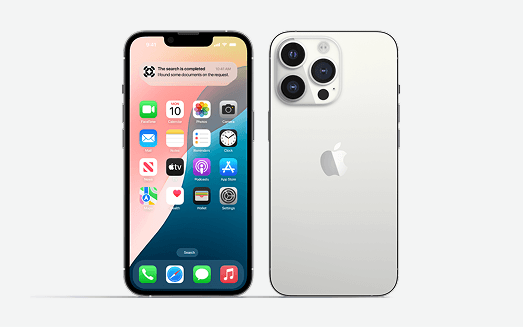
PushMaster is an enterprise-grade push notification server for reliable, multi-channel message delivery across web and mobile.
View case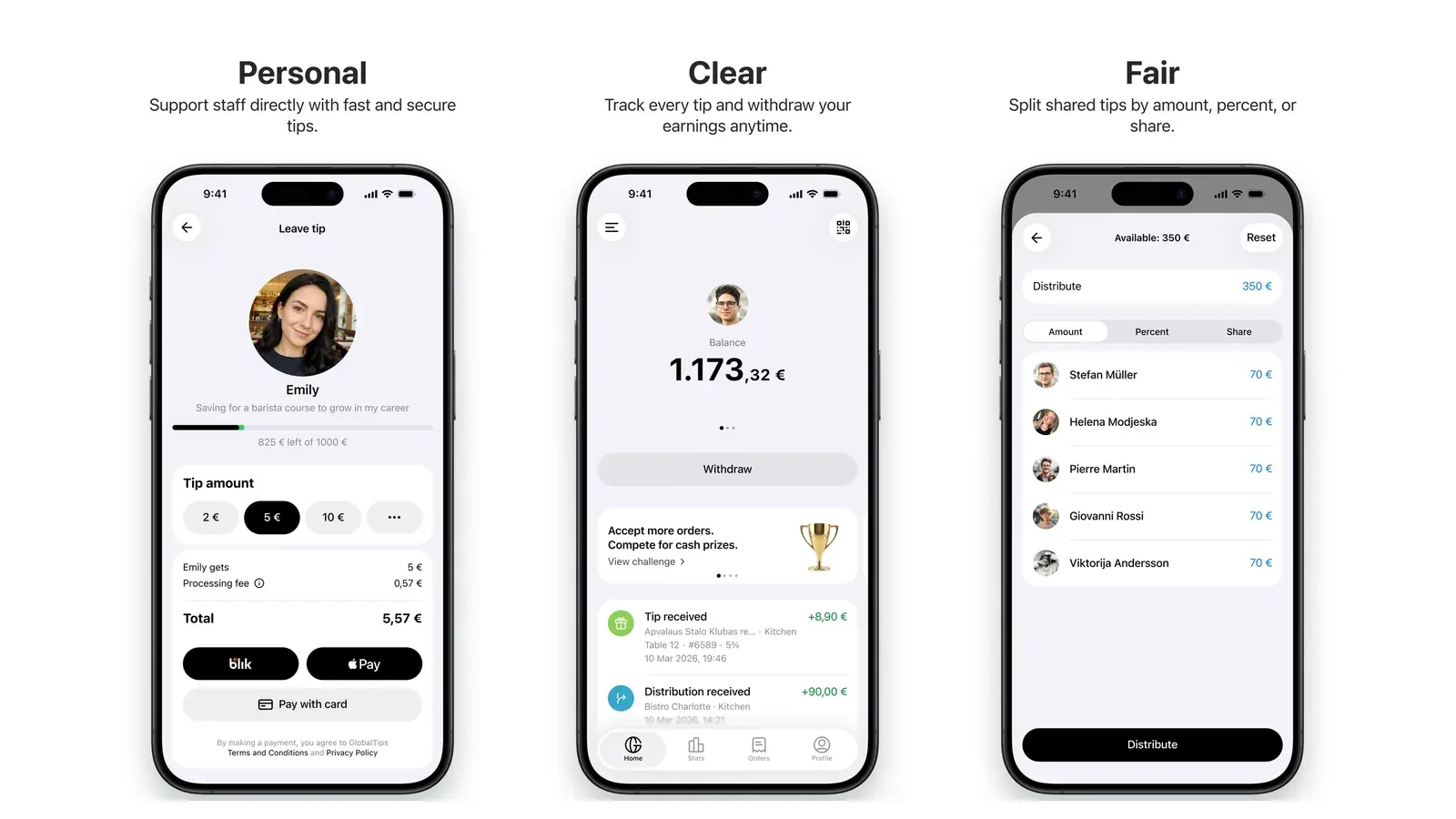
GlobalTips called us in for one feature in their guest app. After 14 monthly cycles, we now build across their guest app, staff app and web products, and BLIK carries about 15% of their payments in Poland.
View case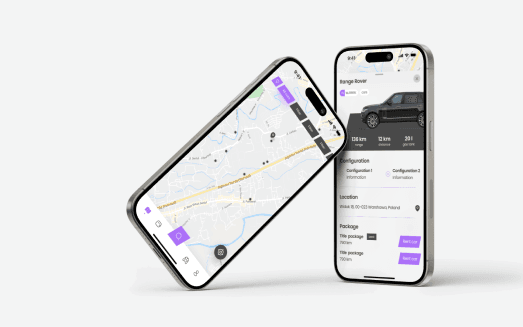
A design concept for a carsharing launch - a progressive web app approach, prototyped to be convenient for customers and efficient to run.
View caseWe've been working with WislaCode since July 2025. What started as enhancing the loyalty program in our GlobalTips guest app grew into a broader partnership where they now handle significant frontend development across our guest app, staff app, and web products.
This was a very task-heavy project, mostly exploration and R&D-driven. However, by the end of WislaCode, we were left with a detailed roadmap consisting of clear milestones - able to be converted into tangible KPIs - and some neat ideas of what actionable are next. Integrating...
We collaborated with WislaCode on a product strategy development project and gave the highest marks for this contractor. The WislaCode team delivered on time and with outstanding quality.
Need frontend, backend and product thinking in one team?
Sketch the product and we will map the build across interface, server and launch.