
Banking software development
Banking software development for regulated banks, neobanks and modernisation programmes. Integration-first, EU-contracted, delivery measured the way regulators measure us.
Results from work we have shipped
Looking for features that keep users coming back?
40+ features we have shipped in banking and fintech apps – from instant onboarding and QR payments to savings mechanics and tools for sole traders.
Services in this area
Named sub-services with their own pages and engagement shapes.
Mobile banking apps for regulated banks: native, PWA and hybrid, integrated with your core, identity and payment rails.
See the service 02Digital banking solutions developmentDigital banking platforms: onboarding, accounts, payments and the operations behind them.
See the service 03Legacy core banking systems integrationLegacy core integration through adapters and orchestration, so new channels ship without a core rewrite.
See the service 04SME mobile banking developmentSME banking apps: onboarding, invoicing, payments and cash flow tools for business customers.
See the serviceBanking software surfaces we deliver
Customer profile, product catalogue, account opening, limits, fees, fraud and risk consoles, and back-office tooling. The systems that sit next to the core and carry most of the daily work.
Mobile banking, internet banking and partner-facing channels, built around the integration backbone rather than bolted to it.
See the service Payment rails integrationCard networks, instant payments, account-to-account, settlement and reconciliation, with the regulator-facing audit trail that closes the loop.
See the serviceApplication flows, decisioning, KYC and credit bureau integration, disbursement, repayment and reporting, designed to scale as volume grows.
KYC and KYB orchestration across providers, with fallback logic, decision retention and a consent trail your compliance function can produce on demand.
Regulatory reporting, internal management information, reconciliation feeds and the data pipelines that connect the operational stack to finance and risk.
Bring us the programme. We will map the joins.
Tell us the core, the channels and the deadline, and we will scope the first phase.
How we deliver banking software development?
The same delivery discipline on every engagement - from the first map to a handover your team runs.
We map the existing systems, the channels in scope, the regulatory constraints and the partner landscape, then write a phased scope your auditor can read.
A named architect makes the integration, identity, data and channel decisions, and writes the reasoning down so your team and your auditor can challenge it.
Delivered inside your repositories and your continuous integration, with automated tests, observability and the documentation your operations team needs.
A runbook, monitoring on the build's own targets, and a handover your engineers own. Later phases run through the same patterns and cost less.
What shapes the work
Banking software development is rarely a green-field build. It is almost always a programme that extends, integrates with or modernises an existing core, in a regulated context, on a tight clock. The questions that decide whether it ships on time are architectural and integration questions, not coding questions.
Where does the channel call the core? What is real-time and what is batch? Who owns the customer identity when the channel is a partner? What does the audit trail look like when a transaction crosses three systems? Answer those and the build is usually the cheaper half. Skip them and the bank pays twice, once for the wrong architecture and once for the rework.
We start from those questions because they decide cost, risk and timeline. The senior people who lead the work have run bank programmes, so the conversation about retry semantics, settlement timing and audit retention happens with someone who has lived inside a bank, not someone learning it on your project.
Banking software development is regulated software development. The delivery partner has to fit the bank's oversight regime, not the other way around. We deliver to regulated buyers as a default, not as an exception.
What our delivery gives you by default:
- WislaCode Solutions PSA as the contracting EU entity, with IP and GDPR under EU jurisdiction.
- A documented sub-outsourcing chain in line with EBA outsourcing guidelines and DORA third-party risk rules.
- An outsourcing register entry your auditor can read, plus audit and exit clauses.
- Delivery metrics tracked weekly in your tools: lead time, deployment frequency, change-fail rate, recovery time.
- Source code, tests, runbooks and documentation handed back, with code ownership that transfers cleanly.
- A replacement guarantee on every squad role, so a departure does not derail the programme.
We have shipped banking at scale: a digital banking programme reached 1.5M+ installations with 150x online-lending growth in a year, recognised as Best Digital Bank by Global Finance, with the modular architecture reused across partner banks in the group.
For the customer-facing channel, see mobile banking app development; for a multi-service front, see super app development; when one integration blocks a product, see the integration unblock sprint.
Banks that try to bypass the core with a parallel system usually end up running two systems. Banks that try to replace the core mid-programme usually slip. Banks that extend the core through adapters and orchestration, and treat the eventual replacement as a separate programme, almost always ship the channel work on time.
We design for that third path by default. The integration backbone takes the pressure off the legacy core, the new products and channels ship against it, and the core replacement, if it happens at all, becomes a calmer decision made on its own timeline rather than under launch pressure.
Regulatory pace is the other half of the plan. Regulators do not move at the speed of a digital launch, so we build the filing, certification and oversight timelines into the programme map from the start. Banks that treat regulator approvals as a finishing step almost always pay for it with rework or a delayed launch, and that is the avoidable kind of delay.
The dedicated page on legacy core banking systems integration covers this work in depth.
A banking software programme runs over months, so the commercial model matters as much as the architecture. A scoped phase with a clear specification is fixed price against an acceptance test. The longer programme around it runs as a named squad on time and material, with the delivery metrics a regulated buyer expects reported weekly in your own tools.
Every squad role carries a replacement guarantee, so a single departure does not stall a multi-month build. The architect who owns the decisions stays with the programme from the first call to handover, which is what keeps the design coherent as the team scales up and down.
Where the engagement is about a measurable outcome rather than a feature list, an outcome-based arrangement is on the table. Whichever shape you choose, the code, tests and runbooks transfer cleanly to your team, with the EU contract and IP assignment unchanged.
A banking programme moves at the speed of access, not the speed of code. The fastest starts come when core documentation, a sandbox or test environment, and a named technical owner on your side are ready at kick-off. We map those dependencies on the programme step so a blocked credential does not become a blocked sprint.
Where access has to come through a third party or a regulator, we build those lead times into the plan from the start rather than discovering them mid-build. Treating approvals as part of the work, not a finishing step, is what keeps a banking launch on its date.
Working with WislaCode Solutions has been a great experience! We needed an Android SDK developed under a tight timeline, and their team delivered a flexible, user-friendly solution that integrated seamlessly into our ecosystem. Their transparent approach, proactive communication, and commitment to quality made the collaboration smooth...
What is included in a banking software engagement?
A banking software engagement is a production programme, not a set of screens and endpoints. The scope covers the architecture, the controls and the operational discipline a regulated build needs. A typical engagement includes:
A phased programme map that covers the existing systems, the channels in scope, the regulatory constraints and the third-party lead times.
Architecture decision records from the named architect, covering the integration, identity, data and channel choices, written so they can be challenged later.
Automated test coverage on the money paths, so payments, settlement and reconciliation cannot be quietly broken by a later change.
An audit trail that follows a transaction across systems, with the decision retention and consent records compliance can produce on demand.
Observability and monitoring set on the build's own targets, so operations sees retry behaviour and settlement timing before customers do.
The build runs in your repositories and continuous integration, with lead time, deployment frequency, change-fail rate and recovery time reported weekly.
An outsourcing register entry with audit and exit clauses, aligned with EBA outsourcing guidelines and DORA third-party risk rules.
At handover your engineers own the result: source code, tests, runbooks and documentation transfer cleanly, with IP assigned under the EU contract, so the programme is something your team runs and extends, not a black box.
What is WislaCode's banking software development experience?
We are led by people who have run bank transformation programmes, not only written code. The senior people on each engagement come from banking, payments and core systems backgrounds, which is why the architecture conversation happens with someone who has lived inside a bank.
Do you deliver for regulated banks or only neobanks?
Both. Most of our banking software development is for regulated banks, banking groups and digital banking programmes. We also work with neobanks and BaaS platforms. The delivery model is the same; the controls are sized to the regulatory context.
How do you handle DORA and EBA outsourcing requirements?
Engineering is delivered through a documented sub-outsourcing chain in line with EBA outsourcing guidelines and DORA. The contracting entity is in the EU. We provide an outsourcing register entry, audit and exit clauses, and exit drill support.
Do you support legacy core banking modernisation?
Yes. Most engagements involve a legacy core to integrate with, extend or build channels on top of. We do not insist on replacing the core. We design the backbone so the channels and products you need ship without waiting for a core replacement.
Can you work alongside our internal banking engineers?
Yes. A squad sits inside your tools, your repositories and your continuous integration. Your engineers stay close to the work from day one, which is what makes the handover real rather than a document nobody can act on.
How long does a banking software engagement take?
A full digital banking or super app launch is usually a 9 to 12 month programme. Smaller entry points move faster: one blocked integration is typically 4 to 6 weeks, and a reusable integration layer 8 to 12 weeks. The programme map sets the phasing before any build starts.
What does WislaCode hand over at the end?
Working code in production or ready for controlled rollout, automated tests, monitoring on the build's own targets, a runbook walked through with operations, documentation, and a trained team. Source code and intellectual property are yours.
How should a bank vet an engineering partner before a compliant platform launch?
Read the arrangement as an outsourcing arrangement, because that is what it is. Article 30 of DORA, Regulation (EU) 2022/2554, sets out what the written contract with an ICT third-party provider must contain: service descriptions, the locations where data is processed, access and audit rights, and exit provisions. Article 30(3) adds requirements where the service supports a critical or important function, and the EBA outsourcing guidelines, EBA/GL/2019/02, require the arrangement to appear in your register. A partner who cannot supply the register entry, the audit and exit clauses and exit drill support without a negotiation is telling you something useful.
Is a boutique engineering firm a sensible risk for core modernisation?
It depends where the seniority sits. A large integrator sells capacity and a name, and the people who win the pitch are rarely the people who write the adapters. A smaller specialist firm is a genuine risk on capacity and continuity, and you should test both - ask who is contracted by name, what happens if they leave, and what the escalation path is. What a specialist should give you in return is that the architecture conversation happens with someone who has run a bank transformation, and that every significant decision is written down as a record you keep.
Where does AI fit inside a bank's systems today?
Sort the use cases by regulatory weight before you sort them by value. Operational cases - document extraction, service triage, code and test assistance, anomaly detection in reconciliation - carry ordinary controls. Creditworthiness evaluation of natural persons is listed as high risk in Annex III of the AI Act, Regulation (EU) 2024/1689, with the standalone Annex III obligations deferred to 2 December 2027 by Regulation (EU) 2026/1744. Anything a customer converses with must disclose that it is a machine under Article 50, which has applied since 2 August 2026. Either way the model becomes an ICT asset under Article 8 of DORA and is mapped and monitored like one.
Can a smaller bank or a startup afford a compliant build?
Yes, if the first release is scoped as a slice of the bank rather than as a platform. The common mistake is buying a programme when the problem is one blocked integration or one journey. A single integration is typically four to six weeks and a reusable integration layer eight to twelve, and both leave something running in production. The controls do not scale down - the outsourcing register entry, the audit trail and the exit clauses are the same for a small bank as for a large one - but the scope does, and that is where a budget is actually saved.
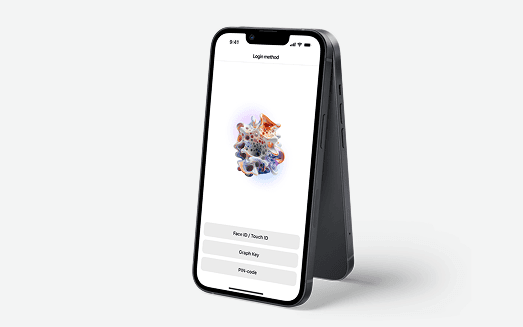
Moving from standard banking with a basic set of functions to a digital bank where everything can be done online.
View case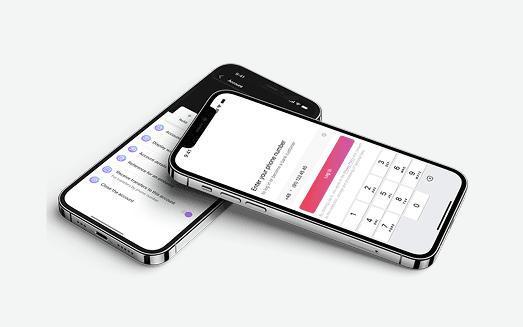
Large-scale migration from a legacy internet banking system to a modern microservices-based architecture, with stronger scalability, security and user experience, while keeping customer trust intact.
View case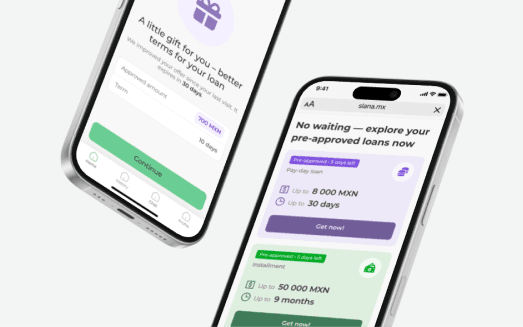
$lana (Monetech), a regulated multi-country consumer credit platform, needed its compliance and data integrations online inside a tight regulatory window. We owned the integration architecture and delivered.
View caseWe've been working with WislaCode since July 2025. What started as enhancing the loyalty program in our GlobalTips guest app grew into a broader partnership where they now handle significant frontend development across our guest app, staff app, and web products.
This was a very task-heavy project, mostly exploration and R&D-driven. However, by the end of WislaCode, we were left with a detailed roadmap consisting of clear milestones - able to be converted into tangible KPIs - and some neat ideas of what actionable are next. Integrating...
We collaborated with WislaCode on a product strategy development project and gave the highest marks for this contractor. The WislaCode team delivered on time and with outstanding quality.
Planning a banking software development programme?
Tell us where the modernisation, integration or channel work sits, and we will map the first phase.