
Configuring push notification servers
Enhance app engagement with WislaCode’s expert Push Notification Server configuration. We ensure fast, secure, and scalable push notification delivery.
Results from work we have shipped
PushMaster is an enterprise-grade push notification server for reliable, multi-channel message delivery across web and mobile.
Shortlisting a software development partner?
The questions to ask in an RFP, three warning signs a vendor may not deliver, and a scoring matrix to compare contractors objectively.
What our push platform work covers?
Every product is different, so a one-size-fits-all approach underperforms. We analyse your architecture and user behaviour, then align the strategy to your objectives - personalised messaging, geo-targeting, event-based triggers, quiet hours, and frequency capping. So notifications add value rather than noise.
A well-configured platform does more than send messages; it drives outcomes. We implement audience segmentation, A/B testing, and data-driven scheduling to lift activation and retention. Lifecycle campaigns (onboarding, re-engagement, churn-risk) are measured with clear KPIs and iterated continuously.
Your push infrastructure must work hand in hand with back-end services. We ensure robust connectivity with CRM, analytics, and databases to enable real-time, user-specific notifications and automated workflows. Observability - metrics, logs, and traces. Keeps delivery transparent and auditable.
Push delivery flaky just when engagement matters?
Give us your volumes and channels and we will scope a push backbone you control.
How we deliver push infrastructure?
The same delivery discipline on every engagement - from the first map to a handover your team runs.
We audit what you have: channels in use, current deliverability and latency, token hygiene, queue behaviour under load, and where engagement tooling stops. The output is a measured baseline and a scoped proposal, so improvement is provable rather than asserted.
We design the target system against explicit numbers - throughput, latency budgets, failover behaviour - and shape it around the constraints that are genuinely yours rather than a reference diagram. Every architectural choice is written down with the trade-off that justified it.
Implementation lands in increments behind tests: pipeline, token management, routing, security controls and dashboards. Before launch we rehearse failure deliberately - platform outages, burst sends, poisoned queues - so the first production incident is not the first time anyone has seen one.
Cutover is gradual and measured, with old and new paths run in parallel until the numbers say switch. Your team takes the system with documentation, runbooks and a working alert-to-action loop - and the option of keeping us on for operations.
What shapes the work
Most products meet push notifications as a checkbox: register a device token, call a send API, watch a banner appear. That holds right up until the business depends on the message. A payment confirmation, a fraud alert, a one-time code, a dispatch update - once a notification carries operational weight, "usually arrives" stops being good enough, and push becomes a distributed system with the same obligations as any other production infrastructure: throughput targets, latency budgets, failure handling and observability.
That is the work this page describes. We design, configure and scale the server side of push: the connections to FCM and APNs, token lifecycles, queues and fan-out, routing across iOS, Android and web, and the controls that keep delivery fast when traffic is not polite. The goal is infrastructure you can state guarantees about - measured deliverability and latency rather than hope - so the engagement mechanics built on top stand on something solid.
The distinction matters commercially as well as technically: notifications that arrive late or twice train users to ignore them, and an ignored channel is expensive to win back.
The client applications this infrastructure serves are built by our mobile app development practice.
The difficulty is that the last mile of delivery runs over channels you do not control. APNs and FCM are black boxes with their own throttling, prioritisation and feedback semantics; tokens expire, devices change hands, users reinstall; and a campaign send can put hours of normal traffic on the wire in seconds. A naive server design works in the demo and degrades silently in production. The failure modes we are hired to remove repeat across industries:
- Stale tokens inflating send counts while real deliverability quietly falls
- Retries without idempotency, so transient errors become duplicate messages
- One slow downstream queue stalling every channel behind it
- Burst sends tripping platform rate limits at the worst moment
- Web, iOS and Android drifting apart in behaviour and measurement
Each of these is preventable with deliberate design - feedback-driven token hygiene, idempotent retries, per-channel queues with backpressure and load-shedding - but none of them is visible until you instrument delivery end to end. That is why we treat observability as part of the delivery path rather than an afterthought: you cannot give a deliverability guarantee on a pipeline you cannot see into.
Architecture arguments are cheap, so we make ours concrete: we designed, built and deployed PushMaster, an enterprise-grade push notification server for reliable multi-channel delivery across web and mobile. Its stack reflects the decisions this kind of system forces. Lightweight Java microservices keep the delivery path simple to reason about and cheap to run. HTTP/
The same reasoning carries into client engagements, whether we deploy PushMaster, configure an orchestration layer over FCM and APNs, or extend infrastructure you already run. Pre-built delivery paths for web and mobile shorten time-to-market; disciplined error handling, retries and observability reduce operational risk; and right-sizing the infrastructure - including cutting SaaS subscriptions the system no longer needs - lowers total cost of ownership without giving up reliability. The architecture is a means to a measurable end: messages delivered fast, at predictable cost, on a platform your team can operate.
The full build is documented in the PushMaster case study.
Push infrastructure work arrives in three usual shapes. The lightest is a configuration engagement: we set up or repair the delivery pipeline you already have - platform credentials, token management, queues, retry policy, dashboards - and leave it measurably faster and observable. The middle shape is a platform deployment, putting a dedicated push backend such as PushMaster in place when routing, tenancy or compliance demands outgrow platform services. The third is ongoing: we operate and tune the system against agreed delivery and engagement targets.
Price follows scope, and scope is set by what already exists and what must change: whether we are repairing a pipeline or standing one up from nothing, how many backend systems feed it, how much engagement tooling - segmentation, scheduling, experimentation - sits inside the engagement, and who operates the result once it is live. We fix those variables in a short scoping exercise that ends in an architecture proposal and an estimate, so the commercial decision is made on specifics rather than a generic day rate.
The platform engineering behind these systems sits with our server-side development practice.
Launch is the midpoint of a push system's life, not the end. From day one in production the questions change: who responds when deliverability dips in one region, who owns the certificate and key calendar, who decides when queue depth justifies more capacity. We answer them with an explicit operating model rather than goodwill - alert thresholds tied to runbooks, a named escalation path, and a review cadence where delivery data turns into engineering decisions.
How much of that your team carries is a choice, not an accident. Some clients take full ownership at handover and run the platform with the operating materials we hand over - written procedures, live monitoring views and tested escalation paths; others keep us on for operation, capacity planning and cost reviews. Both work because the system is built to be operable by people who did not write it - configuration is explicit, behaviour is observable, and every recovery procedure has been rehearsed rather than merely written down.
The engagement layer benefits from the same discipline: segmentation rules, campaign triggers and experiment settings live in version-controlled configuration, so growth teams can iterate on messaging without filing infrastructure tickets.
Working with WislaCode Solutions has been a great experience! We needed an Android SDK developed under a tight timeline, and their team delivered a flexible, user-friendly solution that integrated seamlessly into our ecosystem. Their transparent approach, proactive communication, and commitment to quality made the collaboration smooth...
What is included in a push infrastructure engagement?
Every engagement is scoped as production work: the deliverables below are what a team needs to send, measure and operate push at scale, not a proof of concept. Items are adjusted to your channels and volumes during scoping.
Delivery architecture and channel map covering FCM, APNs and web push, with routing, priorities and regional endpoints agreed before any code is written.
Token lifecycle implementation: registration, refresh, feedback-driven invalidation and identity mapping, so the audience you send to is the audience that exists.
Queueing and fan-out built for bursts, with idempotent retries, backoff, rate limiting and failover that keep duplicates and dropped messages out of production.
Cross-platform feature support specified per channel - silent and background notifications, actionable notifications and localisation - so behaviour stays consistent across iOS, Android and web.
Observability wired end to end - delivery, latency and error dashboards with alert thresholds mapped to runbooks your team can execute.
Separated sandbox and production environments with a controlled release path, so configuration changes are proven on test devices before they touch real users.
A capacity and cost model matched to your message volumes, so scaling decisions and running costs are planned rather than discovered on the first invoice.
The infrastructure lives in your accounts and repositories from day one, and handover is judged by a simple test: your team can operate, extend and audit the system without us in the room.
What’s included in push notification server configuration services?
We design and deploy your push infrastructure, covering FCM/APNs setup, VAPID keys, token management, queues, retries, load balancing and failover. We define priorities, collapse keys and TTLs, add encryption and authentication, and wire observability for metrics, logs and traces. You get documentation, runbooks and dashboards so your team can operate confidently and iterate without guesswork.
Should we use FCM/APNs only, or build our own push infrastructure on top?
For many products, platform services are enough when coupled with a well-designed orchestration layer. A dedicated push backend adds value if you need multi-tenant controls, advanced routing, strict compliance, or vendor cost control. We assess volumes, latency targets, regulatory needs and team capacity, then recommend the simplest solution that meets your goals and budget.
How do you ensure secure and compliant push notifications?
We encrypt traffic, rotate certificates and keys, and enforce least-privilege access. Payloads avoid sensitive content, where required, we send tokens that fetch secure data on open. Audit logs capture changes and delivery events. We respect consent, quiet hours, and opt-out rules, and implement policy-based exclusions for data residency and retention to support compliance audits.
How do you achieve low latency and high throughput under load?
We tune queues, batch where appropriate, and use HTTP/2 multiplexing for efficiency. Regional routing reduces round-trip time; connection pooling and keep-alives prevent slow starts. Rate limiting protects upstreams, while retries with exponential backoff handle transient errors. Load tests validate capacity, and autoscaling policies keep performance stable during traffic spikes.
Can you integrate iOS, Android, and web push with our CRM and analytics?
Yes. We unify device tokens and user identities, map segments from your CRM, and stream events to analytics. Webhooks and APIs keep data fresh in near real time. We mirror preferences and consent across systems and expose delivery/open/conversion metrics by channel, campaign, and segment to guide optimisation without breaking existing workflows.
Do you offer a custom strategy to improve engagement without spamming users?
We create a data-driven plan: audience segmentation, lifecycle campaigns, frequency caps, quiet hours and fallback channels. A/B tests refine copy and timing; holdout groups prove uplift. Preference centres give users control. We optimise for business KPIs - activation, retention and conversion. So notifications add value and reduce churn rather than inflate send volumes.
What KPIs and diagnostics do you monitor post-launch?
Core metrics include deliverability, end-to-end latency, opens, conversions, opt-out, and fatigue indicators. We also track retries, error codes, token expiry, queue depth, and regional performance. Dashboards surface anomalies, alerts trigger runbooks for rapid response. Regular reviews translate insights into backlog items - improving routing, content, timing, and infrastructure efficiency sprint by sprint.
How long does it take to set up a push notification server?
It depends on the engagement shape. Configuring and hardening a delivery pipeline over FCM and APNs is a much shorter exercise than standing up a dedicated platform - PushMaster, our own enterprise-grade push server, took six months to develop. The honest drivers are channel count, integration depth with your backend and CRM, compliance requirements and the amount of engagement tooling in scope. Scoping fixes the timeline before work begins.
Can you take over an existing push setup or migrate us off a SaaS provider?
Yes, and it is a common starting point. We begin with a measured audit of the current setup, migrate device tokens and user identities where the platforms allow, run the old and new paths in parallel, and cut over only when measured deliverability matches or beats your baseline. Reducing vendor spend is often the motive; we quantify the saving during the audit rather than promising it upfront.
Does configuring a push server require changes to our apps?
Usually very little. The bulk of the work is server-side: platform connections, queues, routing, security and observability. App-side involvement is typically limited to token registration, notification handling and consent capture, which we coordinate with whoever owns your app codebase. Where deeper changes help - actionable or silent notifications, richer analytics events - we specify them precisely so your app team can ship them as normal releases.
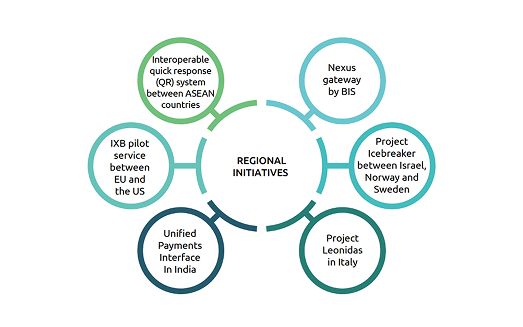
A strategy for a fintech product's market entry and growth, delivering the architecture, technology and investment plan, with a roadmap for the analysed markets.
View case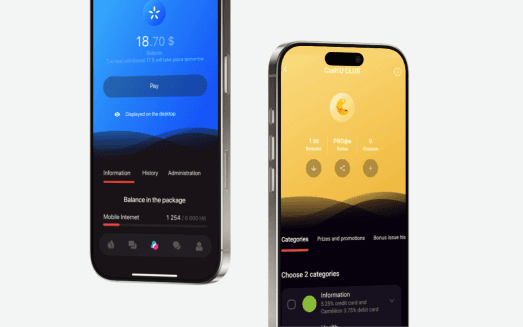
A consumer banking super app in a regulated market had to launch at scale inside a fixed regulatory and competitive window. We owned the integration architecture and mobile delivery.
View case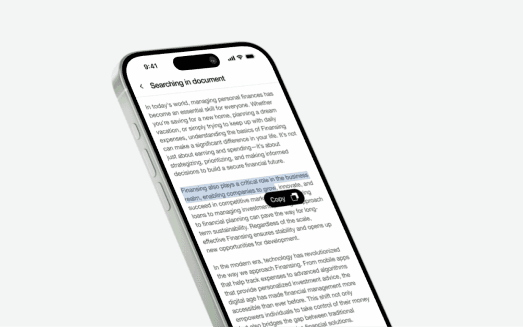
WislaSearch is an AI-powered search assistant that centralises fragmented data, indexes and retrieves the right information instantly, and keeps everything inside your own secure infrastructure.
View caseWe've been working with WislaCode since July 2025. What started as enhancing the loyalty program in our GlobalTips guest app grew into a broader partnership where they now handle significant frontend development across our guest app, staff app, and web products.
This was a very task-heavy project, mostly exploration and R&D-driven. However, by the end of WislaCode, we were left with a detailed roadmap consisting of clear milestones - able to be converted into tangible KPIs - and some neat ideas of what actionable are next. Integrating...
We collaborated with WislaCode on a product strategy development project and gave the highest marks for this contractor. The WislaCode team delivered on time and with outstanding quality.
Want push infrastructure that you own outright?
Share the platforms and the message load and we will plan the server, scaling included.