
Server-side development
Server-Side Development - IT services for financial and banking. Web and Mobile App Development by WislaCode Solutions
Results from work we have shipped
PushMaster is an enterprise-grade push notification server for reliable, multi-channel message delivery across web and mobile.
Shortlisting a software development partner?
The questions to ask in an RFP, three warning signs a vendor may not deliver, and a scoring matrix to compare contractors objectively.
What our server-side work delivers?
We specialise in PHP, ASP, ASP.NET, and other leading technologies to meet diverse project requirements. Our mastery of both open-source and proprietary stacks enables tailored backend development services that integrate third-party APIs and extend functionality.
Our expertise in industry-standard frameworks underpins performance, scalability, and reliability. By using optimised code, scalable architecture, and best practices, we reduce time to market and improve maintainability.
We include you at every stage - from planning to execution. This keeps things clear and aligned with your goals. Our team teaches stakeholders, gives regular updates, and manages server-side hosting smoothly.
With optimised database design and real-time data synchronisation, our solutions improve application performance and security. We implement advanced data modelling and indexing strategies to meet complex requirements and growth.
Backend struggling before the product even scales?
Tell us the load profile and the integrations and we will scope APIs, queues and data layers.
How we deliver server-side systems?
The same delivery discipline on every engagement - from the first map to a handover your team runs.
We start by mapping what the system must guarantee: the domain model, the integrations, the load profile and the consistency rules money or data must obey. The output is a written scope with non-functional requirements treated as requirements, not footnotes.
We design the service boundaries, the API contracts, the data model and the asynchronous flows before code is written. Decisions are recorded with their reasoning, so when the system evolves your team knows what can change safely and what cannot.
Delivery runs in short iterations that each produce a working, tested slice of the system - endpoint, data layer and queue processing together. You see real behaviour early, and load and failure testing happens throughout the build, not in a final hardening phase.
We hand over a system in production, not a codebase in a repository: deployed, monitored, documented and already carrying traffic. Your engineers are involved through the build, so the handover is a transfer of ownership, not a knowledge dump at the end.
What shapes the work
A backend is a set of promises: that a balance reconciles, that a message is delivered exactly once, that a request arriving twice charges the customer once. The server side is where those promises are kept or broken - in the data model, the queues and the contracts between services. Teams come to us when that layer has become the constraint: features take longer every quarter, the same incidents repeat, and every new integration makes the next one harder.
Most of our server-side work is for financial and banking products, where the backend is not allowed to be approximately right. We design the API surface, the data structures beneath it and the asynchronous machinery between them as one system, because that is how they fail: a clean API over a weak data model still loses money, just more politely.
That focus is deliberate. This page covers the backend craft itself - the contracts, the storage, the queues and the behaviour under load - and stops where the user interface begins.
For the interface layer on top of these services, see web frontend development.
Most backend failures are not bugs in the usual sense. The code does what it says; the system around it does something else. A payment provider responds after your timeout and the retry creates a second transfer. A consumer falls behind and the queue quietly grows for a week. A schema migration locks a table at peak hour. None of these appear in a code review, because each one lives in the gap between components, not inside any of them.
We treat these gaps as first-class design work, and we write the answers down before build starts. A written answer can be reviewed, tested against and re-examined when the load profile changes; an assumption in someone's head can do none of those things. Every service boundary gets an explicit answer to four questions:
- What happens when this call is retried
- What happens when the downstream system is slow or unavailable
- What order can these events legitimately arrive in
- How does this data change shape without downtime
Synchronous calls are easy to reason about and easy to topple: one slow dependency and the whole request path queues behind it. Moving work onto queues and events buys you backpressure, replay and independence between components - and charges you for it in duplicates, reordering and eventual consistency. The engineering judgement is knowing which price to pay where. Our default is conservative: synchronous for reads and anything the user is waiting on, asynchronous for fan-out, third-party calls and any work that can be retried.
We have built this machinery end to end. PushMaster, an enterprise-grade push notification server we developed, exists to do one thing well: reliable, multi-channel message delivery across web and mobile, where losing or duplicating a message is the failure that matters. It runs on Java, HTTP/
To see this discipline carried through a complete product, read the PushMaster case.
Server-side work prices off three things: how much of the domain we own, how demanding the non-functional requirements are, and how many external systems the backend must talk to. A scoped build with agreed throughput and availability targets is priced as a deliverable; ongoing platform work runs as a dedicated team with a monthly cadence. Before committing to either number we ask for the load profile - a reliability target priced blind is a guess dressed up as a commitment.
That pattern has history. The $lana (Monetech) lending product reached us as a high-level concept for a payday loan system; what needed pricing was not a feature list but the server-side services to run it. We built those services beneath the application, and the first release went live in five months on a backend designed for reliability and easy evolution.
Transparency is part of the price. You see the backlog, the burn and the risks as we see them. Mikhail Krasnov, Executive Chairman of Verysell Group, credits us with transparency, on-time delivery and outstanding quality across multiple projects - across, not within, because the second project is where working style actually shows.
A backend is judged in its second year, not its first month. The questions that matter then: can your team change it without fear, does capacity grow with usage rather than with panic, and is the reasoning behind the architecture on record or did it leave with its authors. We set those answers up during the build - decision records for the architecture, runbooks for the operations, and service-level objectives agreed in plain numbers your business side can hold us to.
After launch, the engagement can take whichever shape your team needs: we hand the system over fully and step back to an advisory line, keep a small team on evolution while your engineers take operations, or run the service for you with an agreed response and release cadence. The measure of a good handover is that your engineers can ship a release without anyone from our side in the room.
One boundary worth naming: we are describing the backend craft here, not the cloud platform it runs on. Multi-tenancy, elasticity and infrastructure economics are a separate architecture conversation.
For that side of the platform, see cloud-native SaaS development.
We collaborated with WislaCode on a product strategy development project and gave the highest marks for this contractor. The WislaCode team delivered on time and with outstanding quality. I want to mention the team's transparency while running the project - everything was trackable, visible and manageable.
What is included in a server-side engagement?
Server-side work is defined by what the system must guarantee, not by a feature list. Whether we build your backend from scratch or extend an existing one, these are the deliverables and disciplines the work includes.
Domain and API design workshops that turn business rules into an agreed service contract before any endpoint is written.
A data model and migration plan covering schema design, indexing, retention and the path from your current store without downtime.
Asynchronous processing design - queues, events and scheduled jobs - with idempotency, ordering and retry semantics written down, not assumed.
An automated test suite spanning unit, contract and load tests, wired into CI so every change proves itself before release.
Observability from the first deploy: structured logs, metrics, traces and alerting tied to the service levels we agree with you.
Threat modelling at the design stage, so abuse cases and data-exposure paths are closed in the architecture rather than patched after a penetration test.
Runbooks, architecture records and a structured handover plan so operations, debugging and further development can sit fully with your team.
Everything is yours at handover: the repositories, the infrastructure definitions, the test suites and the documentation. There is no dependency on us that you have not chosen to keep.
How should we choose between a monolith and microservices?
We start with domain boundaries, team structure, release cadence, and non‑functional needs. A well‑structured monolith often ships faster and is simpler to operate early on. Microservices suit independently evolving capabilities or specific scale and isolation requirements. We take an evolutionary approach. First, we clarify boundaries in a modular monolith. Then, we extract services when the benefits of operation or scaling clearly outweigh the costs.
How do you secure the backend and meet compliance requirements?
Security is built in. This includes: Least-privilege access, encryption in transit and at rest, secrets management, strict input validation. We implement audit logging, change tracking, and incident runbooks. Data residency, retention, and access policies apply at both the storage and API layers. We align with frameworks like OWASP ASVS. We also support audits using documentation and evidence from CI, testing, and observability.
What’s your approach to API development and versioning?
We design APIs around clear resource models and error contracts, with pagination, filtering, and rate limits defined upfront. OpenAPI specs drive documentation and client generation. Developers prefer backward-compatible changes; they release breaking changes under new versions with deprecation timelines and monitoring. This keeps integrations stable while allowing the platform to evolve predictably.
Which databases do you use, and how do you decide between SQL and NoSQL?
Choice follows data shape, consistency needs, and access patterns. We usually use PostgreSQL or SQL Server for tasks that need strong consistency and complex queries. NoSQL options suit high-throughput, schemaless or document-centric use cases. We focus on modelling, indexing, connection management, and backups first - technology comes second to clarity of requirements and operational simplicity.
Can you integrate with our existing systems (CRM/ERP, payments, messaging)?
Yes. We develop adapters or use proven connectors, ensuring authentication, idempotency, and observability are consistent. We prefer event-driven syncing where appropriate to reduce coupling and keep data fresh. Contract tests protect against provider changes, and phased rollouts with canary traffic reduce risk during deployment.
How do you ensure performance and reliability at scale?
We profile end-to-end, then address the fundamentals: efficient queries, caching, batching and asynchronous work for slow operations. Timeouts, retries and circuit breakers handle downstream issues gracefully. Load tests validate capacity and inform autoscaling. In production, dashboards track latency, error rates and saturation so we can spot regressions early and tune before users feel pain.
Can we hire backend developers to augment our team instead of a full project?
Absolutely. You can hire backend developers or a dedicated squad to work within your tooling, standards, and CI/CD. We agree on common KPIs, align our coding practices, and share documentation and handover. This gives you immediate capacity with low onboarding friction while preserving internal ownership of the roadmap.
What does server-side development cost, and what drives the price?
There is no meaningful per-project figure without a scope, so we do not quote one. The price drivers are consistent: how much of the domain we build versus extend, the throughput and availability targets the system must meet, the number and maturity of external integrations, and the compliance evidence required around the data. Scoping converts those drivers into a costed plan whose assumptions are explicit - including which ones, if wrong, change the number.
How long does a server-side build take?
Scope sets the timeline, but two reference points from our own delivery are useful. The first release of the $lana (Monetech) lending backend shipped in five months; PushMaster, our enterprise push notification server, took six months to build. In practice the schedule moves less on code volume than on third-party lead times, data migration and the depth of load testing the launch demands - all of which the scoping step surfaces before we commit to dates.
Can you take over an existing backend rather than build from scratch?
Yes, and it is common. We start with a short audit of the things that make change safe: test coverage, observability, the deployment path and the state of the data model. The first weeks go into stabilising those rather than adding features, because every later change is priced by them. From there we extend incrementally - we do not recommend big-bang rewrites, and we will say so if one is being considered for the wrong reasons.
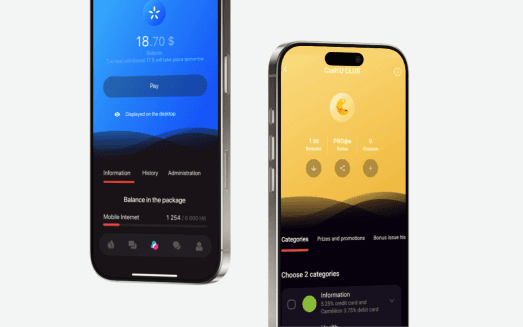
A consumer banking super app in a regulated market had to launch at scale inside a fixed regulatory and competitive window. We owned the integration architecture and mobile delivery.
View case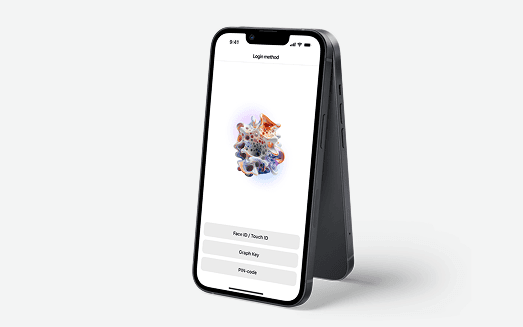
Moving from standard banking with a basic set of functions to a digital bank where everything can be done online.
View case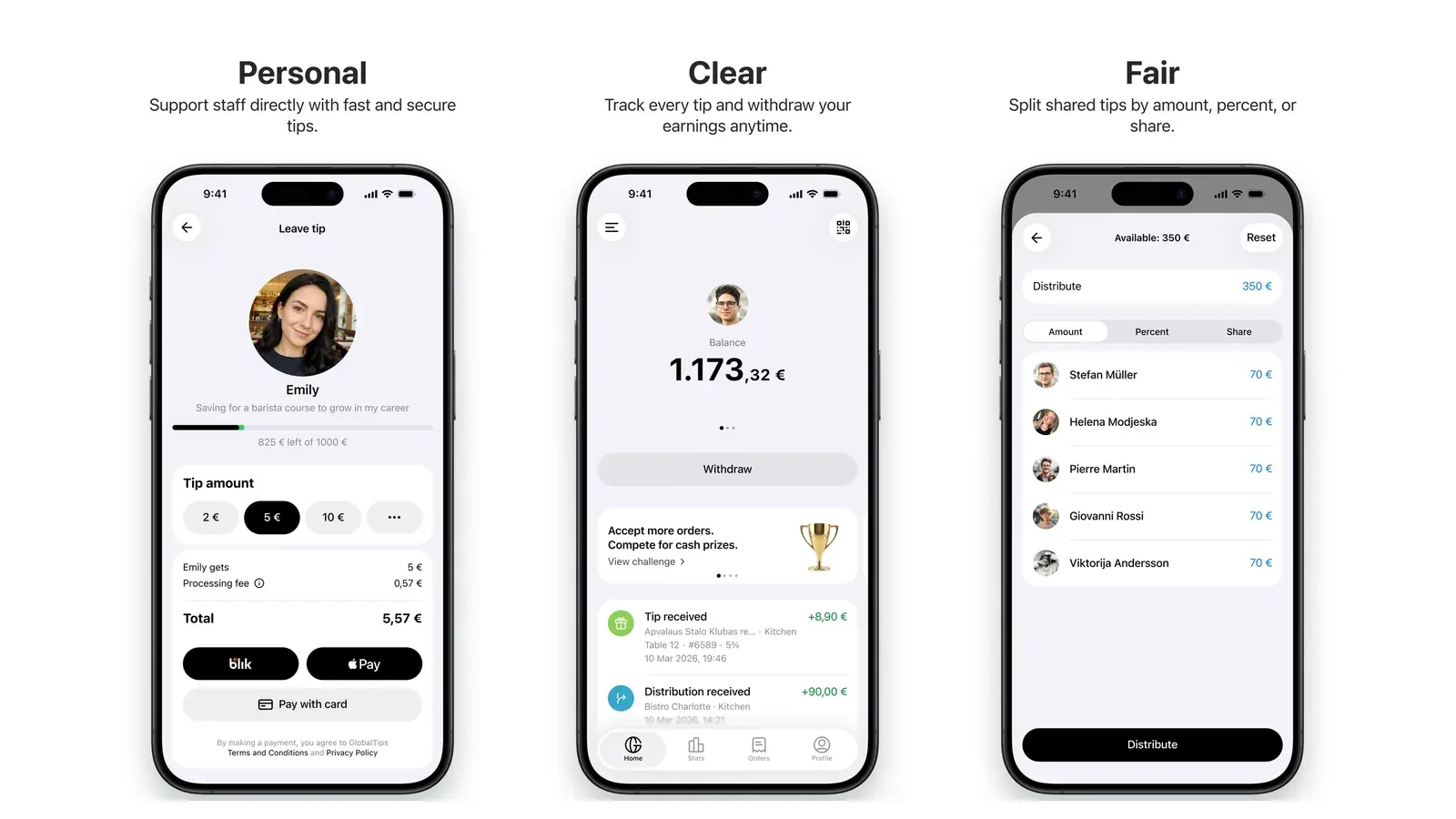
GlobalTips called us in for one feature in their guest app. After 14 monthly cycles, we now build across their guest app, staff app and web products, and BLIK carries about 15% of their payments in Poland.
View caseWe've been working with WislaCode since July 2025. What started as enhancing the loyalty program in our GlobalTips guest app grew into a broader partnership where they now handle significant frontend development across our guest app, staff app, and web products.
This was a very task-heavy project, mostly exploration and R&D-driven. However, by the end of WislaCode, we were left with a detailed roadmap consisting of clear milestones - able to be converted into tangible KPIs - and some neat ideas of what actionable are next. Integrating...
We collaborated with WislaCode on a route-to-market optimisation project. Working with WislaCode was effective, transparent and predictable, which is especially critical for AI and ML projects. We provided them with six months of anonymised data, and within just three weeks...
Need server-side engineering that holds under load?
Outline the traffic you expect and we will plan the architecture and the reliability work.