
API integration services
Custom API integration for B2B fintech, banking, payments and lending platforms. We design the integration, build it inside your stack, and hand it back tested and documented.
Results from work we have shipped
Shortlisting a software development partner?
The questions to ask in an RFP, three warning signs a vendor may not deliver, and a scoring matrix to compare contractors objectively.
What we connect
Onboarding that talks to one or several providers, with verification logic, fallback and re-runs when documents change. We have integrated two KYC providers with facial and document recognition on a single regulated lending flow.
Authorisation, capture, settlement, refunds and dispute messaging, plus the reconciliation feed that closes the loop with your ledger. Built so a retry never creates a duplicate payment.
Aggregation, consent management, account and transaction retrieval, and refresh logic that survives bank-side change. The integration keeps working when the provider quietly alters a field.
Credit bureau calls, soft and hard searches, decision logging and the audit trail your compliance team will be asked for. Every decision is reproducible after the fact.
The enterprise API your platform has to consume to get a signed deal into production. We read the documentation, then verify it against the real sandbox, because the two rarely match.
Extensions and orchestration so the integration runs through your core, not around it. The new connection becomes part of the platform, not a script bolted to the side.
One integration in the way? Let us map it.
Tell us which provider, partner or client connection is blocking the deal.
How we deliver an API integration?
The same delivery discipline on every engagement - from the first map to a handover your team runs.
We map your platform, the counterparty, the data flows, the authentication and the go-live risks, then write a one-page scope you can challenge. The map is where most integration risk is found, before any code is written.
We ship the adapter, the data mapping, the retry and error handling, the logging and the automated tests inside your repositories and your continuous integration. Nothing lives in a separate vendor environment.
We test against the real provider in a sandbox, get the data mapping signed off by both sides, and confirm the integration behaves under failure, not only on the happy path. Reconciliation is agreed here, not after launch.
Source code, a runbook, monitoring on the integration's own alerts, and documentation. Your engineers run it without us when we leave, and they have the tests to change it safely later.
What shapes the work
A new provider, partner or client becomes revenue only when the API integration runs in production, mapped to your data model and accepted by the counterparty. Until then the deal sits in a backlog and the account waits, while the sales team explains the delay.
Most of this work is in the regulated layer: KYC, payment gateways, credit bureaus, open banking, lending and reporting, and the partner APIs between a platform and its enterprise clients. The shape changes from one integration to the next. The unit of delivery does not change: one working API integration, owned end to end.
Pulling your own engineers onto that work is expensive in a way that does not show up on an invoice. They come off the product roadmap, the feature they were building slips, and the integration still competes with everything else for their attention. We take the integration as a whole piece of work so your team stays on the roadmap.
A successful HTTP call is not a finished integration. In a regulated flow, the difference shows up when the counterparty changes, when a call fails halfway, and when an auditor asks what happened six months later.
Every integration we deliver includes:
- Idempotent operations, so a retry never creates a duplicate payment or a duplicate customer.
- Retry, backoff and circuit-breaker behaviour for transient counterparty failures.
- Structured logging and correlation IDs, so support can trace one transaction across providers.
- Schema validation on every payload, with clear errors when a contract drifts.
- Monitoring on the integration's own targets, separate from generic infrastructure alerts.
- A runbook your operations team can read at three in the morning, not a wiki page nobody updates.
When one connection is the blocker, the integration unblock sprint takes it from stuck to live in weeks. When the next ten integrations look alike, the reusable integration layer makes each one cheaper than the last. For the platform around the integrations, see financial software development.
Most fintech provider integrations are REST with webhooks, and we add idempotency keys, signed-webhook verification and retry semantics as a baseline rather than an option. Where a counterparty exposes gRPC or a streaming interface, we use it when the latency budget needs it.
Behind the connection, we lean on message queues and event streams so a slow provider cannot back-pressure your core flows. And we treat the long tail of file-based exchange, ISO 20022, SWIFT messages and scheduled file drops, as a first-class integration with the same monitoring and audit trail as a live API, because in banking those formats are not going away.
Most integration work is bought in one of three shapes, and we will tell you which fits on the first call. A single connection with a clear specification and stable counterparty access is usually a fixed-price piece, scoped and quoted against a defined acceptance test, so you know the cost and the finish line before we start.
Where the scope is still moving, a discovery phase on time and material is the honest answer. Provider documentation is often wrong, sandbox behaviour rarely matches production, and a short paid discovery surfaces those gaps before they become a fixed-price dispute. We convert to a fixed scope once the unknowns are closed.
When the goal is not one connection but a repeatable capability, an outcome-based engagement around the reusable integration layer ties the commercial terms to integrations shipped rather than hours billed. Whichever shape you pick, the integration code, tests and runbooks land in your repositories, so you are never tied to us to run what we built.
For the consolidation shape, see payment platform consolidation.
Not every integration is greenfield. Some of the most consequential integration work is replacing a provider that is being retired, repriced or has become a risk - a KYC vendor, a payment gateway, a credit data source - while the flows it serves keep running. The new adapter is the easy part. The hard part is moving live traffic across without losing a transaction, a consent or an onboarding that is mid-flight. We treat a provider switch as a migration, not a rebuild:
- Parallel running, with the old and new integrations processing the same traffic and their outputs reconciled.
- Phased cutover in slices, so a fault touches a fraction of volume.
- A rehearsed rollback path, so reverting is a routine action rather than an incident.
- Decommissioning in scope: the old adapter, its credentials and its monitoring removed, not left behind.
The end state matters as much as the cutover. You finish with one integration where there used to be two, a reconciliation both sides have signed off, and no dormant credentials or half-retired code waiting to surprise the next audit. Done properly, the only people who know the switch happened are the ones who planned it.
In a regulated platform, the vendor is part of the attack surface, and your security team is right to treat us that way. We expect to be onboarded through your access process, not around it: named individuals, least-privilege accounts issued by you, your devices or your virtual environment where policy requires it, and access that you can revoke in one step the day the engagement ends.
Integration work touches real customer data only where it must, and by default it does not. Development and testing run on masked or synthetic data; production personal data stays in production, behind your controls. When a defect can only be reproduced with live data, the investigation happens inside your environment, under your access policy, and is logged like any other production access.
Everything we change reaches production through your review and release process, so the audit trail of who changed what is the same one your own team produces. When we leave, offboarding is part of the handover: accounts closed, credentials rotated, and nothing of yours retained on our side. Your compliance team can vet that arrangement before kick-off - we would rather have the conversation first than mid-build.
On the compliance questions a regulated buyer's procurement asks, in short:
- DORA: where it applies to your scope, we support the outsourcing register entry, the audit and exit clauses, and the exit drills run before any switch-over.
- PCI DSS: the certification is the platform's, not ours - we build to keep your PCI scope tight and flag the boundaries early, so an integration never puts your certification at risk.
- Subprocessors: we work inside your environment on accounts you issue, so we do not introduce our own subprocessors for your data.
Working with WislaCode Solutions has been a great experience! We needed an Android SDK developed under a tight timeline, and their team delivered a flexible, user-friendly solution that integrated seamlessly into our ecosystem. Their transparent approach, proactive communication, and commitment to quality made the collaboration smooth...
What is included in an integration engagement
An integration engagement buys a production capability, not a set of working endpoints. Beyond the adapter itself, the scope covers the disciplines that keep a regulated connection alive after go-live: tests, monitoring, runbooks and a real handover.
An integration map and a one-page scope covering data flows, authentication and go-live risks, agreed before any adapter code is written.
The adapter, data mapping and automated tests delivered inside your repositories and your continuous integration, with credentials held in your secrets store, never in code.
Idempotent operations with retry, backoff and circuit-breaker behaviour, so a transient counterparty failure never becomes a duplicate payment or a duplicate customer.
Schema validation on every inbound and outbound payload, so contract drift from a provider fails loudly instead of passing bad data downstream.
Structured logging with correlation IDs, so support can trace a single transaction across your platform and every provider it touched.
Monitoring and alerting on the integration's own targets, separate from generic infrastructure dashboards, so the on-call engineer sees the failure that matters.
Counterparty acceptance against the real sandbox, with the data mapping signed off by both sides and reconciliation agreed before launch, not after.
Everything above lands in your repositories and your cloud at handover - source code, tests, runbook and monitoring - so your engineers run and extend the integration without us. There is no black box.
What do custom API integration services include?
End-to-end design and delivery: mapping, architecture, build, automated tests, retry and error handling, monitoring, a runbook, acceptance with the counterparty, and a documented handover. We work in your repositories and your cloud, so what we leave behind is something your engineers can run alone.
How long does a typical API integration take?
A single-counterparty integration usually lands in 4 to 6 weeks when scope and access are clear at kick-off. Multi-provider programmes run longer. For $lana (Monetech) the first release, covering two KYC providers and recognition systems, took 5 months, followed by weekly releases.
Do you work in our environment or yours?
Yours. Your repositories, your continuous integration, your cloud. The integration is built where it will live in production, not in a separate vendor environment your team has to absorb later.
How do you handle credentials and authentication?
Credentials live in your secrets store, never in code or logs. Authentication uses whatever the counterparty supports, whether OAuth, mutual TLS or a signed token, set up so rotation is routine. Access logs reflect the integration's own identity, not a shared account.
What happens when a provider changes its API?
Schema validation catches the drift and the integration fails loudly with a clear error, rather than silently passing bad data downstream. Because the adapter is isolated, the change is contained to one place, and the automated tests tell your team what broke and where.
Can you work alongside our own engineers?
Yes. A small squad sits inside your tools and reports against your metrics. Your engineers stay close to the integration from day one, which is what makes the handover real rather than a document nobody can act on.
How should we vet a partner for a mission-critical integration?
Ask about the failure behaviour before the happy path: what happens on a timeout, a partial write, a duplicate callback, a schema change or a provider outage, and how each of those is detected rather than discovered. Ask who holds the counterparty credentials, what the audit trail records, and whether the test suite runs against a sandbox your own team can also run. For an EU financial institution the answer has to survive a supervisor's question too, because a payment or data connection is an ICT third-party arrangement under DORA, Regulation (EU) 2022/2554, entered in the Article 28(3) register of information and carrying the documented, tested exit required by Articles 28 to 30.
Is a ready-made integration platform enough, or does this need a custom build?
An integration platform earns its place where the connections are standard, the volumes are modest and nobody will have to explain a single failed transaction. Regulated financial connections are usually the other case: bespoke authentication, idempotency and reconciliation rules, error semantics the counterparty defined years ago, and an audit trail that has to hold up long afterwards. We have built both and will tell you when the platform is the cheaper answer, because a custom adapter you did not need is an ongoing cost rather than a deliverable.
How is this different from your Solutions engagements?
This page is the service for buyers comparing API integration vendors. The Solutions pages are named engagements for a specific moment: an unblock sprint for one blocked integration, a reusable layer for a pattern across many, and payment platform consolidation after an acquisition. Same delivery team, scoped differently.
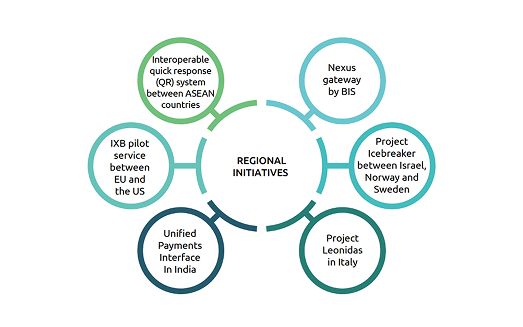
A strategy for a fintech product's market entry and growth, delivering the architecture, technology and investment plan, with a roadmap for the analysed markets.
View case
payabl., an EU-regulated merchant acquirer, had a payment SDK gap holding up merchant onboarding. We designed and shipped it inside a single sprint cycle.
View case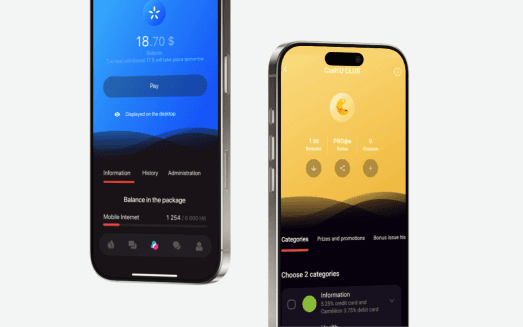
A consumer banking super app in a regulated market had to launch at scale inside a fixed regulatory and competitive window. We owned the integration architecture and mobile delivery.
View caseWe've been working with WislaCode since July 2025. What started as enhancing the loyalty program in our GlobalTips guest app grew into a broader partnership where they now handle significant frontend development across our guest app, staff app, and web products.
This was a very task-heavy project, mostly exploration and R&D-driven. However, by the end of WislaCode, we were left with a detailed roadmap consisting of clear milestones - able to be converted into tangible KPIs - and some neat ideas of what actionable are next. Integrating...
We collaborated with WislaCode on a product strategy development project and gave the highest marks for this contractor. The WislaCode team delivered on time and with outstanding quality.
Have an API integration blocking revenue?
Tell us which provider, partner or client connection is in the way.