


Open banking is reshaping finance. For banks it brings real opportunities and real pressure, and the way you build software decides which one wins.
Open banking strategies for banks to stay competitive
Banks can play one of four roles in open banking: platform provider, product provider, service provider or data provider. Each fits a different goal. The platform provider role has the most upside, because it can put the bank at the centre of the ecosystem.
In that model the bank exposes APIs to third-party developers. Done well, it widens what you offer and deepens customer engagement. The key is to build APIs that are secure, adaptable and able to scale.
Open banking APIs: powering financial innovation through third-party integrations
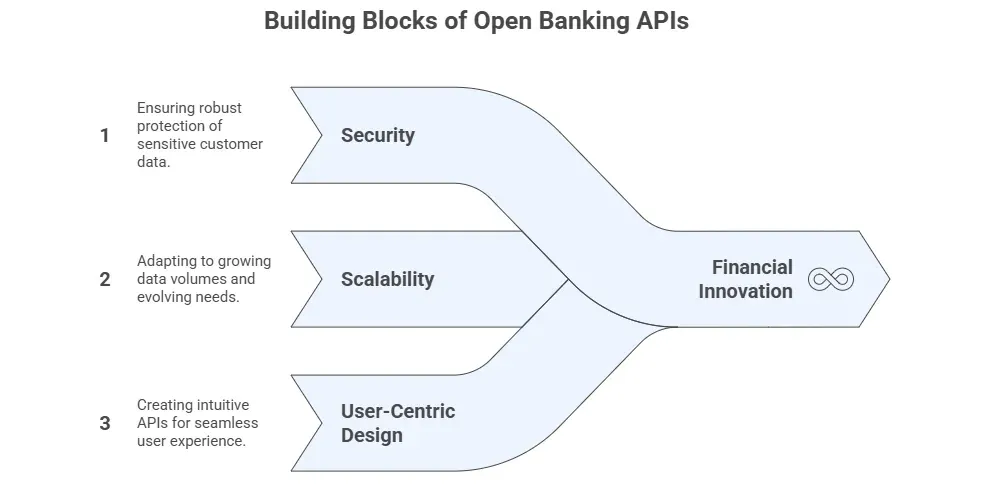
APIs are the base of open banking. They let you share data securely with approved third parties and connect services for the customer. To get the most from them, focus on three things:
- Security first: protecting customer data comes before anything else.
- Scalability and adaptability: APIs must handle more data and change as needs change.
- Design for the user: make APIs easy for both developers and end users, so integration is smooth.
Get these right and open banking APIs become a real driver of growth.
Benefits of API integration in open banking
- Wider offering: connect to third-party services to sell a broader range of products.
- Stronger engagement: give customers many services through one trusted app.
- Faster innovation: launch new services and adapt to the market using API-driven ecosystems.
Banking mobile apps are WislaCode’s speciality
Let’s start the conversation and develop your own effective banking mobile app.
Data privacy in open banking: safeguarding trust and ensuring compliance
Data privacy sits at the centre of open banking. Trust depends on how well you protect customer data. Three principles matter:
- Transparency and control: tell customers plainly how their data is used, and let them manage sharing easily.
- Data minimisation: share only what a request needs, and no more.
- Strong security: use encryption, anonymisation and secure storage to protect customer data.
Compliance requirements
Regulation is part of any open banking build. GDPR, PSD2 and CCPA all apply, and meeting them protects both customers and the bank from penalties.
Regulation
- GDPR (Europe): requires customer consent, data minimisation and transparent processing.
- PSD2 (Europe): enforces strong customer authentication and secure links with third-party providers.
- CCPA (California): focuses on customer data rights and clear disclosure of how data is used.
Few successful projects of WislaCode


Microservices architecture
Moving from a monolith to microservices lets banks scale and manage systems more easily. Each function runs on its own, so a problem or an update in one part of the API does not break the rest. That means better reliability and faster response times.
API-first approach
An API-first approach is essential for open banking, because it lets services exchange data cleanly. By putting APIs first in development, banks can:
- Scale: APIs are built to handle rising demand as the ecosystem grows.
- Stay reliable: services connect directly, without a central data exchange.
- Stay flexible: a change to one API service does not disrupt the rest.
DevOps culture
A DevOps approach, built on continuous integration and continuous deployment (CI/
Benefits of DevOps in open banking
- Faster updates: CI/
CD pipelines ship frequent, reliable updates. - Better security: continuous monitoring and testing catch weaknesses early.
- Better teamwork: DevOps makes cross-functional teams more efficient.
Data governance: a pillar of open banking success
Data governance keeps data accurate, secure and compliant.
Principles of effective data governance
- Data integrity: keep data accurate, complete and reliable.
- Access and usability: allow authorised access while blocking unauthorised access.
- Data-driven insight: use analytics to understand customer behaviour and preferences.
Key data governance strategies for banks
- Central data management: unify data across platforms for consistency and less duplication.
- Automated compliance monitoring: catch non-compliant actions in real time.
- Audit trails: track data access and changes for accountability.
By getting the basics right - trust, data management, secure APIs and compliance - banks can handle the demands of open banking and lead the market.
What are open banking frameworks and why are they important for financial institutions?
Open banking frameworks provide the structure and standards that enable banks to share data securely with authorised third parties. By adopting these frameworks, financial institutions can foster innovation, improve customer experiences, and remain competitive in a rapidly evolving financial landscape.
How do financial data sharing platforms benefit both banks and their customers?
Financial data sharing platforms allow banks to connect with fintechs and other service providers, offering customers a wider range of tailored financial products. This connectivity leads to more personalised services, greater transparency, and increased convenience for end users.
What is the role of third-party banking integrations in open banking?
Third-party banking integrations enable external providers to access banking services and data through secure APIs. These integrations drive the development of new financial solutions, streamline processes, and help banks expand their service offerings without building everything in-house.
Why is secure API authentication essential in open banking environments?
Secure API authentication ensures that only authorised parties can access sensitive financial data. By implementing robust authentication protocols, banks can protect customer information, prevent unauthorised access, and maintain trust in open banking ecosystems.
How do banks achieve regulatory compliance in open banking?
Banks achieve regulatory compliance in open banking by adhering to standards such as GDPR and PSD2, which set requirements for data protection, consent management, and secure communications. Compliance not only avoids legal penalties but also builds customer confidence in the bank’s commitment to privacy and security.
What measures support customer data privacy in open banking initiatives?
Customer data privacy is safeguarded through transparent data usage policies, strong encryption, and giving users control over their data-sharing preferences. These measures help ensure that personal information is handled responsibly and in line with regulatory expectations.
How does an API-first development approach enhance real-time payment processing?
An API-first development approach prioritises the creation of flexible, scalable interfaces that support real-time payment processing and seamless integration with other services. This strategy enables banks to respond quickly to market changes, deliver instant transactions, and continuously improve their digital offerings.