
Payment solutions development
Payment solutions development for fintech and banking platforms: acceptance across the counter, the browser and the wallet, the provider integration behind it, and money that reconciles.
Results from work we have shipped
Looking for features that keep users coming back?
40+ features we have shipped in banking and fintech apps – from instant onboarding and QR payments to savings mechanics and tools for sole traders.
Payment capabilities we build
Payment middleware and SDKs on the terminal itself, for businesses that take money in person as well as online.
See the serviceCheckout and in-app payment flows across cards, wallets and the local methods a market actually uses, behind one internal payment interface.
Authorisation, capture, refunds and chargebacks against your PSP or acquirer, with the settlement side wired in rather than left to finance.
See the service Routing across providersSmart routing, cascading and failover when one provider is no longer enough - availability and economics both.
See the serviceCard data kept out of your systems wherever the architecture allows, so your compliance scope stays as small as it can be.
Settlement files parsed, matched to your transactions and posted to your ledger, with a break report a human can act on.
Money going out as well as in - payouts, refunds and disbursement flows with the same state discipline as acceptance.
Need payments accepted, settled and reconciled properly?
Send us the flow and the markets. We will tell you what the build really involves, and where it usually breaks.
How we deliver payment solutions?
The same delivery discipline on every engagement - from the first map to a handover your team runs.
Every state a payment can reach, who owns it, what the provider promises and where your ledger has to agree. The map is the scope and it is what we hold ourselves to.
In your repository, your CI and your identity provider. The payment flow is part of your platform from the first commit, not a parallel project to be merged later.
Duplicate and late webhooks, partial captures, refunds after settlement, provider downtime. We test the paths that cost money, not only the happy path.
Tests, dashboards, runbooks and a reconciliation process your team runs without us. The source and the mapping logic stay with you.
What shapes the work
Payments are the part of the business that has to be exactly right. A product feature can ship at 90% and be improved next sprint. A payment that is taken twice, refunded to the wrong account or booked as revenue it never became is a customer complaint, a finance problem and, in a regulated platform, a reportable one.
That is why we treat payment work as production engineering from the first day rather than as a feature. The bar is not a checkout that works in a demo; it is a flow where every state the money can reach is modelled, every failure is recoverable, and the numbers reconcile at month end without anyone opening a spreadsheet.
This page is the overview of that work. The specific shapes - payment gateway integration for connecting a provider, payment orchestration for running several, and billing software development for deciding what a customer owes in the first place - each have their own page.
Payment acceptance is no longer one checkout page. A business that sells at the counter, online and in an app is running three different sets of constraints: a terminal with certification and offline behaviour, a browser with SCA and abandonment, and an app with wallet integration and platform rules.
Treating them as three projects is how a platform ends up with three payment models and three reconciliation problems. We put one internal payment interface underneath all of them, so the surface is what differs and the money model does not.
The terminal end is real work in its own right: the Android payment SDK we shipped for payabl. went to production in a month, and it is the kind of engagement where the certification and the edge cases, not the code, set the timeline.
A successful API call is not a finished payment. The difference shows up in the states nobody demonstrates: the capture that succeeded while the webhook was lost, the customer who submitted twice, the refund issued against a settlement that has already closed, the provider that is down for eleven minutes at the busiest hour of the week.
Production payments need idempotency on every write path, signed webhooks with replay and out-of-order handling, an explicit state machine that separates authorised from captured from settled from refunded, and reconciliation with a defined break process.
They also need observability aimed at money rather than at servers. If a payment is stuck, support should be able to see where and why without an engineer and a database console.
The cheapest way to pass a PCI DSS assessment is to have nothing in scope. Wherever the architecture allows, the PAN is captured by the provider's hosted fields or SDK and your platform holds only a token, which keeps your scope and your risk small.
Where a vault is genuinely needed - usually to keep card-on-file portable across providers - we build it as a narrow, isolated service with its own access control and audit trail, rather than letting card data spread through the platform.
Your security team is right to treat a payment provider as part of the attack surface. We document what the flow sends, what it stores, which keys exist and who can rotate them, so the review is a conversation about evidence.
Price follows scope, and in payments the scope drivers are concrete: how many acceptance surfaces you need, how many providers and methods are in scope, whether refunds, chargebacks and payouts are included, and whether settlement reconciliation is ours to build or yours to keep.
We will tell you which shape fits on the first call rather than discovering it in month two. The reference points are real: an Android payment SDK for payabl. in one month, and a credit PWA for $lana (Monetech) live with two KYC providers and full reporting in five months.
Working with WislaCode Solutions has been a great experience! We needed an Android SDK developed under a tight timeline, and their team delivered a flexible, user-friendly solution that integrated seamlessly into our ecosystem. Their transparent approach, proactive communication, and commitment to quality made the collaboration smooth...
What is included in a payments engagement
A payments build is a production engagement, not a prototype. It ends with live transactions and the means to run them:
The payment flow live in production, inside your repository and your CI.
The full state machine - authorise, capture, refund, chargeback, payout - with idempotency on every write path.
Provider integration with signed webhooks, replay handling and defined failure behaviour.
Reconciliation against the settlement file, with a break report and a process for working it.
PCI DSS scope documented and kept as small as the architecture allows.
Dashboards and alerts on the flows that carry money.
Tests over the failure paths, runbooks for on-call, and a documented handover to your team.
How long does a payments build take?
Scope sets the timeline: the number of acceptance surfaces, the number of providers and methods, and whether refunds, chargebacks, payouts and settlement reconciliation are in scope. As reference points from our own work, an Android payment SDK for payabl. reached production in one month, and a credit PWA for $lana (Monetech) went live with two KYC providers and full reporting in five months. Discovery turns your scope into a dated plan before you commit.
Can you build on our existing payment provider?
Yes, and it is usually the right call. We work with the acquirer or PSP you already operate and build inside your existing architecture. If the provider is genuinely the constraint - on cost, on approval rate or on a market it cannot reach - we will say so, and an orchestration layer that keeps them as one route among several is often a better answer than replacing them.
How do you handle PCI DSS and card data security?
By keeping card data out of your systems wherever the architecture allows - tokenisation through your acquirer or payment provider, so your platform holds a token and never a PAN, and your PCI DSS scope stays as small as possible. Where a token vault is genuinely required, we isolate it as a narrow service with its own access control and audit trail, and document exactly what is stored and who can reach it.
Which payment problems is machine learning actually good at?
The ones where a person is already reading data and forming a judgement: fraud and risk scoring, decline analysis that turns provider response codes into a retry decision worth making, and reconciliation matching where a settlement file and your own records disagree over a rounding rule nobody documented. Each of those has a fallback and a reviewer. What it should not do is quietly decide whether a customer's payment goes through with no route to a human and no record of why, which becomes a customer-relations problem long before it becomes a regulatory one.
What do international security standards actually require of a payment platform?
It depends what you touch. Keep card data entirely with the provider and your PCI DSS obligation is a short self-assessment; hold a PAN or run your own vault and it becomes a full assessment with an assessor on site. That single architectural choice moves the compliance cost more than anything else on the project. On the operational side a regulated buyer will look for resilience testing rather than a certificate: Articles 24 to 26 of DORA, Regulation (EU) 2022/2554, put digital operational resilience testing on a defined footing, and platforms supporting critical functions are expected to evidence it.
How is a payment portal outsourced without losing control of the money paths?
Keep three things in your hands from the start. The repository and the pipeline, so nothing ships that your team cannot read. The provider relationships and the credentials, so the integration is yours rather than the supplier's. And the reconciliation, because whoever can prove the day balanced controls the platform in practice. We build inside your stack on that basis and hand over the state machine, the runbooks and the reconciliation tooling, so an outsourced build does not quietly become an outsourced dependency.
What separates a payments build for a bank from one for a merchant?
Direction and obligation. A merchant platform accepts money, and its worst day is a failed checkout. A bank moves money on behalf of customers, so the same flow carries authentication duties, scheme and rail cut-off times, sanctions and fraud checks inside the path, and a reporting obligation attached to every movement. The engineering consequence is that the bank's version needs an auditable state machine and a reconciliation position at all times, not merely an eventual one. Building the merchant shape and adding the bank obligations later is the expensive order.
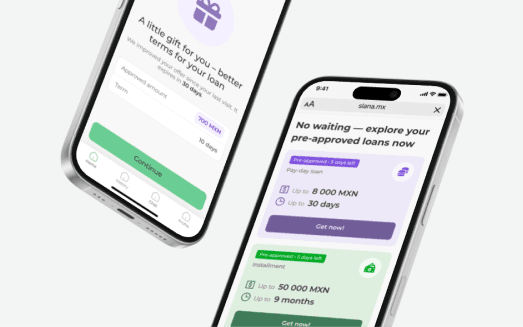
$lana (Monetech), a regulated multi-country consumer credit platform, needed its compliance and data integrations online inside a tight regulatory window. We owned the integration architecture and delivered.
View case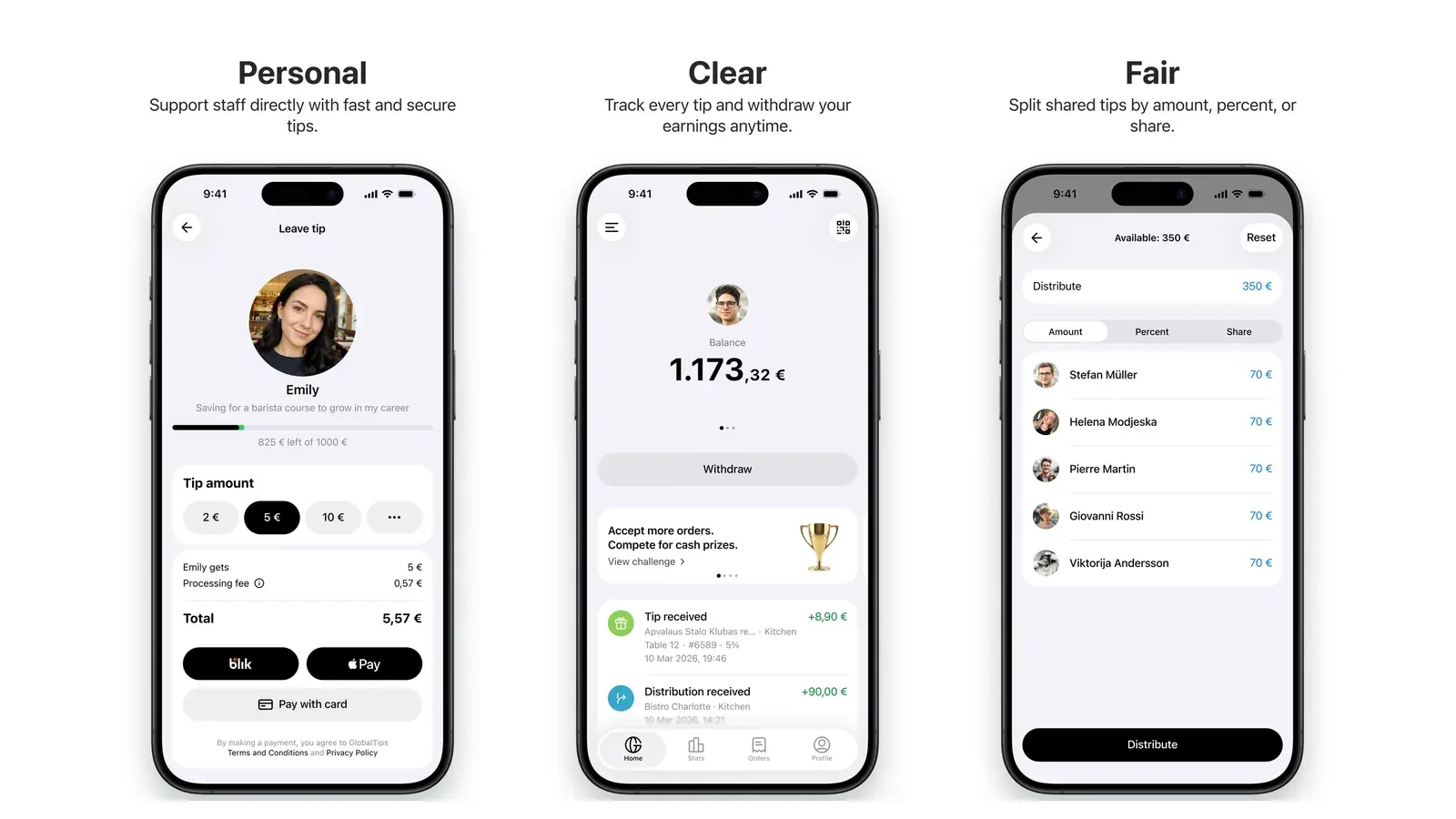
GlobalTips called us in for one feature in their guest app. After 14 monthly cycles, we now build across their guest app, staff app and web products, and BLIK carries about 15% of their payments in Poland.
View case
PushMaster is an enterprise-grade push notification server for reliable, multi-channel message delivery across web and mobile.
View caseWe've been working with WislaCode since July 2025. What started as enhancing the loyalty program in our GlobalTips guest app grew into a broader partnership where they now handle significant frontend development across our guest app, staff app, and web products.
This was a very task-heavy project, mostly exploration and R&D-driven. However, by the end of WislaCode, we were left with a detailed roadmap consisting of clear milestones - able to be converted into tangible KPIs - and some neat ideas of what actionable are next. Integrating...
We collaborated with WislaCode on a product strategy development project and gave the highest marks for this contractor. The WislaCode team delivered on time and with outstanding quality.
Payments on the roadmap and the shape undecided?
Thirty minutes with the engineers who would build it - the flow, the providers and what it takes to reconcile.