
Web frontend development
Web Frontend Development - IT services for financial and banking. Web and Mobile App Development by WislaCode Solutions
Results from work we have shipped
A design concept for a carsharing launch - a progressive web app approach, prototyped to be convenient for customers and efficient to run.
Shortlisting a software development partner?
The questions to ask in an RFP, three warning signs a vendor may not deliver, and a scoring matrix to compare contractors objectively.
What our frontend work delivers?
We work closely with your team to create user-friendly interfaces that match your brand and goals. Through iterative prototyping, usability testing and content modelling, we shape journeys that match user needs and deliver measurable outcomes.
We deliver clean, contemporary interfaces with mobile-first, responsive layouts. Design systems, consistent components, and thoughtful motion improve clarity and speed. We follow UX/UI best practices. This makes our products attractive, usable, and coherent.
We engineer consistent experiences across browsers, devices, and operating systems. Progressive enhancement, resilient fallbacks, and performance budgets ensure reliability. The codebase is also ready to expand into native and hybrid contexts when needed.
Fluid grids, adaptive typography, and optimised media create layouts that fit any screen. We focus on fast loading, readability, and stable rendering. We tune for Core Web Vitals like LCP, CLS, and INP. This keeps interfaces responsive and accessible.
Interface fine in the mockup, slow in the browser?
Show us the designs and the metrics and we will scope a frontend that hits its performance budget.
How we deliver frontend work?
The same delivery discipline on every engagement - from the first map to a handover your team runs.
We start with the journeys that earn money and the constraints around them: current performance measured on real devices, the browser and device matrix from your analytics, accessibility obligations, and the state of your designs. The output is a scoped plan with explicit budgets.
Rendering strategy per route, state boundaries, the design system's token and component structure, and typed contracts with the API are decided and written down before feature work scales. Early decisions are cheap to change now and expensive later; we treat them that way.
Features ship in short sprints with a working demo at the end of each. Every pull request passes the same gates: tests, bundle-size and performance budgets, visual regression and accessibility checks. Quality is enforced by the pipeline, so pace does not depend on heroics.
You receive a frontend your team can run: the design system, the pipelines, the monitoring and the decision records behind them. We transfer it working session by working session, until your engineers release without us in the room.
What shapes the work
For a fintech or banking product, the frontend is the only part of the system most users ever see. Authorisation flows, onboarding, dashboards and payments all succeed or fail in the browser, on whatever device and network the customer happens to have. A slow first paint reads as an unreliable company; a form that loses state reads as a product that might lose money. That is why we treat client-side work as product engineering, not decoration. Conversion, retention and support cost all trace back to interface decisions.
The buying problem is that frontend quality is hard to inspect from outside. Two builds can look identical in a demo and behave completely differently under a slow 4G connection, a screen reader or six months of feature changes. The differences live in the code: rendering strategy, state boundaries, accessibility semantics, the discipline of a design system. We make those choices visible - in architecture notes, performance reports and review-ready pull requests - so you can judge the work on evidence rather than screenshots.
Frontend is one discipline inside our wider web practice - start with the web development overview if you are still mapping the whole build.
A frontend degrades by default. Every sprint adds components, every marketing request adds a script, every dependency upgrade shifts behaviour, and the browsers underneath change on their own release cycles. Financial interfaces add their own pressure: dense data, strict accessibility expectations and zero tolerance for broken payment flows. Codebases that start clean become slow and inconsistent not through one bad decision but through hundreds of small unguarded ones. Holding quality therefore needs mechanisms, not intentions.
- Performance budgets in CI, so a heavy bundle fails the build rather than reaching users
- A design system as the single source of components, so screens cannot drift apart
- Typed contracts between interface and API, so breaking changes surface in development, not production
- Automated accessibility and visual regression checks on every pull request
These mechanisms are cheap to run and expensive to retrofit, which is why we install them in the first weeks of an engagement rather than after the first incident. The same discipline is what lets a small team move fast late in a project, when most frontends slow down.
For one of our frontends running in production, read the intelligent platform for carsharing case - a React and TypeScript frontend that reached its first release in five months.
Framework choice gets the attention, but the decisions that actually shape a frontend's life come after it. How each route renders - on the server, at build time or in the client - sets the ceiling on Core Web Vitals before a line of feature code exists. Where state lives, and which components are allowed to own it, decides whether the codebase is still understandable at fifty screens. Whether the design system is a real package with versioned tokens or a Figma file people glance at decides whether screen twelve matches screen two.
We record these choices as short architecture decision documents in the first sprint, with the trade-offs spelled out, so they survive team changes and can be revisited deliberately instead of eroding quietly. TypeScript is our default because typed component props and API responses move a whole class of defects from production to the editor. And we design the interface against explicit API contracts from day one, so frontend and backend teams can build in parallel instead of in sequence.
Those contracts have a second half - see server-side development for how we build the APIs the interface consumes.
Frontend work comes in two shapes. Most engagements are scoped builds: we take a product area or a whole interface from design to production with our own delivery team, working in sprints with a demo at the end of each. Where you already run a strong frontend team, we can instead supply senior engineers who slot into your existing delivery process - the staffing FAQ below covers that model. Either way the work is senior-led, with engineers who own decisions rather than tickets.
What moves the price is rarely the framework. It is the breadth of the browser and device matrix you genuinely need, the accessibility level you commit to, how mature your designs are when we start, the number of third-party integrations, and how much legacy has to stay alive during the transition. A short scoping exercise turns those drivers into a plan and an estimate you can hold us to, before any long commitment.
This is the model behind the review on this page: the CTO of $lana (Monetech) credits development from scratch, delivery synchronised with his own team, and first users on the product in five months.
Launch is the point where the real data starts. Lab numbers are predictions; the field tells the truth. We wire real-user monitoring so Core Web Vitals are measured on your actual customers' devices and networks, with client-side error tracking alongside, and review both against the budgets set during the build. The same dashboards are open to your team, so conversations about speed start from one shared set of numbers rather than competing impressions.
The quieter work matters as much. Browsers update on their own rapid cycles, frameworks deprecate APIs, and dependencies pick up vulnerabilities; we absorb those changes in small, regular doses, each landing as an ordinary reviewed pull request with an ordinary rollback path. The design system keeps evolving as the product does: new components enter through the same review, accessibility and documentation gates as the originals, so consistency holds at screen forty as it did at screen four.
Whether your team runs this or we do is a choice, not a default; either way the monitoring, dashboards and runbooks are yours, and nothing in the setup depends on us staying.
WislaCode specialists quickly synchronised and worked with the second team involved in developing our solution. As a result, having started development from scratch, we came to the expected result quickly. The first users went to the application after 5 months.
What is included in a frontend engagement?
Every engagement is scoped as a production build, not a proof of concept. The deliverables below are the standing spine of a frontend project with us; discovery decides their depth and order for your product.
A frontend audit and performance baseline, measured on real devices, that fixes the browser matrix and Core Web Vitals targets for the build.
Architecture decision records covering rendering strategy, state management and routing, written down with trade-offs so the choices survive team changes.
A versioned design system - design tokens, components and usage rules released under change control, so the interface evolves as one product rather than many screens.
Feature delivery in TypeScript against typed API contracts, in reviewed pull requests small enough to read and reason about.
CI quality gates on every change: unit and end-to-end tests, bundle-size and performance budgets, visual regression and automated accessibility checks.
A client-side security pass on release candidates - dependency audits, a content security policy and safe handling of credentials in the browser.
Real-user monitoring wired before launch, so Core Web Vitals and client-side errors are tracked on actual customer devices from day one.
Handover ends with your engineers running the stack: they merge, release and monitor with us observing. Ownership transfers as demonstrated capability, not as a zip of documentation; staying on afterwards is your option, not our requirement.
How do you choose between React, Angular and Vue for a new project?
We test requirements such as routing complexity, form handling, state needs, team experience and performance targets. React with Next.js suits content-heavy or SEO-sensitive sites, Angular fits large, structured enterprise apps, Vue offers a gentle learning curve for rapid delivery. We also consider ecosystem maturity, accessibility practices and hiring availability to reduce long-term risk for your organisation.
What does “performance‑first” delivery look like in practice?
We set explicit performance budgets, then design for Core Web Vitals. Techniques include code‑splitting, prefetching, server‑side rendering or static generation where useful, optimised images and fonts, and minimal third‑party scripts. We profile on real devices, monitor in production, and treat regressions as incidents. This keeps pages fast on typical networks, improving engagement and conversion.
How do you ensure accessibility without slowing delivery?
From day one, we build in accessibility through semantic HTML, colour contrast, focus management, and keyboard navigation. We lint for a11y issues, run automated checks, then verify with manual screen reader and keyboard testing. Components in the design system ship with accessible patterns, reducing repetitive fixes. This approach meets WCAG 2.2 and lowers future remediation efforts.
Can you migrate a legacy frontend to a modern stack without a full rewrite?
Yes. We plan to migrate step by step. First, we’ll phase out old routes. Then, we’ll introduce a design system and replace modules one at a time. Where scale demands, we use micro‑frontends to isolate risk. Automated tests, visual regression checks, and performance budgets ensure each step improves quality. This approach shortens time to value while keeping the business running.
Do you offer front-end developers for hire to augment our team?
Absolutely. You can bring in senior front-end developers or a small squad (engineering, QA, UX) to accelerate delivery. We adopt your tooling and standards, set shared KPIs, and provide thorough documentation and knowledge transfer. This model helps you scale capacity quickly without losing internal ownership.
How do you guarantee consistent behaviour across browsers and devices?
We support target browsers based on analytics and business requirements. Progressive enhancement, polyfills where necessary, and robust CSS strategies ensure graceful degradation. We test on real devices and emulators. We automate cross-browser suites and monitor client-side errors after launch. The result is predictable behaviour without over-engineering for edge cases you do not need.
What does your handover look like after launch?
We deliver code, infrastructure configs, CI/CD pipelines, design system documentation, and runbooks. Training sessions cover development workflows, accessibility practices, and performance monitoring. If you prefer, we provide ongoing support with SLAs. Otherwise, your team can take full ownership with confidence. This ensures continuity and reduces vendor lock-in.
Do you work fixed-price or time and materials?
Both, matched to how well the scope is known. A defined product area with stable designs can run fixed-price against an agreed specification; discovery-heavy or evolving work runs time and materials with sprint-level transparency and an agreed budget ceiling. In either model you see progress as a working demo every sprint, so commercial exposure is bounded by what you have already seen running.
How long does a frontend build take to reach production?
It depends on scope, but our pattern is to cut a first production release early rather than build everything before launch. The carsharing platform featured on this page reached its first release in five months on a React and TypeScript stack. Scoping gives you a milestone plan with the first release date as its anchor, not its afterthought.
Do we need finished designs before you start?
No. We can start from brand guidelines, a rough prototype or an existing product. Our squads include UX capability: we prototype the key journeys, test them with users and grow the design system as screens are built. If you have your own design team, we implement their work and feed component constraints back early, so designs and code do not diverge.
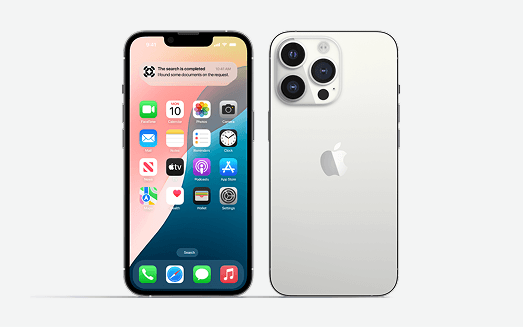
PushMaster is an enterprise-grade push notification server for reliable, multi-channel message delivery across web and mobile.
View case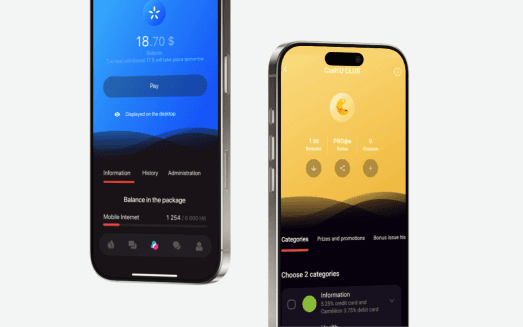
A consumer banking super app in a regulated market had to launch at scale inside a fixed regulatory and competitive window. We owned the integration architecture and mobile delivery.
View case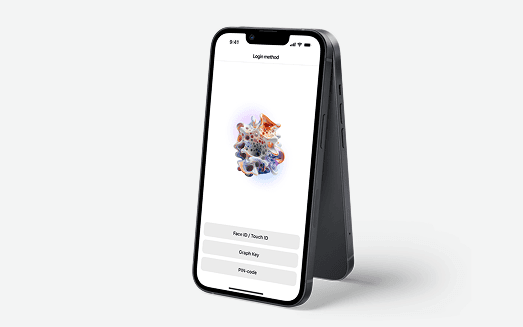
Moving from standard banking with a basic set of functions to a digital bank where everything can be done online.
View caseWe've been working with WislaCode since July 2025. What started as enhancing the loyalty program in our GlobalTips guest app grew into a broader partnership where they now handle significant frontend development across our guest app, staff app, and web products.
This was a very task-heavy project, mostly exploration and R&D-driven. However, by the end of WislaCode, we were left with a detailed roadmap consisting of clear milestones - able to be converted into tangible KPIs - and some neat ideas of what actionable are next. Integrating...
We collaborated with WislaCode on a product strategy development project and gave the highest marks for this contractor. The WislaCode team delivered on time and with outstanding quality.
Want an interface users never have to wait for?
Tell us the product and the devices it serves and we will plan the frontend build, Core Web Vitals included.