
Mobile banking app development
Mobile banking app development for regulated banks, neobanks and banking groups. Native, PWA and hybrid builds, integrated with your core, identity and payments stack.
Results from work we have shipped
Looking for features that keep users coming back?
40+ features we have shipped in banking and fintech apps – from instant onboarding and QR payments to savings mechanics and tools for sole traders.
Mobile banking surfaces we build
Identity capture, document and selfie KYC, and remediation flows. The audit trail your regulator will ask for is produced as part of normal onboarding.
Real-time balances and statements, card controls such as freeze and limits, tokenisation and push provisioning. The card feels instant because the issuer integration is built for it.
In-app payments, peer-to-peer, account-to-account and scheduled payments, with reconciliation back to the ledger so operations are not chasing mismatches.
Pre-approved offers, in-app application, disbursement and repayment, integrated with the credit and reporting systems behind the screens.
Goal-based savings, deposits and investment products with the suitability and disclosure flows the regulator expects, designed in rather than bolted on.
In-app dispute and complaint flows, secure messageing, and the operations console behind the customer view, so support can act on what the customer reports.
Launching or replacing a mobile banking app? Start with the map.
Tell us the customer base and the core integrations, and we will scope the first phase.
How we deliver mobile banking app development?
The same delivery discipline on every engagement - from the first map to a handover your team runs.
We map the existing systems, the channels the app will touch, the regulatory constraints and the customer base, then write a phased scope your auditor can read.
Native, PWA or hybrid, decided by a named architect against the customer base and the rollout plan, with the integration adapters and identity model set in the same step.
Mobile, back end and integration layer built together in your repositories, with feature flags and staged exposure from the first internal release.
Staged rollout, monitoring across the backbone and the client, and a migration that carries an existing customer base across without disruption.
What shapes the work
For a regulated bank, the screens are the visible part of a mobile banking app. The hard part is the integration between the app, the core banking system, the identity stack, the payment rails and the partner services the customer expects inside their bank.
We deliver mobile banking app development as one programme across the app, the integration layer and the back-office surfaces the operations team uses to run it. The app ships connected, audited and ready for the regulator, not in a vacuum.
That framing is what separates a bank app that earns daily use from one that gets installed and forgotten. Real-time balances, a payment that settles when the screen says it did, and an onboarding that does not drop the customer halfway are integration outcomes, not design ones.
Where the core itself is the constraint, see legacy core banking systems integration.
A mobile banking app is judged by both the regulator and the user from the first install. The app has to pass both at once, and the failure modes that matter most are invisible to monitoring designed only for the client.
Designed in from kick-off, not bolted on later:
- Strong customer authentication and device binding aligned with PSD2 and local rules.
- Audit trail and consent retention sized to the longest applicable regulation.
- Offline and network-poor behaviour with retries that never double-spend.
- Monitoring across the boundary, with correlation IDs that follow one request from app to core.
- Feature flags and a rollback that does not need a store submission.
- Accessibility built in, including screen reader, keyboard and contrast support.
We have shipped mobile banking at this scale: a banking app with 1.5M+ installations where monthly active users grew from 45% to 67% in two years, recognised as Best Digital Bank by Global Finance.
For the programme behind the app, see banking software development; for a multi-service front, see super app development; when one integration blocks a release, see the integration unblock sprint.
Most banks cannot cut over a mobile app in one weekend. The existing customer base is on the old app and cannot be disrupted, so the migration has to be staged rather than switched.
We run old and new in parallel for a defined window, move customers across in cohorts behind feature flags, and keep a rollback that does not need an app store submission. That patience at the migration step is what protects daily-active users through the transition, and it is where rushed replacements usually lose them.
The integration layer is what makes a parallel run possible. Both apps talk to the same core through the same adapters, so a customer on the old app and a customer on the new one see consistent balances and transactions throughout. The migration becomes a front-end change behind a stable backbone, not a risky rebuild of everything at once.
For the installable web shape many banks choose here, see PWA development.
A mobile banking build splits cleanly into a commercial structure. The integration layer behind the app, the part that carries the most risk, is usually time and material while the adapters to your core and identity systems are proven out. The app surfaces on top, with a clearer specification, run as fixed-price releases against an acceptance test.
That split means you are not paying a fixed price for the unknowns or an open-ended rate for the knowns. As the integration backbone settles, more of the work moves to fixed scope, and the commercial risk falls with the technical risk.
Accessibility and performance are in the build, not added afterwards. Strong customer authentication, screen-reader support and a performance budget for the devices your customers actually carry are part of the definition of done, because a banking app that is slow or unusable on a mid-range phone loses the customers it was built to keep.
Strong customer authentication is the part of mobile banking security the customer can see. Most of the real attack surface sits elsewhere: in the binary shipped to the device, in the traffic between the app and the backbone, and in the pipeline that builds every release. We treat all three as engineering work with a definition of done, not a checklist run in the week before launch. In the build from the start:
- Certificate pinning and encrypted local storage as standard, not options.
- Root and jailbreak detection with a proportionate response that does not lock out honest customers.
- Tamper detection and obfuscation on every released binary.
- Secrets injected per environment from the pipeline, never committed to the codebase.
We also build for the assessments a regulated bank has to pass. Penetration testers and internal security reviewers get the architecture notes, the threat model and access to a realistic test environment, so findings land early enough to fix inside the normal release flow rather than surfacing as a launch blocker. Security review becomes a routine step in the programme, not an event the schedule has to survive.
A banking app is never finished at launch. The operating systems underneath it change on Apple's and Google's schedule, not the bank's, SDKs and store policies move, and every regulatory change eventually lands as a screen, a disclosure or a new flow. An app that is not actively maintained degrades in front of the customer even when nobody touches the code.
We plan the run phase as part of the programme, not as an afterthought to the build. That means a steady release rhythm with room for OS upgrades and dependency updates, crash and performance monitoring triaged against an agreed severity scale, and product analytics that show whether customers actually adopt each release rather than just install it.
How that work is staffed is your call. You can take the release train in-house after handover, with our engineers stepping back as yours step up; keep a small WislaCode team on the app long term; or split it, with your team owning the roadmap and ours owning the releases. Any of these can work - the one mistake is leaving the question unanswered until the first post-launch incident.
Working with WislaCode Solutions has been a great experience! We needed an Android SDK developed under a tight timeline, and their team delivered a flexible, user-friendly solution that integrated seamlessly into our ecosystem. Their transparent approach, proactive communication, and commitment to quality made the collaboration smooth...
What is included in a mobile banking engagement?
A mobile banking engagement is scoped as a production programme, not a set of screens and endpoints. The deliverable is an app your bank can run under regulatory scrutiny, with the integration layer and operational tooling that keep it running.
Architecture decision records from a named architect, covering the native, PWA or hybrid call and the integration and identity model behind it.
Integration adapters to your core banking, identity and payment systems, built in your repositories so the app never depends on code you cannot see.
Strong customer authentication, device binding and dynamic linking designed in from kick-off, with the audit trail your regulator will ask for.
Test coverage concentrated on the money paths, so payments, transfers and reconciliation are proven against acceptance tests before any customer touches them.
Monitoring across the boundary, with correlation IDs that follow one request from the app through the integration layer to the core.
Feature flags and a rollback that needs no app store submission, so a bad release can be withdrawn without disrupting customers.
Runbooks, documentation and the operations console behind the customer view, so your support and operations teams can run the app from day one.
At handover your team owns all of it - source code, tests, adapters, runbooks and documentation, in your repositories and your cloud from the start. You can run and extend the app without us; nothing is a black box.
Do you build native, PWA or hybrid mobile banking apps?
All three. The choice is part of the architecture step, sized to your customer base, your regulatory context and the cadence you want on the app. We have shipped a native banking app at scale and a credit PWA for a regulated multi-country lender.
Can you integrate with our existing core banking system?
Yes. Most engagements involve an existing core to integrate with. We design adapters and orchestration so the app ships without waiting for a core replacement, and we close the gaps the app needs along the way.
How do you handle strong customer authentication and PSD2?
SCA, device binding and dynamic linking are designed in from kick-off. We work with your SCA provider, or recommend one, and make sure the audit trail your auditor will request is produced as part of normal operation.
How long does mobile banking app development take?
A focused mobile banking app on top of an existing core is typically 4 to 7 months. A full super app launch is usually 9 to 12 months. A PWA-first product can be faster. We size it on the programme map.
How do you replace an ageing app without losing customers?
Gradually, with both apps live at once. Customers move in cohorts - invited, observed, widened - and history, mandates and saved payees carry over so nobody starts from scratch. The old app is retired only when the numbers say the move is complete.
Do you support white-label banking apps for partner banks?
Yes. The white-label case is what the modular architecture is for. A partner bank adopts the shell with its own brand, identity stack and product mix, while the integration backbone stays consistent. We delivered this pattern for a banking group, reused across partner banks after the first launch.
Who owns the source code at the end?
You do. Source code, tests, runbooks and documentation are handed over and code ownership transfers cleanly. The app and its back end live in your repositories and your cloud from the start.
How is a mobile banking app build priced?
The integration layer usually runs time and material while core access and counterparties stabilise; the app surfaces are fixed price once scoped. The drivers are integration count, platform choice and migration scope - the programme map prices the first phase.
Should a bank use a specialist mobile partner or build the app with its own team?
Both, and the split is usually the same one. Your team should end up owning the app, because it changes for the life of the product and the knowledge has to stay in the bank. A specialist earns their place on the parts that are done once and are expensive to get wrong: the integration layer to the core and the identity stack, the release and signing pipeline, and the security engineering around the binary and the traffic. We work inside your repositories and your continuous integration from day one, so the handover is a change of hands rather than a delivery.
What does transparent delivery look like when the client is a regulated bank?
It means your compliance function sees the same evidence we do, at the same time. In practice: a named squad, weekly delivery metrics rather than a status narrative, architecture decisions written as records you keep, and an audit trail produced as a by-product of normal operation rather than assembled before a review. Article 28(3) of DORA, Regulation (EU) 2022/2554, gives you access and audit rights over the arrangement. Our position is that if those rights ever have to be exercised as a surprise, the delivery was not transparent to begin with.
What can a bank ship on a small budget and a short timeline?
Something narrow and real. One journey working end to end on top of the core you already have beats a broad app that is half-built everywhere, and at a small budget it is the only honest shape. An Android payment SDK we built for payabl. reached production in one month precisely because its scope was one thing. What does not compress is the security and regulatory work - authentication, the release pipeline, the audit trail - so we scope the surface down rather than the controls, and we say which is which before the contract.
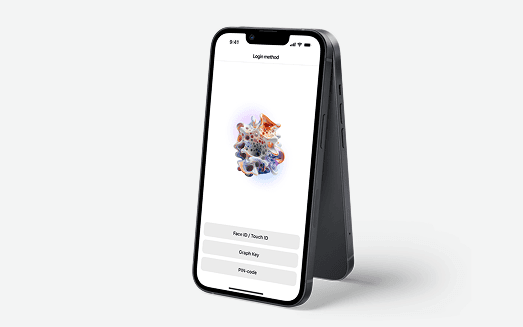
Moving from standard banking with a basic set of functions to a digital bank where everything can be done online.
View case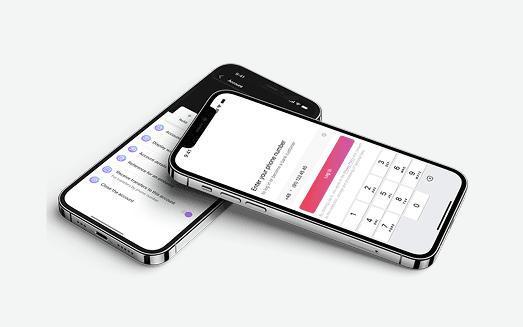
Large-scale migration from a legacy internet banking system to a modern microservices-based architecture, with stronger scalability, security and user experience, while keeping customer trust intact.
View case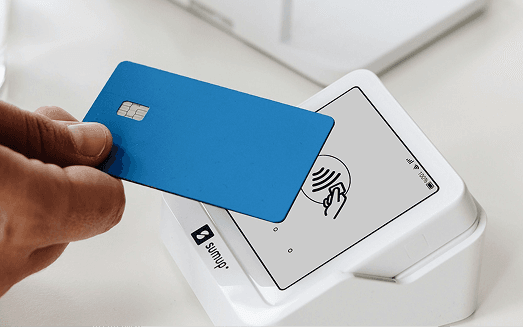
payabl., an EU-regulated merchant acquirer, had a payment SDK gap holding up merchant onboarding. We designed and shipped it inside a single sprint cycle.
View caseWe've been working with WislaCode since July 2025. What started as enhancing the loyalty program in our GlobalTips guest app grew into a broader partnership where they now handle significant frontend development across our guest app, staff app, and web products.
This was a very task-heavy project, mostly exploration and R&D-driven. However, by the end of WislaCode, we were left with a detailed roadmap consisting of clear milestones - able to be converted into tangible KPIs - and some neat ideas of what actionable are next. Integrating...
We collaborated with WislaCode on a product strategy development project and gave the highest marks for this contractor. The WislaCode team delivered on time and with outstanding quality.
Planning a mobile banking app launch?
Replacing an existing app? Bring the current customer numbers and we will scope the parallel run.