
Financial solutions development
The product layer of a fintech platform: banking software, self-service, wealth, billing, analytics and trading surfaces.
Results from work we have shipped
Moving from standard banking with a basic set of functions to a digital bank where everything can be done online.
Looking for features that keep users coming back?
40+ features we have shipped in banking and fintech apps – from instant onboarding and QR payments to savings mechanics and tools for sole traders.
Fintech solutions we build
We create complete banking software ecosystems and standalone applications for central, investment, and commercial banks. Our solutions enhance operational efficiency, optimise services, personalise client experiences, and support data-driven decision-making.
See the serviceWe develop user-friendly financial self-service platforms to simplify customer interactions. These solutions simplify account openings, KYC and AML compliance, onboarding, and claims management.
Our solutions include real-time executive dashboards, proprietary stock and investment scoring algorithms, and AI-powered decision-making tools. We enable efficient management of corporate and personal investment portfolios with capabilities for creation, synchronization, analysis, and diversification.
We implement full-cycle billing and payment workflows, complete with detailed reporting and transaction analytics, ensuring smooth financial operations.
See the serviceOur advanced analytics tools help fintech organisations optimise processes, manage large volumes of sensitive data, and enhance customer satisfaction through actionable insights.
We design full-featured trading platforms and standalone tools for financial institutions and private investors. Our solutions automate data-intensive processes, optimise trading operations, enhance decision-making, and mitigate risks to reduce losses.
A fintech product in mind, shape undecided?
Tell us the customer and the revenue model and we will scope the product shape that fits.
How we deliver fintech products?
The same delivery discipline on every engagement - from the first map to a handover your team runs.
We start by mapping which product surfaces your platform needs now, which can wait and which should be integrated rather than built. The output is a sequenced scope per surface - users, journeys, integrations and compliance checkpoints - that estimates can stand on.
Before any surface is built we design the services they all rest on: identity, accounts, transactions and data. Decisions made here determine whether your second and third products take months or years, so we make them explicit and review them with your team.
Each product ships as a working release, not a phase document. Design, development, compliance flows and testing run in parallel inside one team, so a banking, self-service or analytics surface reaches real users while the next one is being scoped.
You receive the code, the infrastructure, the documentation and a team that knows the roadmap. Whether your engineers take over or we stay for the next surface, the platform is owned by you and structured so either path works.
What shapes the work
A fintech platform is not one product. Banking software, digital self-service, wealth and investment tools, billing, analytics and trading surfaces are six different products, each with its own users, data shape and regulatory exposure - and they only feel like one platform when the accounts, identity and money movement underneath are shared. Most buyers do not need all six. They need one or two built properly now, on foundations that do not block the rest later.
Sequencing is the first real decision. Which surface carries revenue or retention today, which can be integrated from a third party, and which only makes sense once the data underneath it exists. A wealth dashboard without reliable position data is decoration; a trading tool without dependable market feeds is a risk. We work this through with you before anyone writes code, because the order of the build decides most of the cost.
We build both standalone products and complete banking ecosystems, and we take on full rebuilds - one of them moved a bank with over 700,000 customers from a basic feature set to a digital bank its customers run entirely online.
To see one of those rebuilds in production, read a banking product rebuilt around UX.
None of these products is hard because of its happy path. A current-account screen, an onboarding form or a portfolio chart can be prototyped in weeks. The difficulty is everything wrapped around it: regulation that lives inside the user journey, money that must reconcile to the penny, and data that is sensitive, high-volume and expected in real time.
- Compliance sits inside the journey: KYC, AML and audit requirements shape every flow, not just a legal annex
- Nothing starts on a green field: products land inside existing core systems and third-party ecosystems that were never designed together
- Financial data raises the bar on security, integrity and latency at the same time
- Users judge the result against the best consumer apps, within seconds
This is why the source of failure in fintech builds is rarely the visible product. It is the integration surface and the compliance surface, discovered too late. We treat both as first-class scope from the first workshop: integration contracts are designed and tested before the UI depends on them, and regulatory checkpoints are mapped per journey before a sprint is planned.
Every product on this page can be built as a one-off. We do not build them that way. Each surface is a module over shared platform services - identity, accounts, transactions, documents - exposed through APIs that treat web, mobile and back-office as equal clients. The practical test is simple: when the second product starts, how much of the first does it reuse? If the answer is nothing, the platform was never there.
Technology follows the surface. Where the product is the experience - mobile banking, self-service - we build native, Kotlin on Android and Swift on iOS, because that is where the responsiveness and platform integration a banking user expects actually come from. Where the product is the data - analytics, wealth scoring, trading - the work is pipelines, models and latency budgets, and the front end is the thin part.
The shared data layer is the quiet asset in this architecture. Analytics, dashboards and scoring all draw on the same governed event and transaction streams, so each new surface gets reporting on day one instead of a retrofit project.
Where those streams need scoring, forecasting or automated decisioning, see the analytics and decisioning layer.
We scope by surface, not by platform. Each product gets its own definition - users, journeys, integrations, compliance checkpoints, data sources - and its own estimate, so you decide per surface rather than signing one platform-sized number. The drivers that move cost are consistent across all six shapes: how many integrations the surface touches, how deep the compliance work runs, whether the front end must be native mobile, and how much existing data has to be migrated or reconciled.
The team behind each surface is deliberately compact: management and analytics, developers, and UI/
One scope question comes up on almost every engagement: where the product ends and the payment plumbing begins. Cards, acquiring, settlement and reconciliation are their own discipline with their own estimate, and we keep that boundary explicit.
For that payment layer under these products, see billing and payment solutions.
The first release is where a fintech product starts earning trust, not where the work ends. From day one in production there is a monitoring picture across the money paths and the user journeys, an incident process with named owners, and a release cadence that respects app store review cycles for the mobile surfaces. Banking customers notice a broken login faster than any dashboard does, so alerting is tuned to journeys, not just servers.
The environment keeps moving after launch. KYC rules change, reporting duties get added, third-party providers deprecate APIs, and operating systems update underneath the apps. A fintech product therefore needs an owner and a maintenance cadence, not a finished state - and budgeting for that from the start is cheaper than rediscovering it at the first regulatory deadline.
Production data is also where the portfolio question reopens. Usage and transaction analytics show which journeys carry the business and which surface deserves to be built next, which is how a single product becomes a platform on evidence rather than ambition.
WislaCode specialists quickly synchronised and worked with the second team involved in developing our solution. As a result, having started development from scratch, we came to the expected result quickly. The first users went to the application after 5 months.
What is included in a fintech product engagement?
Every fintech product engagement is scoped to put a working surface in front of real users, not to produce documents. The list below is what a typical product build includes from the first workshop to the first release.
Product discovery that maps users, journeys and regulatory checkpoints for the chosen surface, producing a scoped backlog rather than a wish list.
Architecture for the platform, with shared identity, account and transaction services designed so the next product surface reuses them.
Integration design and build against core banking, third-party providers and market data sources, with contracts tested before the UI depends on them.
UI and UX design and native mobile development where the surface demands it, using Kotlin and Swift as on our banking work.
Compliance and security engineering embedded in the build: KYC and AML flows, audit trails, encryption and access control treated as features.
Testing across functional, security and performance dimensions, with reporting and transaction analytics wired in before the first release, not after.
Release management to production and the app stores, with monitoring, rollback paths and a support handover agreed in advance.
Everything we build is yours: source code, infrastructure definitions, documentation and the admin access that goes with them. Your team can take over, extend the platform or keep us on for the next surface.
What does fintech product development cost?
Cost is driven by the number of product surfaces in scope, the integrations each one touches, the depth of the compliance work and whether the front end must be native mobile. We scope each surface separately during discovery, so you get a per-product estimate rather than a single platform-sized number.
How long does a fintech product take to reach its first release?
It depends on the surface and its integrations, which is exactly what discovery pins down. As reference points from our own work: a mobile banking product for a bank with 700,000+ customers reached its first release in six months, and $lana (Monetech) had first users within five months on a build from scratch.
Should we build every product surface ourselves or integrate some?
Build where the surface differentiates you and integrate where it is commodity. A wealth or trading surface that embodies your edge is usually worth building; a standard component behind it often is not. We make this call explicitly per surface during portfolio mapping, with the cost of each path in front of you.
How much does regulatory work add to a delivery timeline?
Less than teams fear, and later than they plan for, which is why it hurts. The engineering itself is modest. What takes calendar time sits outside the code: contracting an ICT third-party arrangement that carries the terms Article 28(3) of DORA, Regulation (EU) 2022/2554, requires; obtaining a sandbox and credentials from a provider; scheduling a penetration test; and your own approval cadence. We map those dependencies into the plan at scoping, because a blocked credential becomes a blocked sprint and it is the delay nobody budgets for.
What are the real trade-offs when a new product must sit on legacy financial systems?
You are choosing where to absorb the constraint. Build the product against the legacy contracts directly and it ships sooner but inherits every quirk, permanently. Put an adapter layer between them and the first release costs more, while the second product costs much less and the legacy system can later be replaced without touching what customers use. The decision is worth making explicitly and writing down, because the version made implicitly - by whoever writes the first integration under time pressure - is almost always the first option.
Do the mobile surfaces and the platform behind them need separate teams?
No, and separating them is where most of the delay comes from. The interesting problems in a financial product sit exactly at the boundary: what the app does when a payment authorises but the confirmation never arrives, how a limit change reaches the screen, what the customer sees while a provider is down. One squad that owns both sides settles those in a conversation. Two teams settle them in a ticket queue, and the product carries that compromise for years.
How is AI scoped inside a fintech product without becoming the project?
By naming the decision it improves and the measure that proves it, before any model work starts. If nobody can say which number moves, the feature is a demonstration rather than a product. We scope it as one surface with a fallback, because the product has to work when the model is unavailable, and we keep the data path inside your compliance boundary. Where the output touches a customer decision, the human review route is designed at the same time - adding one later means reopening the journey it sits in.
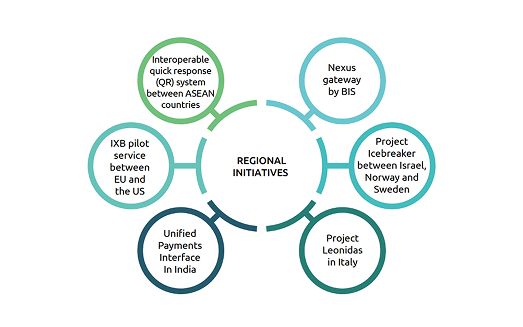
A strategy for a fintech product's market entry and growth, delivering the architecture, technology and investment plan, with a roadmap for the analysed markets.
View case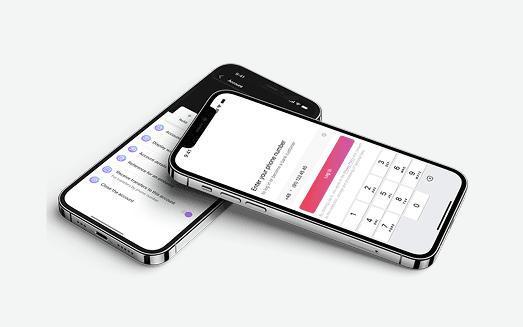
Large-scale migration from a legacy internet banking system to a modern microservices-based architecture, with stronger scalability, security and user experience, while keeping customer trust intact.
View case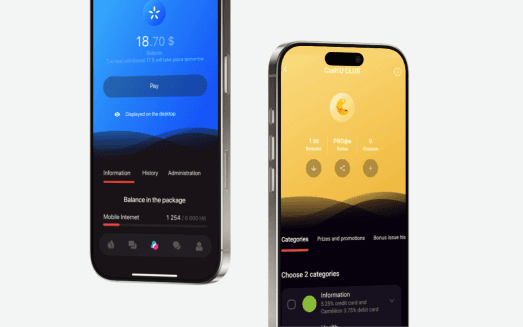
A consumer banking super app in a regulated market had to launch at scale inside a fixed regulatory and competitive window. We owned the integration architecture and mobile delivery.
View caseWe've been working with WislaCode since July 2025. What started as enhancing the loyalty program in our GlobalTips guest app grew into a broader partnership where they now handle significant frontend development across our guest app, staff app, and web products.
This was a very task-heavy project, mostly exploration and R&D-driven. However, by the end of WislaCode, we were left with a detailed roadmap consisting of clear milestones - able to be converted into tangible KPIs - and some neat ideas of what actionable are next. Integrating...
We collaborated with WislaCode on a product strategy development project and gave the highest marks for this contractor. The WislaCode team delivered on time and with outstanding quality.
Picking the next fintech product to build?
Bring the portfolio question and we will map which surface to ship first and why.