
SDK integration services
SDK integration services for iOS, Android and web. We integrate payments, identity, analytics and messaging with CI/CD, versioning and QA - fast, secure and built to scale.
Results from work we have shipped
payabl., an EU-regulated merchant acquirer, had a payment SDK gap holding up merchant onboarding. We designed and shipped it inside a single sprint cycle.
Shortlisting a software development partner?
The questions to ask in an RFP, three warning signs a vendor may not deliver, and a scoring matrix to compare contractors objectively.
SDK work we deliver
Integration of payments, identity, maps, messaging, and analytics SDKs via CocoaPods, Swift Package Manager, or Gradle. Strict version control, stable behaviour under poor connectivity, robust permission and background handling.
SCA‑ready cards and wallets (3‑D Secure, tokenisation) and OAuth/OIDC authentication. Token management, fraud tools, webhooks, PCI DSS and PSD2 compliance, full reconciliation.
Consent‑driven setup (GDPR/CCPA), event taxonomy, sampling, and offline batching. Multi‑SDK coordination prevents duplicate events and preserves app performance.
Custom modules and plugins exposing native SDKs to cross‑platform apps. CI/CD compiles and tests bindings per platform, preventing regressions from SDK updates.
An SDK other teams have to embed and trust?
Tell us who integrates it and on which platforms and we will scope the interface, versioning and docs.
How we deliver SDK work?
The same delivery discipline on every engagement - from the first map to a handover your team runs.
Define objectives, audit the SDK landscape against your product constraints, and plan measurable outcomes and risk. We verify candidate SDKs for functionality, security and performance across OS versions and devices before a line of integration code is written.
Decide what crosses between the SDK and your app: wrapper interfaces, initialisation order, threading, key storage and consent flows. For your own SDK, this is where the public API, versioning policy and footprint budget are fixed.
Implement integrations with predictable APIs and a native feel, then prove them: contract tests on callbacks, profiling against start-up, memory and frame budgets, behaviour under poor connectivity and aggressive OS background limits. Hardening is scoped work, not residual time.
Stage rollouts with canaries and telemetry, settle into a stable release cadence, and transfer ownership: developer documentation, runbooks and upgrade paths live in your repositories, so your team operates and evolves the integration without depending on ours.
What shapes the work
Most SDK problems are not coding problems - they are boundary problems. An SDK runs inside a process someone else owns. Integrate a third-party SDK and your app inherits the vendor's crashes, start-up cost and update schedule; ship your own SDK and your code now runs inside a partner's app, under their build system, their threading model and their release calendar. Either direction, the work is the same discipline: controlling what crosses that boundary, and proving the result behaves under conditions you do not control.
That is why we scope SDK work as its own service rather than a line item inside an app build. The failure modes are specific: a payments SDK that initialises too early and stalls launch, two analytics tools double-counting events, a permission prompt fired at the wrong moment that wrecks opt-in rates, a vendor upgrade that silently breaks a callback contract. We treat each SDK as a unit with its own version policy, test surface and rollback path, so your roadmap is never held hostage to somebody else's release notes.
On paper, integrating an SDK is an afternoon: add the dependency, call init, follow the quick-start. In a real product the quick-start is the easy tenth. Dependency graphs collide when two vendors pin incompatible versions of the same transitive library. Initialisation order matters when several SDKs contend for the first frames of start-up. Permission prompts have to land at the moment the user understands why - not when the SDK demands them. The recurring hard problems:
- Background execution limits that silently drop events and callbacks
- Connectivity loss, where naive retries drain batteries or lose data
- Secure key storage and signed callbacks on both platforms
- OS releases and vendor updates moving underneath a pinned integration
None of this appears in vendor documentation, because each problem depends on what else lives in your app. The work is verifying behaviour across the device and OS matrix before your users do, with start-up time, memory and frame stability profiled as acceptance criteria rather than checked as an afterthought.
Messaging and engagement SDKs also depend on the delivery layer beneath them - we cover that side in configuring push notification servers.
When the SDK is yours - a payment SDK for merchants, an identity module for partners - the engineering bar rises. You are no longer consuming someone else's API surface; you are designing one that strangers must succeed with, unsupervised. That means a deliberately small public API, semantic versioning honoured strictly, thread-safe modules that behave inside host apps you have never seen, a lean footprint, because the weight you add is carried by every product that embeds you, and documentation with a sandbox a partner can integrate against without filing a single ticket.
This is the shape of the work we did for payabl., an EU-regulated merchant acquirer whose missing Android payment SDK was holding up merchant onboarding. We designed and shipped it inside a single sprint cycle - one month from kickoff to delivery - and onboarding was unblocked. Loucas Charalambous at payabl. singled out the smooth collaboration and proactive communication alongside the delivery itself, which is the point: when your users are other engineering teams, how you communicate interfaces and changes is part of the product.
The full story is in the payabl. Android payment SDK case.
The first decision is rarely technical: which vendor, on what evidence. We are vendor-neutral - we implement SDKs across payments, identity, analytics, communications and maps, so the solution serves your product rather than a single vendor's roadmap - and selection runs on your constraints: regulatory posture, market coverage, and the exit cost if that roadmap diverges from yours. The second decision is exposure: call the native SDK directly, or wrap it behind your own thin interface so a future vendor swap is a refactor, not a rewrite. For anything business-critical we default to the wrapper.
Payment SDKs carry decisions that sit outside the app entirely: where tokenisation happens, which 3-D Secure flows your acquirer supports, how SCA exemptions apply, and what reconciliation looks like when a callback never arrives. We keep the compliance evidence - GDPR, PCI DSS, PSD2 - in the CI/
A payment SDK is only the edge of a larger system - for the acquiring and billing platforms behind it, see billing and payment solutions.
Two engagement shapes work. An end-to-end team takes the whole SDK scope - selection, integration or build, hardening, staged release - and answers for the outcome against agreed KPIs. Or you hire SDK integration developers from us into your existing squad, which suits teams that own their product but need depth on a critical path: a payments integration, a bridge layer, a versioning overhaul. Both run on transparent KPIs, written decisions and documentation, because the real test of SDK work is whether your team can operate it without us.
Launch is not a finish line, because the ground keeps moving: vendors deprecate APIs, OS releases tighten background and privacy rules, and a dependency pinned for good reason quietly becomes a security finding. What we leave behind is an operating model rather than a finished artefact: telemetry your team actually watches, release rituals they can run unaided, and a written upgrade playbook that turns the next version bump into routine maintenance. Some teams keep us on for vendor escalations and major upgrades; others run the integration entirely themselves after handover - both are designed outcomes, not accidents.
Working with WislaCode Solutions has been a great experience! We needed an Android SDK developed under a tight timeline, and their team delivered a flexible, user-friendly solution that integrated seamlessly into our ecosystem. Their transparent approach, proactive communication, and commitment to quality made the collaboration smooth...
What is included in an SDK engagement?
Every engagement is scoped as a production deliverable - an SDK integrated, upgraded or built and published - not a consulting report. The deliverables below are the standing spine; the mix shifts with whether the SDK is third-party or your own.
A selection and risk assessment for each candidate SDK, covering licensing, footprint, compliance posture and the exit cost of replacing it later.
Integration of each SDK with controlled initialisation order, permission timing, secure key storage and background behaviour profiled across the device matrix.
Thin, typed bridges where cross-platform apps need native SDKs, with parity tests keeping iOS and Android behaviour aligned.
For your own SDK: a versioned public API, packaged distribution, partner documentation and a sandbox environment integrators can test against.
Migration off a risky or end-of-life SDK behind a compatibility layer, replacing it without a big-bang rewrite of the journeys it serves.
Error-handling verification that proves each integration degrades safely when a vendor endpoint fails, times out or returns malformed data.
A written deprecation and update policy per SDK - ownership, review cadence and replacement triggers - so vendor releases never dictate your release calendar.
Everything ships into your repositories and your accounts from day one. At handover your engineers hold the documentation, the test suites and the release process - knowledge transfer is a deliverable, not a goodbye email.
Should we hire SDK integration developers or rely on vendor documentation?
Vendor docs are useful, but complex apps need more than sample code. Conflicts between SDKs, permission timing, background behaviour and performance budgets demand experience. We provide adapters, versioning strategy, test coverage and monitoring so integrations don’t degrade UX or security. If you already have engineers, hire SDK integration developers from us to accelerate critical paths while keeping knowledge in‑house.
How do you integrate payment and authentication SDKs securely?
We separate concerns: authentication via OAuth/OIDC with short‑lived tokens, payments with SCA‑ready flows and robust error handling. Sensitive data never touches your app when not required; card data is tokenised and routed to PCI‑compliant providers. Webhooks are verified and idempotent. We log audit events, enforce least‑privilege keys, and include threat modelling plus pen tests before launch.
What’s your approach to iOS and Android SDK versioning and updates?
We pin versions, document upgrade paths and use feature flags for risky changes. CI/CD runs UI tests on device farms, contract tests for callbacks and performance checks against ANR/crash budgets. Rollouts are staged with canaries and observability dashboards. If telemetry degrades, we halt or roll back quickly. This keeps releases predictable across iOS and Android without freezing the roadmap.
Can you integrate SDKs in react native or flutter without hurting performance?
Yes. We build thin native modules/plugins that bridge only what’s needed, avoid heavy JS <-> native chatter and batch events. Permission flows and background tasks remain native. We profile start‑up time, memory and jank, then optimise: lazy initialise, defer non‑critical work, and offload to background threads. End‑to‑end tests validate the bridge so upgrades don’t break UX.
How do you manage multiple analytics and attribution SDKs while respecting privacy?
We start with consent and data minimisation. An event taxonomy defines what’s tracked and where it’s routed. A lightweight router prevents duplicate events and enforces sampling or offline batching. PII is masked; IDs are consistent but privacy‑safe. Users can change consent, and retention rules are honoured. This yields reliable insight without breaching GDPR or blowing performance budgets.
What does a typical SDK integration timeline look like?
Discovery and selection: 1-2 weeks. Prototyping and risk spikes: 1-3 weeks. Implementation of core journeys: 3-6 weeks per SDK (often in parallel). Hardening and staged release: 2-3 weeks. Timelines vary by platform mix, vendor maturity and compliance. We provide a clear plan, KPIs and rollout strategy, and you can scale capacity by hiring SDK integration developers from our team when needed.
How is SDK integration work priced?
Against scope drivers rather than a rate card: the number of SDKs and platforms, whether the work is integrating third-party SDKs or designing your own, the compliance surface involved (payments and identity carry more evidence work than analytics), and the maturity of your CI/CD. A short scoping exercise turns those drivers into a fixed plan with milestones, so you see the cost shape before committing to the build.
Can you design and publish an SDK for our partners or merchants?
Yes - building SDKs as products is half of this service. We design the public API, keep the footprint minimal, version it semantically and ship thread-safe modules for iOS and Android, with optional React Native wrappers. Your partners get documentation and a sandbox to integrate against; you get a release and deprecation process your own team can run after handover. The Android payment SDK we built for payabl. followed exactly this shape.
What do you need from us to start?
Sandbox or test credentials for each vendor, repository and CI access, a current architecture overview, and a named owner for compliance sign-off. Missing pieces are normal - vendor account setup and access mapping are handled inside the scoping step, not treated as prerequisites for it.
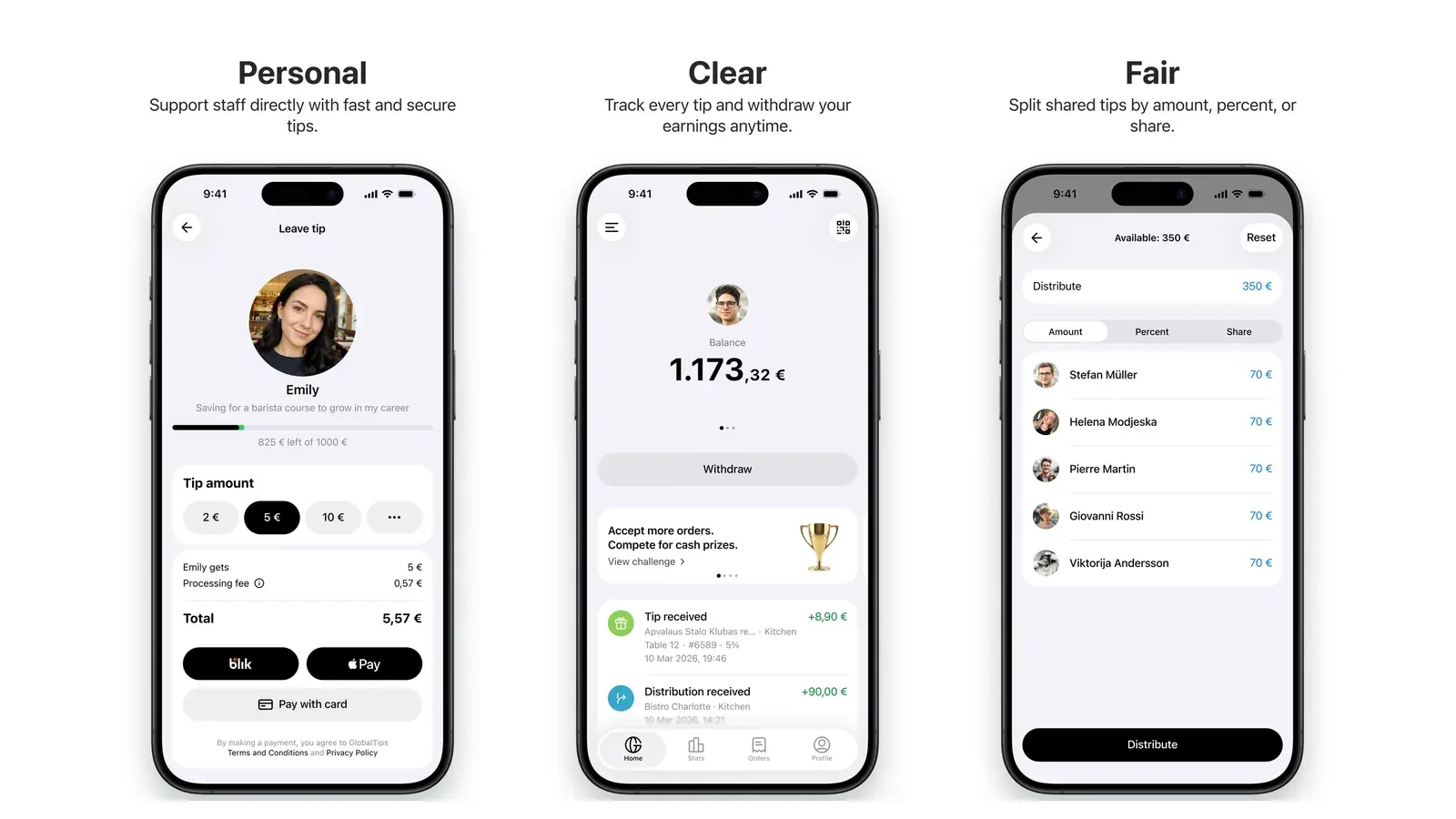
GlobalTips called us in for one feature in their guest app. After 14 monthly cycles, we now build across their guest app, staff app and web products, and BLIK carries about 15% of their payments in Poland.
View case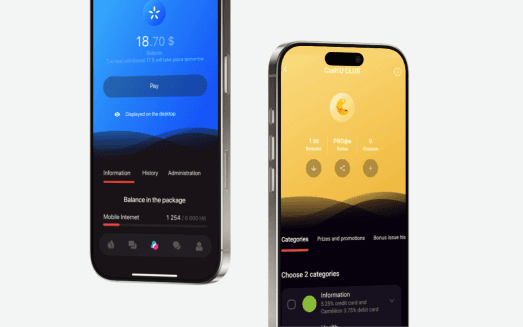
A consumer banking super app in a regulated market had to launch at scale inside a fixed regulatory and competitive window. We owned the integration architecture and mobile delivery.
View case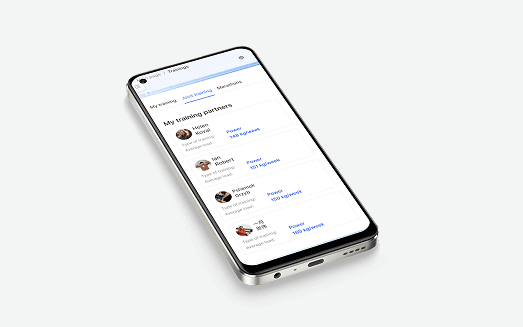
A progressive web app for independent and cooperative workouts in the gym, built for maximum accessibility.
View caseWe've been working with WislaCode since July 2025. What started as enhancing the loyalty program in our GlobalTips guest app grew into a broader partnership where they now handle significant frontend development across our guest app, staff app, and web products.
This was a very task-heavy project, mostly exploration and R&D-driven. However, by the end of WislaCode, we were left with a detailed roadmap consisting of clear milestones - able to be converted into tangible KPIs - and some neat ideas of what actionable are next. Integrating...
We collaborated with WislaCode on a product strategy development project and gave the highest marks for this contractor. The WislaCode team delivered on time and with outstanding quality.
Need an SDK built or a tricky one integrated?
Describe the host apps and the constraints and we will map the cleanest route in.