
Android app development
Android apps and payment SDKs for regulated products - from design and build to release.
Results from work we have shipped
payabl., an EU-regulated merchant acquirer, had a payment SDK gap holding up merchant onboarding. We designed and shipped it inside a single sprint cycle.
Looking for features that keep users coming back?
40+ features we have shipped in banking and fintech apps – from instant onboarding and QR payments to savings mechanics and tools for sole traders.
Android development services we provide
Our skilled UI/UX designers bring your ideas to life with engageing, user-friendly interfaces. Using Material Design principles, we create visually stunning designs that strengthen your brand identity while ensuring exceptional user experiences.
At WislaCode, we excel in custom Android applications development. Our developers apply modern technology and industry best practices to create apps perfectly aligned with your business needs, delivering solutions that set you apart.
We ensure your app reaches the widest audience possible. By utilising advanced cross-platform frameworks, we deliver Android applications optimised for multi-platform deployment, enhancing efficiency and broadening your app’s reach.
Flawless performance is non-negotiable. Through rigorous quality assurance and testing, we guarantee your Android app performs reliably across various devices and OS versions. Every app is tested for functionality, usability, performance, and security.
Your app’s success doesn’t end with its launch. We provide continuous support and maintenance to keep your app robust, secure, and up-to-date, ensuring long-term success in a fast-evolving digital environment.
An Android build that has to behave on every device?
Tell us the hardware, the integrations and the Play Store deadline and we will scope the Kotlin build.
How we deliver Android apps?
The same delivery discipline on every engagement - from the first map to a handover your team runs.
A short scoping phase turns the idea into an Android-specific plan: the user flows, the device and OS matrix, the hardware integrations, the security and policy requirements, and a backlog with a priced first milestone you can take to your board.
UX and UI take shape on Material guidelines while the architecture is set in parallel: a modular Kotlin structure, the security model, and the integration contracts with your backend and any payment hardware - the decisions that are expensive to change later, made deliberately.
Development runs in sprint cycles with working software at the end of each one. Code review, automated tests and CI are standing practice, and QA tests against real devices throughout - so hardware and OS-version surprises are found during the build, not in production.
We run the Play Store release end to end - signing, policy declarations, staged rollout, monitoring - then hand over the repository, keys and documentation. You keep us for support and maintenance if it earns its place, not because you are locked in.
What shapes the work
Teams come to us for Android when the platform itself is the risk. A regulated product - a banking app, a payment SDK, a KYC flow - has to behave identically across an enormous spread of device models, OEM-modified versions of the operating system, and hardware you do not control. iOS gives you a closed, predictable estate; Android gives you reach, and makes you earn it.
That trade is worth making, but only with engineers who treat Android as a platform discipline rather than a screen-rendering exercise. The decisions that determine whether your app survives contact with real devices - how you handle background execution limits, where credentials live, what happens when an OEM battery manager kills your process mid-transaction - are made in the first weeks and are expensive to reverse later.
We build Android applications and payment SDKs in Kotlin for fintech and other regulated domains, and we own the whole surface: design, build, device and hardware integration, security hardening, and the Play Store release itself.
Building for Apple devices as well? See iOS app development - the same disciplines applied to a very different platform.
The failure mode is rarely the happy path. An Android app that demos well on a flagship phone in the office can still fall over in production, because the production environment is every device your customers own, every Android version still in circulation, and every OEM's opinion about how background work should behave. The problems that consume budgets are concentrated at this edge:
- OEM battery managers killing long-running work mid-flow
- OS version spread that keeps old API behaviour alive for years
- Payment terminals and NFC hardware that behave differently per vendor
- Rooted or compromised devices probing your app's attack surface
We plan for this edge from day one: a defined device and OS matrix, hardware-in-the-loop testing for anything that touches a terminal or sensor, and defensive handling of process death as a normal event rather than an exception. That is the difference between an Android build and an Android product. It is also how a payment SDK for payabl., an EU-regulated merchant acquirer, went from kickoff to shipped inside a single sprint cycle and unblocked their merchant onboarding.
Read the payabl. Android payment SDK case for the full story - delivered in one month.
We build in Kotlin on the current Android toolchain: coroutines for concurrency, Jetpack libraries where they earn their place, and a modular architecture that keeps payment, identity and UI concerns in separate, independently testable layers. The bar for adding a third-party dependency is high - every library you ship is code you did not write running inside a regulated product, and on Android it also bloats the APK and widens the attack surface.
Security is designed in, not audited in. Credentials live in the Android keystore, sensitive flows pin their certificates, release builds are obfuscated, and the app verifies the integrity of the device it is running on before it trusts it. When the deliverable is an SDK rather than an app, the discipline tightens further: a minimal public API, almost no transitive dependencies, and documentation good enough that an integrating merchant's team never needs to call us.
Native Kotlin is our default for regulated Android work because it gives full access to platform security APIs and hardware the moment they ship, with no abstraction layer in between.
When one codebase across both platforms is the better commercial call, see cross-platform app development.
There is no honest flat price for Android development, but the cost drivers are knowable up front: the number and complexity of user flows, how much device or payment hardware integration is involved, the security and compliance bar the product has to clear, and how much backend work sits behind the app. We make those drivers explicit in a scoping exercise before any build commitment, so the first number you see is one we are prepared to stand behind.
The engagement itself runs in sprint cycles with a team shaped to the work: Android developers, a UI/
Scope changes are normal on a product that is learning from its users; the cadence is built so they cost a conversation, not a renegotiation.
Shipping on Google Play is a compliance exercise in its own right. Target API level deadlines arrive every year and will eventually block your updates if ignored; data safety declarations have to match what the app actually does; and for payment and financial products, policy review is stricter and slower. We treat the release as engineering work: signing and keystore management, pre-launch testing across Google's device pool, a staged rollout with halt criteria, and the policy paperwork done properly the first time.
After launch, Android keeps moving whether you do or not. A new OS version lands annually, OEMs push their own updates on their own schedules, and a dependency you rely on will deprecate something sooner or later. We run post-launch support as a standing discipline: crash and ANR monitoring against the vitals thresholds that affect your store visibility, regression passes on every major OS release, and scheduled dependency and security updates so the app never drifts into policy debt.
The aim is for day two to be boring: the operating cost of the app known and planned, and every store deadline visible months before it bites.
Working with WislaCode Solutions has been a great experience! We needed an Android SDK developed under a tight timeline, and their team delivered a flexible, user-friendly solution that integrated seamlessly into our ecosystem. Their transparent approach, proactive communication, and commitment to quality made the collaboration smooth...
What is included in an Android engagement?
Every Android engagement is scoped as a production delivery, not a prototype: the work below is what it takes to put a Kotlin application or SDK into real users' hands on Google Play and keep it there.
Discovery and scoping that turns your product flows, device estate and compliance constraints into a concrete Android backlog with a priced first milestone.
UX and UI design on Material guidelines, prototyped and tested with real flows before production Kotlin is written.
A modular Kotlin codebase with code review, automated tests and a CI pipeline that builds, signs and verifies every change.
Device and hardware integration - payment terminals, NFC, biometrics, cameras - tested against the physical hardware your product actually runs on.
Security hardening for regulated products: keystore-backed credential storage, certificate pinning, obfuscated release builds and device integrity checks.
QA across an agreed device and OS matrix - functional, performance and security passes on the versions your users actually hold.
Play Store release engineering: signing and keystore management, data safety declarations, staged rollout and the post-release monitoring that follows it.
At handover everything is yours: the repository, the signing keys, the Play Console listing, the CI pipeline and the documentation. No dependency on us survives unless you choose ongoing support.
How much does Android app development cost?
It depends on four drivers: the number and complexity of user flows, the depth of device or payment hardware integration, the security and compliance bar, and the backend work behind the app. We run a scoping exercise first and give you a priced first milestone, so the figure you commit to reflects your product, not a rate card.
How long does it take to build an Android app?
A tightly scoped deliverable can move very fast - we designed and shipped an Android payment SDK for payabl. within one month. A full application typically spans multiple sprint cycles, with working software at the end of each. The scoping phase produces a dated plan before you commit to the build.
How should we choose an engineering partner for a large-scale, compliant Android build?
Ask about the device estate before anything else: which API levels and manufacturers you support, how they test against the real mix rather than an emulator, and what the staged rollout and rollback look like when a release misbehaves on one vendor's firmware. Then ask who holds the signing keys, the Play console and the release pipeline at the end. A partner who treats the release machinery as part of the deliverable is one who has shipped at scale.
What does enterprise-grade mean for an Android app in a regulated setting?
It means the parts that only surface after launch are designed in from the start: device attestation feeding a risk decision, staged rollout with a real rollback path, crash and ANR budgets watched per device family, remote configuration for the flags that matter, and managed distribution where the app goes to staff or agents rather than the public. It also means release governance, because on Android a bad build reaches a large audience quickly and the recovery path has to exist before you need it.
Can one team cover both a PWA and native Android?
Yes, and the sensible programmes usually do. One core serves both surfaces, with the PWA carrying reach and the Android app carrying what the web cannot reach, such as deep hardware access, background behaviour or a payment SDK. Splitting that across two suppliers is what makes the surfaces diverge, because each ends up owning its own copy of the business logic. Handled as one product, the Android build is an extension of work already done, which is where the saving comes from.
What makes an Android banking app secure?
Keys in the hardware-backed keystore with user authentication bound to them, device attestation feeding a risk decision rather than a blunt block, certificate pinning that survives rotation, and root or tamper signals treated as inputs instead of verdicts. For a European payments app the authentication design is fixed by the PSD2 technical standards, Commission Delegated Regulation (EU) 2018/389, whose Article 9 requires independence of the authentication elements, so a compromised device must not defeat more than one of them. That is decided at the architecture step, because reworking it later means reworking the payment flow.
Can AI features run inside an Android banking app?
Yes, and on Android the constraint is the device estate rather than the model. On-device inference for document capture, liveness or personalisation has to be sized for the weakest handset you still support and fall back to a server path on the rest, which is a build decision rather than a tuning exercise. Where the feature interacts with a customer, Article 50 of the EU AI Act, Regulation (EU) 2024/1689, has applied since 2 August 2026 and requires the person to be told they are dealing with an AI system.
Can a legacy system be modernised into an Android app?
Usually, though most of the work sits behind the app. An older core rarely exposes what a modern mobile product needs, so we put an adapter and orchestration layer in front of it for real-time balances, transactions and identity, then keep that layer stable while the core changes on its own schedule. Where an old Android codebase exists as well, we audit it first and tell you plainly whether it is worth extending.
Can you take over an existing Android codebase?
Yes. We start with an audit of the architecture, dependencies, security posture and Play Store standing, then agree what to stabilise before adding features. Where the codebase is sound we extend it; where it is not, we tell you plainly and show the cost of each path.

A consumer banking super app in a regulated market had to launch at scale inside a fixed regulatory and competitive window. We owned the integration architecture and mobile delivery.
View case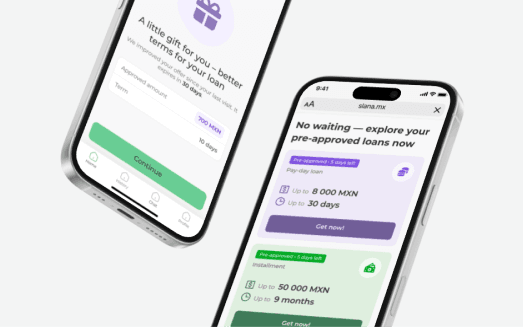
$lana (Monetech), a regulated multi-country consumer credit platform, needed its compliance and data integrations online inside a tight regulatory window. We owned the integration architecture and delivered.
View case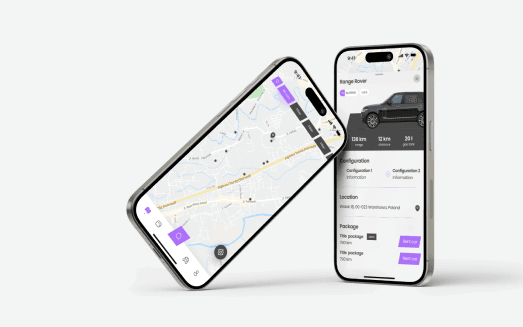
A design concept for a carsharing launch - a progressive web app approach, prototyped to be convenient for customers and efficient to run.
View caseThis was a very task-heavy project, mostly exploration and R&D-driven. However, by the end of WislaCode, we were left with a detailed roadmap consisting of clear milestones - able to be converted into tangible KPIs - and some neat ideas of what actionable are next. Integrating...
We collaborated with WislaCode on a product strategy development project and gave the highest marks for this contractor. The WislaCode team delivered on time and with outstanding quality.
We collaborated with WislaCode on a route-to-market optimisation project. Working with WislaCode was effective, transparent and predictable, which is especially critical for AI and ML projects. We provided them with six months of anonymised data, and within just three weeks...
Need Android engineers who ship to production?
Outline the app and its release cadence and we will plan the team and the first milestone.