
iOS app development
iOS apps for regulated products - design, build, testing and App Store release discipline.
Results from work we have shipped
Moving from standard banking with a basic set of functions to a digital bank where everything can be done online.
Looking for features that keep users coming back?
40+ features we have shipped in banking and fintech apps – from instant onboarding and QR payments to savings mechanics and tools for sole traders.
iOS development services we provide
Wondering how to get the most out of your app? Our iOS app strategy services offer a tailored roadmap combining market insights and strategic foresight to ensure your app’s success.
Improve the look and feel of your app with our intuitive UX/UI services. We create visually stunning, user-friendly designs that blend creativity with functionality, making every interaction enjoyable.
Need a unique app that stands out? WislaCode specialises in custom iOS applications development, leverageing the latest technologies to deliver innovative, user-focused solutions tailored to your goals.
Transform your business operations with our enterprise-grade iOS apps. From enhancing productivity to streamlining collaboration, our solutions cater to your organisation’s specific needs.
Quality is our priority. Through testing for functionality, usability, performance, and security, we ensure your iOS app runs reliably and securely.
Keep your app ahead of the curve with our maintenance services. From resolving issues to ensuring compatibility with the latest iOS updates, we provide continuous optimisation for top performance.
An iOS app that must clear App Store review first time?
Sketch the feature set and the security needs and we will scope the Swift build around them.
How we deliver iOS apps?
The same delivery discipline on every engagement - from the first map to a handover your team runs.
We start with the backlog, not the contract. Product goals, integrations, compliance constraints and App Store requirements are mapped into scoped features with estimates and explicit assumptions, so you can see what drives cost and timeline before any code is written.
UX and UI are designed against Apple's Human Interface Guidelines while the architecture is laid out in parallel - module boundaries, security model, integration contracts - so design and engineering stay synchronised instead of queueing behind each other, and the first sprint starts from decisions, not blanks.
Development runs in sprints that each end in a TestFlight build on real devices. Features ship behind flags, every change passes code review, and functional, performance and security testing run continuously - so the open question is when to release, not whether the app works.
We carry the app through App Store review with the listing, privacy declarations and reviewer materials prepared in advance, then hand over the codebase, accounts and documentation - with post-release monitoring and iOS-version maintenance agreed before launch day rather than negotiated after it.
What shapes the work
Teams searching for iOS development are usually past the platform debate: the product will live on iPhones, and it has to clear Apple's gate. For regulated products - banking, payments, identity - that choice carries real weight, because the iPhone's security model becomes part of your compliance story. Biometric login, hardware-backed key storage and the App Store's review regime are not features you bolt on at the end; they shape the architecture from the first sprint.
That is the work WislaCode does: native Swift builds for products where security review, audit and App Store approval are part of the definition of done. The reference point is our mobile banking build for a bank with 700,000+ customers - a move from a basic feature set to a digital bank where everything can be done online, first release in six months. The same model applies whether you are launching a new product or replacing an app your customers have outgrown: a small senior team, design and engineering synchronised, and production quality from day one rather than a prototype that gets rewritten later.
If you are still weighing one shared codebase against two native apps, start with cross-platform development.
Apple's review is a hard gate between code-complete and live, and it is where inexperienced teams lose weeks. Permission prompts that do not explain why the app needs them, missing privacy declarations, sign-in flows that break Apple's account rules, payment screens that drift into guideline territory - each one is a rejection, and each rejection restarts the queue. Financial apps get looked at harder: reviewers expect account opening, money movement and data handling to be demonstrably in order, and they need a working demo account to test against.
We treat review as an engineering constraint rather than a formality at the end. Guideline requirements go into the backlog next to functional ones, privacy declarations are written alongside the features that trigger them, and reviewer notes and demo credentials are prepared as deliverables, not scrambled together on submission day. Submissions are timed so a rejection cannot move the launch date, and the response to a rejection - what we appeal, what we change, how fast we resubmit - is agreed in advance. Phased rollout is the default for first releases, so an issue in production reaches a fraction of users instead of all of them.
To see this discipline carried through a regulated product, read the Swift and Kotlin banking build.
We build in Swift and choose between SwiftUI and UIKit per product, not by fashion: the minimum iOS version you need to support, the complexity of custom interactions and how long each screen has to live decide the split. Architecture is modular, so features build, test and ship independently - which is also what makes a security audit tractable. The security layer leans on what Apple's hardware already provides instead of reinventing it:
- Face ID and Touch ID login, with keys held in the Secure Enclave
- Keychain storage and certificate pinning for credentials and transport security
- Apple Pay where the product moves money, push notifications through APNs
- Privacy-by-design data handling that matches the App Store declarations
Ecosystem and tooling work sits inside the same scope: App Store Connect setup, TestFlight distribution and the signing and provisioning machinery every iOS team eventually fights are handled in the engagement, not left as an exercise for your staff. The result feels native because it is native, and it passes a dependency review without an exotic third-party list attached.
An honest iOS quote starts with an admission: nobody can price your app from a phone call. What we can name up front is where iOS budgets actually go. Apple's narrow device range keeps the testing matrix manageable, so the spend concentrates elsewhere: in the integrations behind each journey - core platforms, KYC providers, payment rails - in the security and audit evidence a regulated product has to carry, and in the review-readiness work described above. That is why we scope before we quote: the first deliverable is a mapped backlog with estimates and explicit assumptions, so you are challenging a feature list rather than accepting a single number.
Engagements run in two shapes: a fixed-scope build with a defined release, or a dedicated team that carries the roadmap past launch. For calibration on pace rather than promises: the mobile banking app in our case work reached its first release in six months, and the review on this page from Aleksei Malenkin, CTO of $lana (Monetech), singles out the speed of delivery. Timelines like these come from running design, engineering and review preparation in parallel, not from cutting the testing budget.
When the roadmap needs both platforms moving in step, pair this work with Android app development.
An iOS app stays inside Apple's machinery for as long as it is on the store: every update goes back through the same review that gated the first release, and Apple sets deadlines of its own - within months of each major iOS release, new submissions must be built against the current SDK. Because iPhone users adopt new versions quickly, any change in system behaviour reaches most of your customer base within weeks.
Our post-release scope is built around that reality. Crash and performance monitoring is wired to alerting an engineer actually receives, releases run on a train so fixes and features batch into predictable review submissions, and signing assets and push credentials are renewed on a calendar rather than after an outage. When Apple publishes developer betas, we test against them before your customers do, so version-day surprises surface in our pipeline first.
This is also where the engagement settles into a steady shape: a maintenance retainer for compatibility and fixes, or a continued product team for a roadmap that keeps moving. Either way, the discipline that got the app through review the first time stays in place.
WislaCode specialists quickly synchronised and worked with the second team involved in developing our solution. As a result, having started development from scratch, we came to the expected result quickly. The first users went to the application after 5 months.
What is included in an iOS engagement?
An iOS engagement at WislaCode is scoped to production, not to a prototype: every stage below ends in something you can test, audit or ship, and the App Store release is part of the plan from day one.
Discovery and scoping that turns your product goals into a mapped iOS backlog with estimates, assumptions and a release plan.
UX and UI design built on Apple's Human Interface Guidelines, delivered as developer-ready screens and a reusable component library.
Native Swift development with a modular architecture, code review on every change and feature flags for safe rollout.
Security implementation covering biometric login, Secure Enclave-backed keys, Keychain storage and certificate pinning, documented so your auditors can verify it.
Functional, performance and security testing on real devices, with TestFlight builds your stakeholders can try at the end of every sprint.
App Store submission handled end to end, covering the listing, privacy declarations, reviewer notes, demo accounts and the response to any rejection.
Post-release support covering crash and performance monitoring, annual iOS compatibility work and an update cadence agreed before launch.
At handover you own everything: the Swift codebase, the App Store Connect listing, signing assets, design sources and the documentation - no licence back to us and no dependency on our infrastructure.
How long does it take to build an iOS app?
Scope and integration depth set the timeline, which is why scoping comes before any quote. As a grounded reference point: the mobile banking build in our case work, for a bank with 700,000+ customers, reached its first release in six months. Running design, development and review preparation in parallel is what keeps a number like that honest.
How is an iOS development engagement priced?
From a mapped backlog, not a headline day rate. The drivers are integration count, security and compliance requirements, custom design depth and the testing matrix. Engagements run as a fixed-scope build or a dedicated team, and the scoping stage gives you an estimate broken into features and assumptions you can challenge line by line.
How do we evaluate the technical depth of a team building a secure iOS app?
Ask them to describe how they store a credential, refresh a session, and handle an expired token on a device that has been offline for a week. Ask what runs on the device and what leaves it, how they test against the oldest OS version you still support, and what the release pipeline does when a build is rejected. Depth shows up in the unglamorous answers, and a team that has shipped a supervised financial product will have them ready.
Can an iOS app integrate with our legacy banking systems?
Yes, and that is the usual case rather than the exception. The app rarely talks to the core directly. We build an adapter and orchestration layer that turns what the legacy system can provide into the real-time balances, transaction history and identity checks the app needs, then keep that layer stable while the core migrates on its own timetable. That is what stops a mobile release date from depending on a core banking programme.
What do security and compliance mean specifically on iOS?
Keys live in the Secure Enclave and the Keychain with the right protection class rather than in application storage, sessions are bound to the device, and certificate pinning has to survive your own certificate rotation. For a European payments app the authentication design is set by the PSD2 technical standards, Commission Delegated Regulation (EU) 2018/389, whose Article 9 requires the independence of the authentication elements, so a compromise of the device must not defeat more than one of them. That is what decides how biometrics and the possession element are combined, and it is settled at the architecture step.
Can AI features run inside an iOS financial app?
Yes, and the first decision is where inference happens. On-device keeps the data on the phone and works offline, which suits document capture, liveness checks and personalisation; server-side suits anything needing your full history or a model you have to govern centrally. Where the feature interacts with a customer, Article 50 of the EU AI Act, Regulation (EU) 2024/1689, has applied since 2 August 2026 and requires the person to be told they are dealing with an AI system, so the disclosure belongs in the design rather than in a later release.
Boutique team or large agency for a complex iOS build?
The size of the firm matters less than who is actually on your project and how many layers sit between you and them. A focused team gives you the engineers making the decisions and a short path from question to answer. A large agency gives you bench depth and procurement comfort, sometimes with a rotating cast. Ask for the named people, their availability and what happens when one of them leaves, then judge on that instead of on headcount.
What changed for iOS app distribution in the EU?
Article 6(4) of the Digital Markets Act, Regulation (EU) 2022/1925, requires a gatekeeper to allow and technically enable third-party app stores and alternative distribution on its operating system, so an EU financial product can now reach users outside the App Store. In practice Apple still notarises those builds and applies its own terms, so the choice is commercial and operational rather than a free route around review. For most regulated products the App Store stays the primary channel, and we plan the review track into the schedule on that basis.
Do you handle App Store submission and review?
Yes, end to end. We prepare the store listing, privacy declarations, reviewer notes and demo accounts, time the submission so a rejection cannot move your launch date, and manage the response through approval and phased rollout. Review requirements are tracked in the backlog from the first sprint, not discovered at submission.
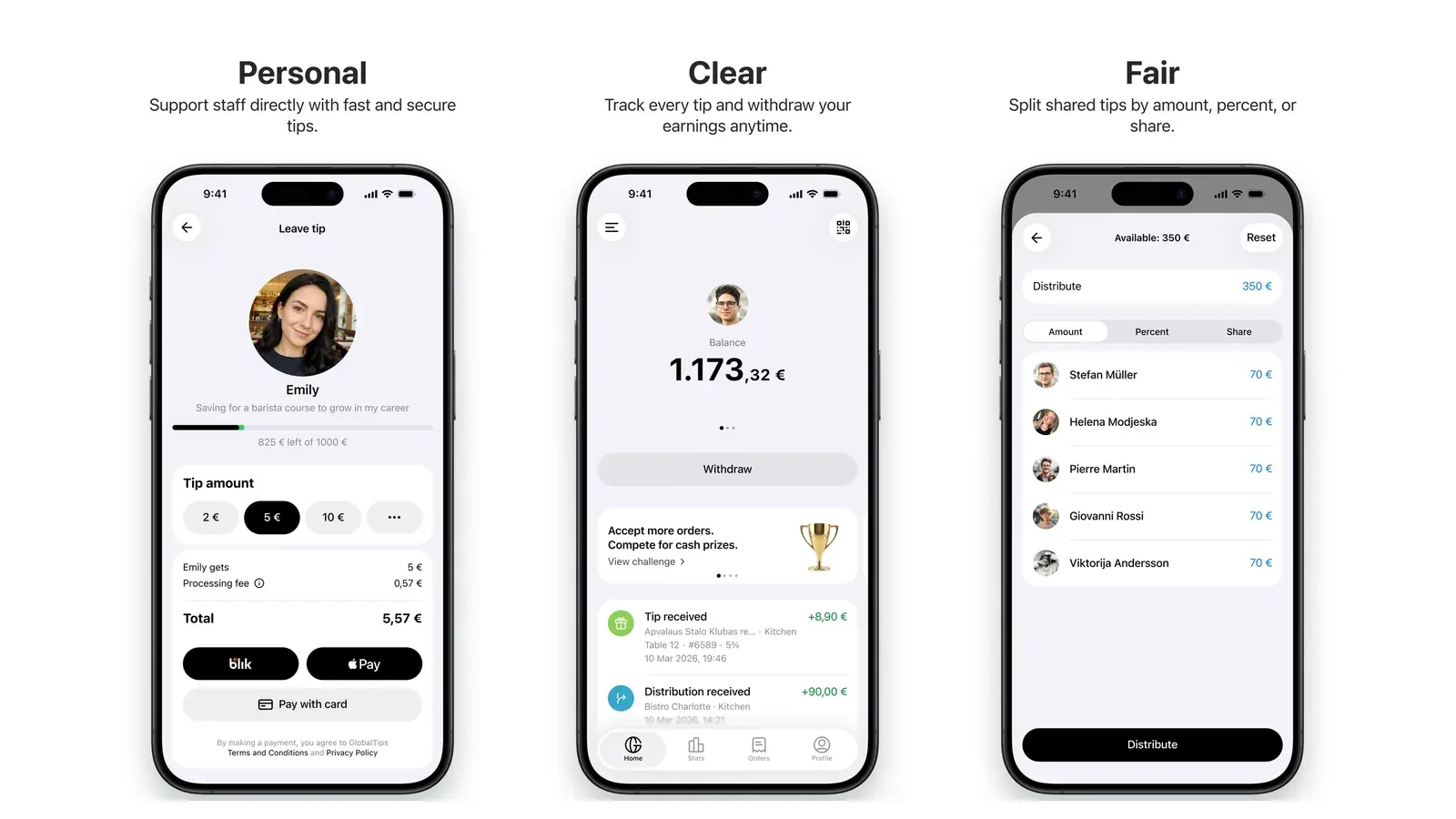
GlobalTips called us in for one feature in their guest app. After 14 monthly cycles, we now build across their guest app, staff app and web products, and BLIK carries about 15% of their payments in Poland.
View case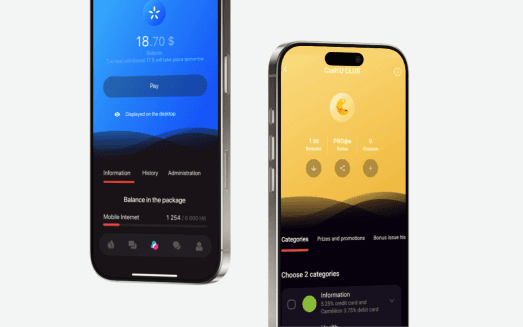
A consumer banking super app in a regulated market had to launch at scale inside a fixed regulatory and competitive window. We owned the integration architecture and mobile delivery.
View case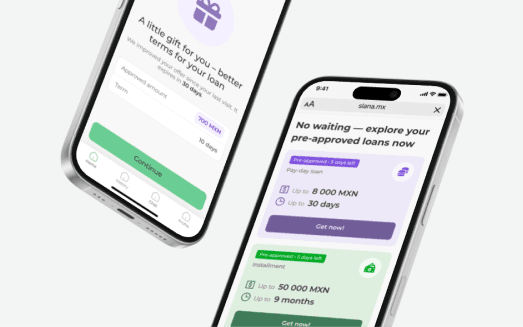
$lana (Monetech), a regulated multi-country consumer credit platform, needed its compliance and data integrations online inside a tight regulatory window. We owned the integration architecture and delivered.
View caseWe've been working with WislaCode since July 2025. What started as enhancing the loyalty program in our GlobalTips guest app grew into a broader partnership where they now handle significant frontend development across our guest app, staff app, and web products.
This was a very task-heavy project, mostly exploration and R&D-driven. However, by the end of WislaCode, we were left with a detailed roadmap consisting of clear milestones - able to be converted into tangible KPIs - and some neat ideas of what actionable are next. Integrating...
We collaborated with WislaCode on a product strategy development project and gave the highest marks for this contractor. The WislaCode team delivered on time and with outstanding quality.
Taking a high-stakes product to the App Store?
Share the product brief and we will plan biometrics, review strategy and the release path.