
Generative AI development
LLMs and generative AI you can put in production - RAG, fine-tuning and guardrails, deployed privately inside your compliance boundary.
Results from work we have shipped
WislaSearch is an AI-powered search assistant that centralises fragmented data, indexes and retrieves the right information instantly, and keeps everything inside your own secure infrastructure.
Shortlisting a software development partner?
The questions to ask in an RFP, three warning signs a vendor may not deliver, and a scoring matrix to compare contractors objectively.
Generative AI we build
Language features built into your product - reading, drafting, classifying and routing over documents, messages and forms.
Answers grounded in your own documents, databases and APIs, with citations, so the model reasons over retrieved facts rather than its training data.
Adapting open-weight models to your domain, tone and taxonomy where a general model is not enough.
Drafting, summarising and transforming documents at scale, with a person in the loop where it matters.
Assisted development and internal tooling, used with the guardrails that keep generated code reviewable.
Refusals, grounding checks, evaluation sets and monitoring, so quality is measured before and after launch.
Self-hosted or private-endpoint models so generation runs inside your compliance boundary.
How we deliver generative AI?
The same delivery discipline on every engagement - from the first map to a handover your team runs.
We map the task, the data to ground it and the governance constraints, then scope a proof of concept with a measurable bar.
We design the retrieval layer, the model choice and the boundary - what runs where, and what never leaves your infrastructure.
We build the pipeline, ground the model in your data, and add the guardrails, refusals and evaluation that make it safe to ship.
Deployed privately, measured on an evaluation set, and monitored after launch, with the runbook handed to your team.
What shapes the work
The distance between a promising demo and a system you can run in a regulated business is where most generative AI projects stall. A model that sounds convincing is not the same as a model that is grounded, bounded and safe to put in front of a customer or an auditor.
We build for that distance: retrieval so answers are grounded in your data, guardrails and evaluation so the system refuses rather than invents, and private deployment so your data never leaves your boundary. The generative capability is the easy part; making it dependable is the work.
Chatbots and search are the two most common products built on generative AI, and the subtle part is that they share the same foundation - LLMs and RAG - but serve different jobs. So we keep them on their own pages and keep this one about the foundation and the generation use-cases that are neither: content, code, summarisation and document processing.
If you want a conversational assistant, see AI chatbot development. If you want to find answers across a corpus, see AI-driven search. Both are grounded with the same retrieval patterns we describe here. The AI search assistant case shows the pattern in production.
Public model providers are the fastest way to leak regulated data. The data that makes a generative system useful - your records, policies and history - is exactly the data you cannot send out. We design for that from the start: self-hosted or private-endpoint models where capability allows, retrieval that keeps your data on your infrastructure while the model only reasons over what was retrieved, and contractual limits on any third-party endpoint. The full boundary approach is on the Data Science &
Generative AI carries real uncertainty, so we prove it before you commit. A proof of concept on your own anonymised data is fixed-price and time-boxed, with a measurable bar - grounding quality, refusal behaviour, task accuracy. If it clears the bar, production follows with guardrails, evaluation and monitoring built in from the first sprint.
The hardest question in generative AI is not building the system, it is knowing whether it is good enough to ship. A demo that impresses in a meeting can fail quietly in production, inventing an answer one time in twenty where nobody is checking.
So we build an evaluation set before we build the feature: real questions with known good answers, graded for grounding, accuracy and refusal behaviour. The system has to clear an agreed score on that set before it goes live, and the same set runs again after every change to catch regressions.
That is what separates a generative feature you can put in front of a customer or an auditor from a promising prototype. The evaluation is not a final QA step, it is the specification the build is measured against from the first sprint.
What is the difference between generative AI, chatbots and search here?
Generative AI is the foundation - LLMs, RAG and fine-tuning - and the generation use-cases that are not conversation or retrieval, such as content and code. A chatbot is a conversational product built on it; AI-driven search is a retrieval product built on it. Each has its own page.
How do you stop the model inventing answers?
Retrieval so the model reasons over your facts, guardrails and refusals so it declines when it should, and an evaluation set so grounding is measured before and after launch.
Can generative AI run inside our own infrastructure?
Yes. Self-hosted or private-endpoint models keep generation and your data inside your compliance boundary, with contractual limits on any third-party endpoint.
Do you fine-tune models or use them off the shelf?
Whichever clears the bar. Often retrieval over a strong general model is enough; we fine-tune open-weight models when domain, tone or taxonomy needs it.
What can you build with generative AI besides a chatbot?
Document drafting and summarisation, classification and routing, code generation and internal tooling, and language features inside your product.
How do you prove it works before we commit?
A fixed-price, time-boxed proof of concept on your anonymised data, measured against grounding, refusal and accuracy targets you agree up front.
A private, on-premise WislaSearch deployment that turns a logistics operator's scattered operational knowledge into instant, cited answers - without anything leaving their network.
View case
An AI-driven solution that optimises medical sales representative routes and improves field efficiency, using deep learning over visit patterns to predict the best routes.
View case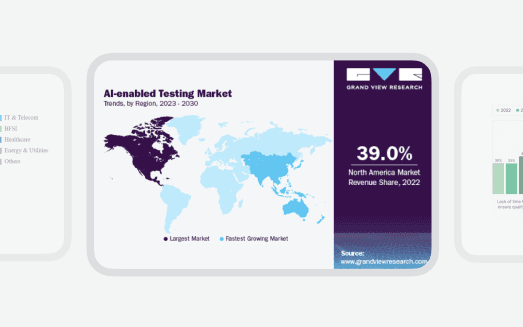
WislaCode helped Verysell Group Applied AI Lab explore the current state and future of AI testing, turning uncertainty into clear, actionable insights.
View caseWe've been working with WislaCode since July 2025. What started as enhancing the loyalty program in our GlobalTips guest app grew into a broader partnership where they now handle significant frontend development across our guest app, staff app, and web products.
This was a very task-heavy project, mostly exploration and R&D-driven. However, by the end of WislaCode, we were left with a detailed roadmap consisting of clear milestones - able to be converted into tangible KPIs - and some neat ideas of what actionable are next. Integrating...
We collaborated with WislaCode on a product strategy development project and gave the highest marks for this contractor. The WislaCode team delivered on time and with outstanding quality.
Building on LLMs?
Bring the task and the data to ground it. We will scope a proof of concept that proves grounding and safety before any full build.