
Invoicing solutions development
Invoicing software development for B2B and fintech platforms: issuing, e-invoicing compliance, recurring invoices, approvals and the accounting integration behind them.
Results from work we have shipped
$lana (Monetech), a regulated multi-country consumer credit platform, needed its compliance and data integrations online inside a tight regulatory window. We owned the integration architecture and delivered.
Shortlisting a software development partner?
The questions to ask in an RFP, three warning signs a vendor may not deliver, and a scoring matrix to compare contractors objectively.
What we build
Gapless, jurisdiction-correct invoice numbering with credit notes and corrections handled as first-class documents rather than edits to a sent invoice.
Structured e-invoicing where it is mandated - EU formats, PEPPOL delivery and the clearance or reporting step a jurisdiction requires - rather than a PDF that a tax authority will not accept.
VAT treatment by counterparty and place of supply, reverse charge, exemptions and rounding rules, expressed as configuration your finance team can read and audit.
Scheduled and usage-driven invoices, proration on mid-cycle change, and the run that has to produce thousands of correct documents on the same morning.
Approval chains, holds and disputes for the invoices that cannot simply be issued - with a clear audit trail of who approved what and when.
Invoices posted to the accounting system or ERP you already run, so the ledger is the source of truth and nobody re-keys anything.
Delivery with proof, dunning reminders, and payment matching that reconciles an incoming payment to the right invoice without a spreadsheet.
Invoicing outgrown the template it started as?
Tell us the jurisdictions and the volume. We will tell you what an invoicing build actually has to cover.
How we deliver invoicing software?
The same delivery discipline on every engagement - from the first map to a handover your team runs.
Jurisdictions, tax treatment, numbering and retention first. The rules determine the data model, and getting that order wrong is what forces the rewrite.
In your repository, your CI and against the accounting system you already run. Invoicing that lives outside the platform becomes a reconciliation problem of its own.
Immutable issued documents, a full audit trail and reproducible output. If an auditor asks for an invoice from three years ago, the system answers - not an engineer.
Runbooks for the invoice run, tests over the tax and numbering rules, and a configuration surface finance can operate without a deployment.
What shapes the work
Most invoicing projects are scoped as though the deliverable were a document: generate a PDF, email it, mark it paid. The document is the easy half. An invoice is a legal and tax artefact - it has to be numbered in an unbroken sequence, carry the right tax treatment for the counterparty and the jurisdiction, be immutable once issued, and be reproducible years later exactly as it was sent.
That is why invoicing work that starts as a template exercise tends to be rewritten within a year. The rules are not decoration around the PDF; they are the product.
We build invoicing as a system of record: a numbering authority, a tax engine, an immutable issued document, a delivery channel with proof, and a matching process that closes the loop when the money arrives.
The failures are consistent enough to name in advance, and each one is a design decision rather than a bug.
- Mutable invoices. Editing a document that has already been sent breaks the audit trail. Corrections are credit notes, and that has to be true from the first release.
- Numbering as an afterthought. A sequence with gaps, or one that restarts per tenant without a rule, is a finding in an audit. Numbering is an authority, not a counter.
- Tax logic scattered through the code. When the rate or the treatment changes - and it does - the change has to be one configuration edit, not an archaeology exercise.
- The month-end run treated as a normal job. Producing thousands of correct documents in one window is a throughput and idempotency problem: a half-finished run must be safe to restart without double-issuing.
- Payment matching left manual. It is the step that decides whether anyone trusts the receivables number.
Structured e-invoicing is no longer a European curiosity. Mandates are arriving jurisdiction by jurisdiction, each with its own format, delivery network and clearance model, and each with its own timetable. A platform that sells across borders will be subject to several of them at different times.
We design for that shape rather than for one country: a canonical internal invoice, mappings out to each required format, and a delivery layer that knows which network and which clearance step applies. Adding the next jurisdiction becomes a mapping and a rule set, not a second invoicing system.
This is the same integration discipline we apply everywhere else on the platform - see API integration services for how we treat a provider or network as a contract with edge cases rather than a happy path.
It is worth being precise, because the three get conflated and the conflation is expensive. Billing decides what a customer owes - the plans, the usage, the proration. Invoicing turns that into a legal document and delivers it. Payments collect the money.
They fail differently and they change for different reasons: billing changes when commercial policy changes, invoicing changes when a tax authority changes, payments change when a provider or a scheme changes. Building them as one module means every one of those forces lands in the same code.
We build them as separate systems with clear contracts between them. If your scope is really the first, start at billing software development; if it is the third, start at payment solutions development.
The cost drivers in invoicing are the rules, not the screens: how many jurisdictions are in scope, whether structured e-invoicing is mandated in any of them, how complex the tax treatment is, whether invoices are recurring or usage-driven, and which accounting system has to receive the result.
We scope those first and tell you which of them is the real driver. Most invoicing engagements are smaller than the client fears on the document side and larger than they expect on the rules side, and it is better to know that before the contract than during it.
As a reference point from our own work, a credit platform for $lana (Monetech) went live with two KYC providers and full reporting in five months - the reporting and document side of a regulated financial product is the same discipline this page describes.
WislaCode specialists quickly synchronised and worked with the second team involved in developing our solution. As a result, having started development from scratch, we came to the expected result quickly. The first users went to the application after 5 months.
What is included in an invoicing engagement
An invoicing engagement ends with a system finance can operate and an auditor can accept:
Invoice issuing with gapless, jurisdiction-correct numbering and immutable issued documents.
Credit notes and corrections as first-class documents, with a complete audit trail.
A tax and VAT rule set expressed as auditable configuration rather than scattered code.
Structured e-invoicing and delivery for the jurisdictions in scope, with proof of delivery.
The recurring invoice run, restartable and idempotent, with monitoring on the window it has to finish in.
Posting into your accounting system or ERP, and payment matching that closes the loop.
Tests over the numbering and tax rules, runbooks for the run, and a documented handover.
What does invoicing software development cost?
The drivers are the rules rather than the screens: how many jurisdictions are in scope, whether structured e-invoicing is mandated, how complex the tax treatment is, whether invoices are recurring or usage-driven, and which accounting system has to receive the output. Discovery turns those into a scoped, dated plan before you commit, and we will tell you on the first call which of them is the real cost driver for you.
Can you build invoicing on top of our existing billing and accounting systems?
Yes, and that is the usual shape. Billing decides what is owed, invoicing turns it into a legal document, and the accounting system stays the ledger of record. We build the invoicing layer inside your platform and integrate outwards to the billing logic and the ERP or accounting system you already run, rather than replacing either.
Do you handle e-invoicing mandates and VAT rules?
Yes. We design for a canonical internal invoice with mappings out to each required format and delivery network, so adding the next jurisdiction is a mapping and a rule set rather than a second invoicing system. VAT treatment by counterparty and place of supply, reverse charge and exemptions are expressed as configuration your finance team can read and audit.
Which e-invoicing mandates are already live in the EU?
Enough of them that a cross-border seller is usually in scope of at least one. Since Council Directive (EU) 2025/516 entered into force on 14 April 2025, member states may impose domestic e-invoicing without an EU derogation, and several have moved. Poland is the clearest case: mandatory KSeF invoicing applied from 1 February 2026 for taxpayers above PLN 200 million of 2024 sales and from 1 April 2026 for other VAT-registered businesses, with micro-entrepreneurs following on 1 January 2027. EU-wide digital reporting for intra-Community B2B arrives on 1 July 2030, with transposition due by 31 December 2026.
A bespoke invoicing build or an off-the-shelf product?
Buy if your invoicing is genuinely standard and single-jurisdiction. Build, or extend, when the invoice has to come out of your own product with your own data, when several mandates apply on different timetables, or when numbering and correction rules have to match a ledger you already run. The failure mode of buying is not the licence cost. It is the integration: a product that owns the invoice but not the billing data leaves a synchronisation problem that nobody in either team owns.
Can invoicing be modernised without replacing the billing system?
Yes, and it is usually the right order. Billing decides what is owed, invoicing turns it into a legal document, and the two change for different reasons - billing when commercial policy moves, invoicing when a tax authority does. We build the invoicing layer as its own service with a defined input from whatever your billing produces, so a mandate in a new country becomes an invoicing change and does not reopen the pricing engine. The accounting system stays the ledger of record throughout.
Which parts of an invoicing workflow can AI take on?
The incoming side, mostly. Extracting line items from supplier documents, matching invoices to purchase orders and receipts, and routing exceptions to the right approver are cases where a model saves genuine hours and a wrong answer is caught by the next control. What it should not do is determine tax treatment or issue a document. Those have to be deterministic, reproducible and explainable to an auditor, and a probabilistic answer to a VAT question is a liability with a good user interface.
What makes an invoicing system secure enough for financial data?
Immutability first. Article 233 of the VAT Directive, 2006/112/EC, requires the authenticity of origin, the integrity of content and the legibility of an invoice to be assured from issue until the end of the storage period, which member states set under Article 247. In engineering terms: an issued invoice is never edited, because corrections are credit notes; numbering is gapless and allocated by the system rather than by a person; the stored document and its structured form are both retained; and the right to reissue or void is a named permission with an audit trail behind it.
How do we outsource an invoicing build without losing control of the rules?
Insist that the rules stay readable by your finance team and not only by developers. Tax treatment by counterparty and place of supply, reverse charge, exemptions and numbering series belong in configuration with an effective date and a change history, so a rate change is a controlled edit rather than a release. Then the outsourcing decision is about capacity rather than dependence: we build inside your repositories, hand over the rule set with the code, and your team can change a rule the day after we leave.
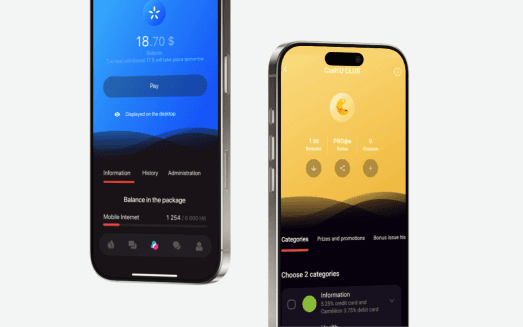
A consumer banking super app in a regulated market had to launch at scale inside a fixed regulatory and competitive window. We owned the integration architecture and mobile delivery.
View case
PushMaster is an enterprise-grade push notification server for reliable, multi-channel message delivery across web and mobile.
View case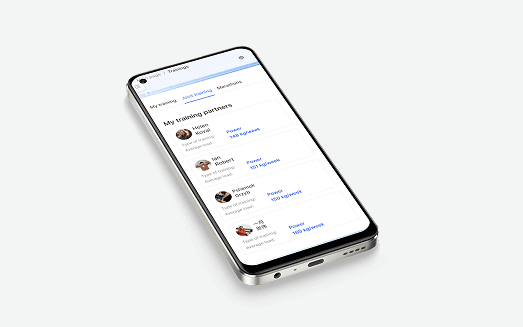
A progressive web app for independent and cooperative workouts in the gym, built for maximum accessibility.
View caseWe've been working with WislaCode since July 2025. What started as enhancing the loyalty program in our GlobalTips guest app grew into a broader partnership where they now handle significant frontend development across our guest app, staff app, and web products.
This was a very task-heavy project, mostly exploration and R&D-driven. However, by the end of WislaCode, we were left with a detailed roadmap consisting of clear milestones - able to be converted into tangible KPIs - and some neat ideas of what actionable are next. Integrating...
We collaborated with WislaCode on a product strategy development project and gave the highest marks for this contractor. The WislaCode team delivered on time and with outstanding quality.
Invoicing that has to satisfy a tax authority?
Talk to the engineers who would build it - the rules, the jurisdictions and what it takes to stay compliant.