
SME mobile banking development
SME banking apps: onboarding, invoicing, payments and cash flow tools for business customers.
Results from work we have shipped
Moving from standard banking with a basic set of functions to a digital bank where everything can be done online.
Looking for features that keep users coming back?
40+ features we have shipped in banking and fintech apps – from instant onboarding and QR payments to savings mechanics and tools for sole traders.
SME banking capabilities we build
Simplify customer acquisition with a contactless process. From document uploads to identity verification, onboarding is quick and user‑friendly.
Tailor the platform to meet your business needs and branding. Add functionalities as required and customise financial documents to align with your company’s visual identity.
Generate invoices instantly and receive automated reminders for due dates. Use optical character recognition for faster cost entry.
Business owners rarely sit at a desk when money needs moving. We design the mobile experience around real working life: approving a payment between site visits, checking incoming funds before committing to a supplier, freezing a card from anywhere. Biometric sign-in keeps frequent access fast without weakening security, and the most common tasks sit one or two taps from launch.
A business changes faster than a consumer: staff join and leave, a new hire needs a card, an accountant wants three years of statements. We build servicing around self-administration - managing users, ordering and replacing cards, downloading statements and account confirmations, adjusting limits - all in the app, without a call to the bank. That is where the economics sit: self-administration cuts operational cost, and servicing capacity grows with the software rather than with headcount.
Access all customer data on a single platform. Monitor order fulfilment, payment terms, and gather insights to improve customer service.
Easily scale your operations with pre‑integrated, cloud‑based applications. Quickly add new functionalities while maintaining a flexible IT infrastructure.
Regulation shapes the product before any code is written. In discovery we map what applies to each journey - PSD2 and strong customer authentication for payments, local requirements for business onboarding - and turn it into checks your compliance team can sign off before build. Exemptions matter as much as obligations: low-risk payments stay frictionless where the regulation allows it. And because regulation keeps moving, the product is built so a new requirement lands as a release, not a rebuild.
Gain a clear view of your financial health with a user‑friendly dashboard. Keep cash flow steady by tracking revenues and expenses in real time.
Business customers stuck with retail-grade banking?
Show us how your SMEs onboard, invoice and pay today and we will scope what to build first.
How we deliver SME mobile banking?
The same delivery discipline on every engagement - from the first map to a handover your team runs.
Discovery maps the SME journeys that must work on day one - onboarding, payments, invoicing, cash flow - against your core banking, identity and accounting landscape. Each journey gets acceptance criteria; each integration gets an owner and a readiness check before it can block the schedule.
Architecture and design run together: the roles and approvals model, the integration layer that isolates core banking, the security architecture, and UX prototypes of onboarding, payment authorisation and the cash flow view - tested against real SME tasks before engineering commits to them.
Native mobile, backend services, integrations and security work run as parallel workstreams on one release plan. Every increment ships through CI/CD with automated testing, and release candidates pass security and regression gates before store submission - quality is checked continuously, not discovered at the end.
We take the release through store review, production cutover and the first weeks of live operation, with monitoring and alerting in place from day one. Handover is deliberate: documentation, runbooks and knowledge transfer are scheduled work items with owners, not goodwill compressed into the final week.
What shapes the work
An SME owner does not open a banking app to check a balance and log out. They run the company from it: raising invoices, chasing receivables, paying suppliers, approving payments a bookkeeper has prepared, and checking whether next month's cash covers payroll and VAT. Those are different jobs from retail banking, and an app built on retail patterns fails them in predictable ways - one user where the business needs several, no separation between preparing a payment and authorising it, and no connection between an invoice and the payment that settles it.
We build SME banking as its own product. Onboarding that verifies a company and its signatories, not just one person. Payment flows with roles and approvals, so an owner can delegate without losing control. Invoicing, reminders and a cash flow view that live inside the account, where the money actually is, instead of in a separate tool that is permanently out of date. Business servicing - support, documents, limits - designed around how a small company operates rather than scaled down from corporate banking.
If the brief is the whole bank rather than the business channel, start with digital banking solutions.
Business onboarding is the first wall. Verifying a company means registry checks, documents, directors and signatories, and the flow has to survive the awkward cases: a sole trader applying from a phone, a partnership where two people must approve, a director who fails an identity check on the first attempt. Every extra day of waiting costs applicants, because a business that needs an account today will open one wherever it can get one today.
Permissions are the second. Small companies are shaped in every possible way - an owner who does everything, an owner plus an external accountant, a finance person who prepares and a director who signs. If the roles model is too rigid, people share credentials and your security model collapses in practice. If it is too loose, there is no real control and no clean audit trail when something is disputed.
And cash flow tools are only as honest as the data underneath them. Categorisation has to hold up across messy real-world transactions, and invoices have to reconcile against the payments that settle them, or the dashboard becomes something owners check once and never trust again.
For the invoicing and payment plumbing behind the app, see billing and payment solutions.
We default to native Kotlin and Swift for SME banking. Business owners approve payments from a phone in a warehouse or a van, and the features that carry the product - biometric authorisation, document capture for onboarding, instant card freeze, push-based approvals - all sit closest to the platform. Native keeps them fast and predictable under real-world network conditions.
Behind the app, the architecture decisions are about isolation and freshness. We put a dedicated layer between the product and core banking, so the app's roadmap is not hostage to the core's release calendar. Balance and payment status updates are pushed to the app as they happen rather than polled on a timer, current enough for an owner to act on. Cloud-native deployment gives resilience and lets new features ship without downtime, and we instrument the whole chain so a slowing connection shows up on our dashboards before it shows up in app store reviews.
The same discipline applies to money movement itself: invoice generation, payment initiation, reminders and reconciliation are a product of their own, and the app is only the surface that exposes them.
If untangling the core itself is the bigger job, start with legacy core banking systems integration.
A bank serving more than 700,000 customers asked us to rethink its mobile banking - to move beyond balances and transfers to a digital bank where everything can be done online. We delivered exactly that: client registration and verification, daily payments, invoicing and card controls, all of it in the app. The apps were built natively in Kotlin and Swift, and the first release went live in six months.
Security ran through that build rather than arriving at the end: threat modelling and a secure SDLC from the first sprint, code reviews, encryption in transit and at rest, MFA and biometric options, and continuous vulnerability testing.
The delivery pattern is consistent across our fintech work. Loucas Charalambous of payabl., whose team worked with us on an Android SDK delivery, highlighted the transparent approach, proactive communication and commitment to quality that made the collaboration smooth. That matters in SME banking because the hard moments are coordination moments - a compliance question, a slipping integration, a scope decision - and they go better with a partner who surfaces problems early.
The full story, including the stack and the release timeline, is in the 700,000+ user banking app case.
The cost questions in SME banking are concrete, and we put them on the table early. How wide is business onboarding - sole traders only, or partnerships and multi-director companies with registry checks in several markets? Do invoicing and accounting sync ship on day one, or do payments and cards go first? Which systems sit behind the app, and how much work will each connection take? The answers separate a wide estimate from a commitment.
You work with a dedicated team - product, native mobile, backend and integration engineering, QA and security - on a cadence built around demonstration rather than reporting: working software at the end of every cycle, on devices, against test systems. When priorities shift, the change is made visible and costed before it is absorbed.
After launch, SME usage has a rhythm of its own - month-end payment runs, payroll days, VAT deadlines - so the run phase is provisioned for peaks from the first month. We stay on for monitoring, support triage and the release cadence, and the roadmap follows observed behaviour: the journeys business customers repeat, where they stall, and what they ask for next.
Working with WislaCode Solutions has been a great experience! We needed an Android SDK developed under a tight timeline, and their team delivered a flexible, user-friendly solution that integrated seamlessly into our ecosystem. Their transparent approach, proactive communication, and commitment to quality made the collaboration smooth...
What is included in an SME banking engagement?
An SME banking engagement is scoped as a production build, not a prototype: a day-one release that business customers can bank on, with the onboarding, payments, invoicing and compliance work done to banking standards from the first sprint.
Discovery that maps SME owner journeys - onboarding, invoicing, approvals and cash flow - into a scoped day-one release with acceptance criteria.
Business onboarding flows with document capture, identity verification and KYC built to pass compliance review, not just demo well.
Native Kotlin and Swift apps covering accounts, payments, invoicing and card controls, with role-based access and approval flows for delegation.
An integration layer that connects core banking, payment, identity and accounting systems behind one stable contract the app can rely on.
Device-level protection for the app itself, from secure credential storage to certificate pinning, because business banking happens on personal phones.
Usability testing with real SME users, so invoicing, approvals and reconciliation stay quick on a phone, not just in a design file.
CI/CD, automated testing and observability so releases ship in short cycles and issues surface in monitoring before customers report them.
Everything ships as yours: source code, infrastructure definitions, CI/CD pipelines, test suites and documentation. Your team can take the product over at handover, or we stay on for releases and support - the choice is contractual, not technical.
What features should an SME mobile banking app include to deliver value from day one?
To deliver immediate value, focus on the core jobs SME owners perform daily. Prioritise streamlined onboarding with digital identity verification, clear account overviews (including multi-currency), fast domestic and international payments, and simple invoicing with automated reminders. Card management matters too: virtual and physical cards, spend controls, merchant category limits, and instant freeze/unfreeze improve expense governance. A practical cash-flow view that surfaces upcoming payables and receivables, powered by transaction categorisation, removes the need for separate tools. Role-based access and maker - checker approvals allow secure delegation, while audit trails keep everything transparent. In-app chat or secure messaging shortens resolution time, and contextual help reduces friction for tasks like setting up payees or batch payments. Accounting integrations (for example, Xero or QuickBooks) streamline reconciliation and reduce manual entry. With these foundations in place, you can layer advanced capabilities such as recurring payments, payroll batches, data-driven insights, and working-capital recommendations - without compromising a fast, trustworthy mobile experience.
How do you ensure security and compliance for SME banking apps?
We embed security into architecture, code, and operations. Data is encrypted in transit and at rest, secrets are managed centrally, and strong customer authentication supports biometrics and MFA. Least‑privilege, role‑based access protects sensitive actions like payment authorisation, with step‑up authentication for higher‑risk events. We maintain tamper‑evident audit trails across user actions and payments. Our secure SDLC includes dependency scanning, SAST/DAST, container hardening, and infrastructure as code with policy guardrails. Regular penetration testing and continuous vulnerability management reduce risk further. Operational controls include real‑time monitoring, anomaly detection, and rehearsed incident response to ensure rapid containment and recovery. Compliance is supported through consent and privacy controls, data minimisation, clear retention policies, and transparent user notices. We align to payments and open banking standards, enforce fine‑grained scopes for APIs and webhooks, and keep evidence ready for audits - delivering a banking‑grade posture without degrading user experience.
How long does it take to launch an SME mobile banking product, and what affects the timeline?
A typical first release lands in six to nine months for a native app covering onboarding, balances, payments, invoicing, card controls, and a basic cash‑flow view. We have achieved six months where scope is tight and integrations are ready. The biggest timeline variables are integration complexity (core banking, payments, identity, cards, accounting), non‑functional needs (performance, accessibility, offline support, localisation), and security, compliance, and testing depth. We de‑risk with discovery to confirm journeys, constraints, and acceptance criteria; a roadmap that prioritises day‑one value; and CI/CD for safe incremental releases. Parallel workstreams - mobile, services, integrations, and security - compress time without compromising quality. After launch, short cycles add batch payments, approvals, analytics, and automation, ensuring rapid value delivery while scaling reliably.
Can you integrate with our existing core banking and accounting tools?
Yes. We use standards‑based APIs and event streams to connect mobile apps with core banking, payments, identity providers, card issuing, and accounting platforms. For accounting, we support secure integrations with tools such as Xero or QuickBooks to sync invoices, categorise transactions, and simplify reconciliation. Where legacy interfaces are limited, we introduce an integration layer to normalise payloads, enforce idempotency, and add resilient retries. Webhooks and event‑driven patterns provide near real‑time updates (for example, posting transaction events or payment status), while rate limits, back‑pressure, and circuit breakers protect both sides. Fine‑grained permissions, explicit scopes, and robust authentication ensure only the minimum required data is exposed. Correlation IDs, comprehensive logging, and monitoring make cross‑system troubleshooting straightforward and keep the full SME banking experience reliable.
What does modernisation involve if we currently rely on legacy systems?
We begin by mapping our current capabilities to target journeys. Then, we isolate changes using an integration and anti-corruption layer. High-value domains like onboarding, payments, and statements are being split into microservices. Each microservice has clear APIs. We adopt cloud‑native deployment for resilience and elasticity, and implement observability (metrics, logs, traces) for real‑time insight. Data strategy focuses on ownership, versioned schemas, and safe migration, with read‑optimised views to keep mobile responses fast. Security improves via consistent IAM, secrets management, and automated compliance checks in the pipeline. CI/CD, automated testing, and blue‑green or canary releases reduce risk. The goal is not to rewrite everything at once, but to enable SME‑facing value early while retiring legacy components when risk and economics align - lowering cost‑to‑serve and speeding up future change.
How do you measure success and ROI for an SME mobile banking rollout?
We measure activation (completed onboarding and verification), early engagement (first payments, first invoice, first card issued), and repeat behaviours (weekly logins, approvals, batch payments). Adoption metrics tie to value: percentage of invoices sent in‑app, approval times, and reduction in support tickets. Financial impact includes revenue (for example, interchange on cards, payments fees where applicable) and savings from digital self-service replacing higher-cost channels. Risk metrics track authentication success, fraud detection effectiveness, and incident MTTR. Product metrics include task completion time, error rates, and in‑app satisfaction. Technical health covers crash-free sessions, API latency, uptime, and scalability under load. These signals shape the roadmap, determining what to improve, simplify, or integrate next, and demonstrate ROI through higher digital adoption, lower cost-to-serve, and stronger retention as SMEs make the app central to their daily financial management.
What pricing model do you use for SME banking development?
We separate the commercial decision into two stages. Discovery is a fixed-scope, fixed-price piece of work that produces the release plan, the integration map and the estimate. The build then runs either as a fixed price per release, where scope is stable enough to commit to, or as a dedicated monthly team, which suits programmes that expect to reprioritise as integrations and compliance reviews interact with the plan. Cost is driven by day-one scope, integration readiness and assurance depth rather than by a rate card alone, which is why we will not quote a meaningful figure before discovery. Whichever model fits, you get a costed backlog, reporting against it, and change requests priced before the work starts.
What do we need to provide from our side during the build?
A small, named group keeps the project moving: a product owner empowered to make scope calls, a compliance or risk contact for onboarding and payment rules, and a technical counterpart for each system we integrate with - core banking, payments, identity, cards or accounting. Practical access matters as much as people: test environments, API credentials and sample data early in the schedule, because integrations stall on access more often than on engineering. We bring the delivery team itself - product, mobile and backend engineering, QA and security - and we structure ceremonies so your people spend their time on decisions rather than status reporting. Where a counterpart is missing, we flag it in discovery instead of absorbing the risk silently.
Can you add SME banking to our existing mobile app instead of building a separate product?
Both routes work, and the right one is a discovery finding rather than a default. Extending the existing app makes sense when business and personal customers share identity infrastructure, the codebase is healthy, and your release process can absorb the change safely. A separate SME product wins when the journeys diverge - roles and approvals, business onboarding, invoicing - or when the current app is too brittle to carry a second segment without slowing both down. We audit the codebase, architecture and release pipeline as part of discovery and recommend a route with the trade-offs stated, including what each option means for time to first release and for the teams that maintain the app afterwards.
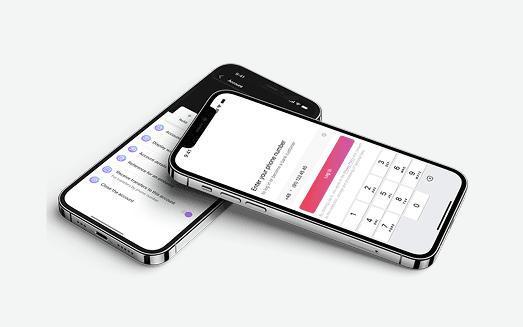
Large-scale migration from a legacy internet banking system to a modern microservices-based architecture, with stronger scalability, security and user experience, while keeping customer trust intact.
View case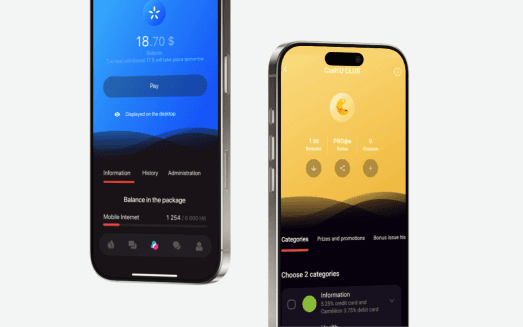
A consumer banking super app in a regulated market had to launch at scale inside a fixed regulatory and competitive window. We owned the integration architecture and mobile delivery.
View case
payabl., an EU-regulated merchant acquirer, had a payment SDK gap holding up merchant onboarding. We designed and shipped it inside a single sprint cycle.
View caseThis was a very task-heavy project, mostly exploration and R&D-driven. However, by the end of WislaCode, we were left with a detailed roadmap consisting of clear milestones - able to be converted into tangible KPIs - and some neat ideas of what actionable are next. Integrating...
We collaborated with WislaCode on a product strategy development project and gave the highest marks for this contractor. The WislaCode team delivered on time and with outstanding quality.
We collaborated with WislaCode on a route-to-market optimisation project. Working with WislaCode was effective, transparent and predictable, which is especially critical for AI and ML projects. We provided them with six months of anonymised data, and within just three weeks...
Want banking your business customers actually use?
Describe your SME segments and we will plan onboarding, invoicing and cash flow tools that fit them.