
AI development services
Custom AI built into your product - agents, computer vision, NLP and decisioning, integrated into the stack and compliance boundary you already have.
Results from work we have shipped
An AI-driven solution that optimises medical sales representative routes and improves field efficiency, using deep learning over visit patterns to predict the best routes.
Shortlisting a software development partner?
The questions to ask in an RFP, three warning signs a vendor may not deliver, and a scoring matrix to compare contractors objectively.
AI we build
Agents that carry out a task end to end - gather inputs, call your systems, apply rules and escalate to a person on the edge cases.
Document capture, classification and verification, and image checks for onboarding, claims and operations.
Extracting fields, intent and meaning from documents, messages and forms, so downstream steps run on structured data.
Underwriting and risk models with the audit trail, override paths and challenger setup a regulator expects. Every decision is reproducible after the fact.
Transaction and behavioural models, real-time scoring and the explainability your fraud and compliance teams need to act on an alert.
Document and selfie checks, liveness and identity matching, with automated scoring across vendors and fallback to manual review where required.
Wiring a model, an API or an agent into an existing app, with the monitoring and guardrails to run it in production.
How we deliver AI development?
The same delivery discipline on every engagement - from the first map to a handover your team runs.
We map the use case, the data you can use and the governance constraints, then write a phased scope. A proof of concept can land in weeks.
A named lead decides where the AI runs, what its boundary is, how it is logged and how it is explained. Governance is part of the architecture, not a finishing layer.
We build the pipeline, train or wire the model, set up override and challenger paths, and integrate it into your stack.
Deployed in your cloud, monitored on its own targets, with a runbook handed to your team so they can run it without us.
What shapes the work
Most AI projects do not fail on the model. They fail because the model never reaches the data or the workflow it was meant to change. We build AI that ships: scoped to a real decision, integrated into your stack, and handed to your team to run.
An assistant that cannot reach the right data is a chatbot; a fraud model that cannot reach the payment stream is a research paper. So a large part of AI development is integration - which is why this work sits next to our API integration services and, for the wider platform, financial software development.
In a regulated operation, a decision the model cannot explain is a decision you cannot ship. We pick model classes and logging patterns that produce explanations by default, set up challenger models where a regulator expects them, and design override paths so a person can intervene with an audit trail. For the deeper modelling side of this - training, validation and the MLOps around it - see ML development.
If the input is language - documents, queries, conversations - the build usually leans on a language model. We treat that as generative AI, which is where LLMs, RAG and fine-tuning live. Two common products built on it have their own pages: AI chatbots for conversation, and AI-driven search for retrieval. On this page we keep to applied AI: agents, vision, NLP and decisioning, and the integration that makes them work.
We prove value before you commit to a build. A proof of concept on your own anonymised data is fixed-price and time-boxed, with one question to answer: does the model clear the bar your use case needs. If it does, production follows as time and material or an outcome-based arrangement, with governance and monitoring built in from the first sprint. See the full approach on the Data Science &
The AI projects that succeed share a shape: one decision that is made often, has a clear right answer most of the time, and currently takes up expensive human attention. Onboarding checks, first-line triage, document classification, alert prioritisation. The volume justifies the build and there is ground truth to measure against.
The ones that stall are usually the opposite: a decision made rarely, with no agreed definition of a good answer, over data nobody has cleaned. We will tell you which of the two you have brought us before you spend on it.
So the first conversation is not about models. It is about the decision, how often it is made, what a good answer looks like and what data records it. Bring that and we can usually say within a call whether a proof of concept is worth scoping.
What does AI development cover for a bank or fintech, and how does it differ from your other AI services?
At WislaCode, AI development means putting an AI capability into a financial product and the workflow around it: AI agents, computer vision for document and identity checks, NLP, credit and lending decisioning, anti-fraud and risk scoring, and KYC and identity, plus the integration that makes each one run in a live system. It is the applied layer, so where the real need is custom model training or MLOps we point to ML development, where it is LLMs, RAG or fine-tuning we point to generative AI development, and where it is autonomous agents we point to AI agents development. Many regulated projects use several of these together, and we route you to the right service rather than overclaiming on this page.
How do you keep AI secure and inside our regulatory compliance boundary?
At WislaCode the compliance boundary is decided at the design step rather than bolted on later: self-hosted or private-endpoint models where capability allows, data kept on your own infrastructure, and audit logging where the use case requires it. A named lead defines where the AI runs, its boundary and how it is logged, so a bank or fintech gets an AI feature it can put in front of an auditor as readily as in front of a customer. Deciding the boundary first means the AI never becomes a data-governance gap you have to explain after the fact.
Can you add AI to an existing banking platform rather than build from scratch?
Yes. A large share of WislaCode's applied-AI work is exactly that: wiring a model, an API or an agent into an app or core system you already run, with the monitoring and guardrails to operate it in production. That covers modernising a legacy platform, adding an AI capability to a web or mobile banking app, or integrating machine learning into an existing workflow without replacing the stack around it, so the AI ships as part of the product rather than as a side system.
When does a custom AI build make more sense than an off-the-shelf tool for a regulated financial product?
An off-the-shelf tool is often the right call for a general task, but a regulated decision usually needs a model scoped to your data, your rules and the audit trail a supervisor expects, which a packaged product rarely exposes. WislaCode builds to the specific decision you need to change, whether that is underwriting, fraud scoring or a KYC check, and integrates it into your stack rather than bending your process around a fixed tool. The result is owned by you and runs in your own cloud, so you are not tied to a vendor's roadmap.
How do you make AI decisions explainable and auditable for regulators?
WislaCode picks model classes and logging patterns that produce explanations by default, sets up challenger models where a regulator expects them, and designs override paths so a person can intervene with a full audit trail. In a regulated operation a decision the model cannot explain is a decision you cannot ship, so explainability is designed in from the first sprint rather than reported at the end. Every decision stays reproducible after the fact, which is what fraud, credit and compliance teams need to act on an alert or defend an outcome.
How do you run a complex AI transformation with strict compliance requirements?
WislaCode runs a complex, compliance-heavy build in four phases: first we map the use case, usable data and governance constraints into a phased scope, then a named lead fixes where the AI runs and how it is logged and explained. From there we build and integrate with override and challenger paths, then deploy in your cloud with monitoring on its own targets and a runbook for your team, so governance is in place from the first sprint rather than retro-fitted at the end. Scope starts small and phased, so a transformation programme for a bank or fintech shows working software early instead of committing to a large build up front.
What should we look for in a partner to build AI for a regulated financial product?
Look for a team that treats governance as part of the architecture, integrates into your existing stack rather than handing over a model in isolation, and can show explainability, override paths and an audit trail for every decision. In regulated finance the harder part is rarely the model; it is reaching the data and workflow the model was meant to change while staying inside your compliance boundary. WislaCode builds applied AI for banks and fintechs from offices in Warsaw and Dubai, scoped to a real decision, run in your own cloud and handed to your team with a runbook.
How fast can you prove value before we commit to a full build?
WislaCode starts with a fixed-price, time-boxed proof of concept on your own anonymised data, scoped to one regulated decision such as a fraud, credit or KYC check, that answers a single question: does the model clear the bar your use case needs. As one worked example of that approach, a route-optimisation proof of concept ran three weeks on six months of anonymised data and showed 30% less travel time and 20% more visits per day, before any full build. Production for a bank or fintech then follows as time and material or an outcome-based arrangement, with governance and monitoring built in from the first sprint.
Who owns the AI once it is built, and how is it run afterwards?
You do. With WislaCode the source, data pipelines, model artefacts and documentation are yours, running in your own cloud from the start. The system is deployed into your infrastructure, monitored against its own targets and handed over with a runbook, so a regulated financial operation keeps full control with no black box it cannot inspect and no lock-in on the models behind its decisions.
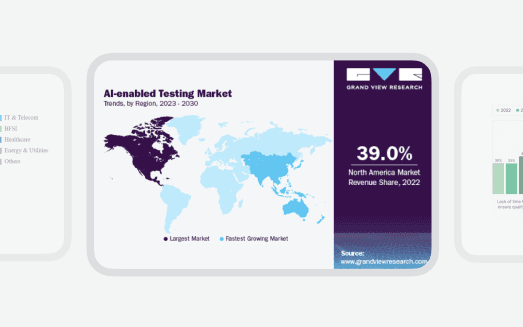
WislaCode helped Verysell Group Applied AI Lab explore the current state and future of AI testing, turning uncertainty into clear, actionable insights.
View case
A private, on-premise WislaSearch deployment that turns a logistics operator's scattered operational knowledge into instant, cited answers - without anything leaving their network.
View case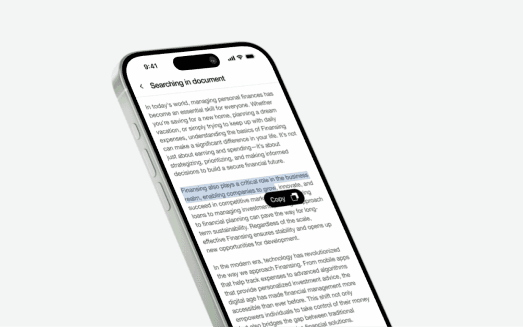
WislaSearch is an AI-powered search assistant that centralises fragmented data, indexes and retrieves the right information instantly, and keeps everything inside your own secure infrastructure.
View caseWe've been working with WislaCode since July 2025. What started as enhancing the loyalty program in our GlobalTips guest app grew into a broader partnership where they now handle significant frontend development across our guest app, staff app, and web products.
This was a very task-heavy project, mostly exploration and R&D-driven. However, by the end of WislaCode, we were left with a detailed roadmap consisting of clear milestones - able to be converted into tangible KPIs - and some neat ideas of what actionable are next. Integrating...
We collaborated with WislaCode on a product strategy development project and gave the highest marks for this contractor. The WislaCode team delivered on time and with outstanding quality.
Have an AI feature in mind?
Bring the decision you want to automate or the capability you want to add. We will scope a proof of concept that answers whether it works, fast.