
Indoor positioning and tracking systems development
Indoor Positioning and Tracking Systems Development - IT services for financial and banking. Web and Mobile App Development by WislaCode Solutions
Results from work we have shipped
A data-driven GPS monitoring and routing system that helps sales teams work with higher efficiency and lower operating costs.
Shortlisting a software development partner?
The questions to ask in an RFP, three warning signs a vendor may not deliver, and a scoring matrix to compare contractors objectively.
Indoor positioning solutions we build
We create indoor location services that use advanced algorithms for precise positioning within buildings. Track assets and people in real time to improve efficiency and safety.
IPS solutions using Wi‑Fi, Bluetooth and RFID provide accurate location data for complex spaces - helping customers and staff find their way and enabling better space management.
Comprehensive tracking of people and assets across facilities - especially valuable in healthcare, retail and logistics where quick location of resources is critical.
Custom applications that present real‑time location, wayfinding and task context. Interfaces and workflows are tailored to your roles and processes to improve adoption and engagement.
Dashboards and reports on space utilisation, footfall and operational efficiency. Insights support resource allocation, facilities management and continuous optimisation.
Losing sight of assets the moment they go indoors?
Tell us the building and the accuracy you need and we will scope BLE, UWB or Wi-Fi positioning.
How we deliver indoor positioning?
The same delivery discipline on every engagement - from the first map to a handover your team runs.
We walk the venue, audit existing radio infrastructure and measure how the building actually behaves: attenuation, reflection, dead zones, floor bleed. The output is a signal model and an accuracy baseline for each zone, so every later decision rests on measurement rather than vendor datasheets.
We assign each zone the cheapest technology mix that answers its operational question: presence, room level or sub-metre. The architecture fixes hardware density, the device strategy and every integration contract, and it is costed in full before a single beacon is ordered in volume.
Installation runs in phases, starting with a pilot zone that real users work in. The positioning engine, maps, rules and dashboards are built against the measured environment, and each increment is calibrated and verified on site before the next begins.
You receive a live, documented system: source code, calibration tooling, runbooks and a trained team. Support is shaped to your organisation - full handover to your engineers, ongoing operation by us, or anything between - with fleet monitoring already in place on day one.
What shapes the work
GPS stops at the door. Satellite signals do not survive concrete and steel, so inside a warehouse, hospital or retail floor the question of where an asset or a person is has to be answered by infrastructure you design: BLE beacons, Wi-Fi measurements, UWB anchors and a positioning engine that turns their noisy readings into coordinates someone can act on. An indoor positioning system is that whole chain - signal layer, engine, indoor map and the zone logic that triggers workflows - and the weakest link sets the ceiling for everything above it.
The teams that buy this are operational: hospitals losing clinical time to equipment searches, warehouses that cannot place stock or people quickly, retailers who want wayfinding and evidence about how space is used. The return is concrete - search minutes recovered, safety obligations met, floor space decisions made on measured movement rather than assumption. We build the full stack, from site survey to live dashboards, because in indoor positioning the venue itself is the variable: the same software behaves differently in every building, and the engineering is in handling that.
Once the assets are vehicles and the problem moves outdoors, that territory belongs to GPS tracking and monitoring systems.
Vendor datasheets quote accuracy from open test halls. Real venues are hostile: metal racking reflects signals so a tag appears two aisles away, crowds attenuate Bluetooth, lift shafts and stairwells bleed signal between floors, and every phone model measures the same beacon differently. Worse, the environment changes - a re-racked warehouse or a new seasonal display quietly degrades a system that was accurate at install. Treating these as edge cases is the most common reason indoor positioning projects disappoint.
Our answer is to treat accuracy as a budget that is spent deliberately. Each step up the scale multiplies hardware count, installation effort and maintenance load, so during design we match the accuracy tier to the operational decision each zone has to support, zone by zone rather than venue-wide:
- Presence: knowing an asset is in a zone - sparse beacons, lowest cost
- Room or aisle level: finding equipment and people - denser placement plus calibration
- Sub-metre: safety distances, precise picking, process verification - UWB anchors and disciplined installation
No single radio wins indoors, so the design question is never which technology but which mix. The choice is driven by what you already own - existing Wi-Fi access points are coverage you have already paid for - what is being tracked, since staff phones behave differently from battery tags on pallets, the accuracy tier each zone needs and the maintenance load your facilities team can realistically carry. We design the hybrid against those constraints and validate it in the survey before hardware is ordered in volume.
The map layer gets less attention than the radio and causes more failures. Coordinates are useless until they land on a map people recognise, so we build a proper mapping pipeline: floor plans converted into routable indoor maps with points of interest, lift and stairwell transitions, and tooling that lets your team update the map when the building changes without calling us. Position events then flow out through APIs and webhooks, so location becomes a field in the systems your teams already work in rather than another screen to watch.
Indoor positioning does not price honestly from a feature list, because the venue drives the cost. We therefore start every engagement with a paid survey and discovery: walk the site, measure the radio environment, fix accuracy targets per zone and agree the device strategy. The output is a costed architecture you could in principle take elsewhere - that is what makes the quote behind it credible rather than optimistic, and gives your own engineers a document they can challenge.
The cost drivers are predictable: floor area and construction type, the accuracy tier each zone demands, whether tracking runs on existing phones or a dedicated tag fleet, how many systems the location data must feed, and whether any alerts are safety-critical with hard latency obligations. Hardware sits as its own line - beacons, anchors and tags are a capital decision we size, not a margin we hide. Most clients then run a pilot zone under a fixed scope before committing to full rollout, which keeps the large spend conditional on measured results.
The delivery model behind it - senior engineers, short increments, verification on the live system - sits inside our wider software development practice.
An indoor positioning system is the rare software product with a physical fleet attached: beacons with batteries to replace, anchors bolted to a building that keeps being rearranged. Launch is therefore the midpoint, not the finish. We hand over an operating model along with the software: who replaces batteries and on what cycle, how a refit or re-racking triggers recalibration, which spares to hold, and what your facilities team handles versus what needs an engineer.
The other post-launch discipline is proving the system earned its budget. The baseline measured in the survey - search times, asset utilisation, incident response - becomes the yardstick: the same dashboards that show where things are also show what the data is changing operationally. That evidence is what turns a pilot into a rollout and keeps the system funded after the novelty fades.
Adoption is operational too. A tracking system that floor staff distrust gets routed around within weeks, so we train the people who will live with it, keep interfaces to what their role needs, and watch usage in the first months as closely as accuracy.
For what location data does to a field operation once teams act on it daily, see the GPS monitoring solution for sales agents case.
We collaborated with WislaCode on a route-to-market optimisation project. Working with WislaCode was effective, transparent and predictable, which is especially critical for AI and ML projects. We provided them with six months of anonymised data, and within just three weeks, they delivered a proof of concept that already showed...
What is included in an indoor positioning engagement?
An indoor positioning engagement is scoped for production from the start: surveyed venues, measured accuracy targets and an operations plan, not a demo over a clean floor plan. A typical scope includes:
A site survey and radio audit of every venue, producing a coverage plan, beacon and anchor placement map and a measured accuracy baseline.
A positioning engine that fuses BLE, Wi-Fi and UWB measurements into stable coordinates, with documented accuracy and latency targets for each zone.
An indoor mapping pipeline that turns floor plans into routable maps with points of interest, floor transitions and tooling for ongoing updates.
Geofencing and zone logic for entry, exit, dwell and proximity events, built as a configurable rules engine rather than hard-coded behaviour.
Role-based dashboards and mobile views for live tracking, search and wayfinding, designed around the jobs of the people using them daily.
Safety and compliance features such as mustering visibility, duress signals for staff, incident timelines and location verification evidence for audits.
Operating runbooks for the hardware fleet, written so routine upkeep stays with your own team and engineering callouts become the exception.
At handover you own everything: the source code, the hardware plan, the calibration tooling and the documentation. Your team can run, recalibrate and extend the system; we stay involved only as far as you choose.
How accurate can an indoor positioning system be in real‑world conditions?
Accuracy depends on technology, layout and calibration. BLE and Wi‑Fi can achieve room‑level accuracy using fingerprinting and careful beacon placement, while UWB often delivers decimetre‑level precision. We run site surveys, tune beacon density and apply methods such as AoA or TDoA where appropriate. Continuous calibration and drift monitoring maintain performance as environments change, and we publish accuracy and latency targets so stakeholders know what to expect.
What technologies do you use and how do you decide between them?
We select a hybrid that fits your use case, constraints and budget. BLE beacons offer good value for wayfinding and zone alerts; Wi‑Fi fingerprinting uses existing infrastructure; UWB suits safety‑critical and high‑precision tracking. We also blend inertial sensors for smoother blue‑dot transitions and support computer‑vision anchors where needed. A discovery phase confirms accuracy goals, device mix and maintenance overheads before finalising the design.
Can you integrate with our existing apps, maps and business systems?
Yes. Our services are API‑first and support indoor maps, POIs and floor plans from standard sources. We integrate with mobile and web apps, CRM/ERP, facilities and BMS platforms, and analytics tools. Webhooks and streaming deliver real‑time events such as zone entry, dwell and exceptions. Connectors handle ID resolution, deduplication and error recovery, while role‑based permissions ensure each team sees the right data.
How do you handle privacy and staff consent for location tracking?
We implement transparent consent flows, role scoping and clear purpose limitations. Data is encrypted in transit and at rest, with retention policies that minimise storage of historical trails. Administrators can define privacy zones, mask sensitive areas and restrict access by role. Audit logs capture who accessed what and when, and we provide documentation that explains data collection, processing and opt‑out options.
What is the typical delivery timeline and when do we see value?
A first value slice often lands within four to six weeks, including site survey, core positioning, a live map and essential geofences. Subsequent increments add navigation, advanced alerts and integrations. We use phased rollouts, feature flags, and telemetry. This helps us test improvements with real users. It keeps disruptions low while boosting accuracy and utility.
How do you ensure reliability for safety‑critical alerts and operations?
We define accuracy and latency SLAs, monitor device health and battery status, and provide fallback behaviours when signals degrade. Rules include escalation paths, duplicate suppression and quiet hours to reduce noise. Our pipelines check data for quality, freshness, completeness, and drift. Then, they display the results on dashboards. Regular calibration windows and automated tests guard against regressions after layout changes or firmware updates.
How do you price an indoor positioning project?
The survey and discovery phase is a fixed-price first step, sized to the venue. The build that follows is priced either as fixed-scope increments - typically a pilot zone first - or as a dedicated team where the scope is expected to evolve. Hardware is purchased at cost as its own budget line, never bundled into the software price. Ongoing support is priced against the operating model you choose at handover, from full self-operation to a managed service.
Can tracking run on staff smartphones, or do we need dedicated tags?
Both, and most deployments mix them. Phones suit staff wayfinding and consent-based presence, since people already carry them, but operating systems restrict background location aggressively and antenna behaviour varies by model. Dedicated tags suit assets, contractors and safety-critical tracking, with battery life, mounting and replacement cycles as the trade-offs. When both are present they feed the same positioning engine, so rules and dashboards do not care which device reported the position.
Can we pilot on one site before committing to a multi-site rollout?
Yes, and we recommend it. A pilot zone or single site proves accuracy against the agreed targets and shows operational value on real workflows. The rollout then reuses what the pilot produced: a survey playbook, hardware kit lists, a repeatable calibration procedure and a central platform that onboards each new site as configuration rather than a new project.

PushMaster is an enterprise-grade push notification server for reliable, multi-channel message delivery across web and mobile.
View case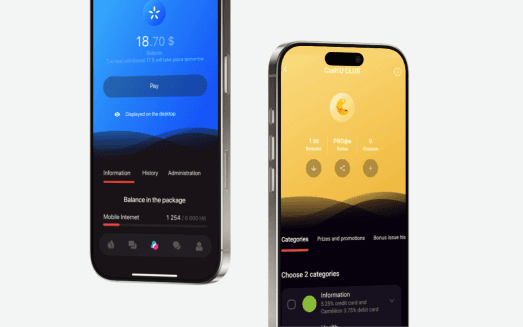
A consumer banking super app in a regulated market had to launch at scale inside a fixed regulatory and competitive window. We owned the integration architecture and mobile delivery.
View case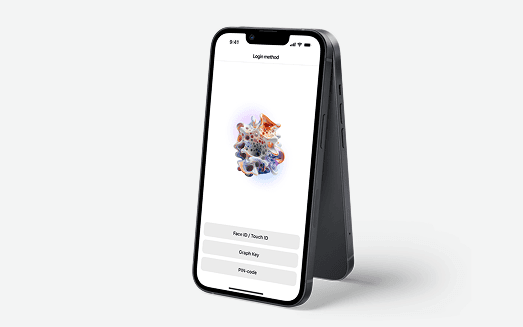
Moving from standard banking with a basic set of functions to a digital bank where everything can be done online.
View caseWe've been working with WislaCode since July 2025. What started as enhancing the loyalty program in our GlobalTips guest app grew into a broader partnership where they now handle significant frontend development across our guest app, staff app, and web products.
This was a very task-heavy project, mostly exploration and R&D-driven. However, by the end of WislaCode, we were left with a detailed roadmap consisting of clear milestones - able to be converted into tangible KPIs - and some neat ideas of what actionable are next. Integrating...
We collaborated with WislaCode on a product strategy development project and gave the highest marks for this contractor. The WislaCode team delivered on time and with outstanding quality.
Need GPS-grade visibility inside the building?
Describe the site and what you track and we will plan the indoor system around it.