
Custom web solutions development
Custom web solutions for fintech platforms, banks and integration-heavy programmes. Web apps, portals and B2B2C surfaces built around the integration backbone behind them.
Results from work we have shipped
Shortlisting a software development partner?
The questions to ask in an RFP, three warning signs a vendor may not deliver, and a scoring matrix to compare contractors objectively.
Custom web solutions we build
Self-service portals for end users or enterprise customers, with identity, KYC, account, payment and reporting surfaces in one place.
Operational web apps for merchants and partners, integrated with your APIs and the reporting stack, with the real-time views they expect.
End-user web surfaces an enterprise client ships under its own brand, with the integration backbone behind them rather than a thin wrapper.
The consoles your operations, risk and compliance teams use to run the product, integrated with the operational systems behind them.
Standalone onboarding and KYC flows, embeddable into a parent product, built for conversion as well as compliance.
Where the surface needs offline and installable behaviour, a Progressive Web App shape on the same integration backbone.
See the serviceHave a web product riding on integrations? Let us scope it.
Tell us the audience and the systems behind it, and we will map the build.
How we deliver custom web solutions?
The same delivery discipline on every engagement - from the first map to a handover your team runs.
We map the platform, the audience, the integrations in scope and the regulatory constraints, then write a phased scope you can challenge.
A named architect chooses the framework, the integration model, the identity model and the rollout machinery against your team and the product lifecycle, not a default preference.
Web, back end and integration layer built together in your repositories and your continuous integration, with feature flags from the first internal release.
Source code, tests, a runbook, monitoring and documentation. The product lives in your repositories and your cloud from day one, and your team can extend it.
What shapes the work
Custom web solutions for a fintech platform cover customer portals, merchant dashboards, partner-facing applications, internal consoles and the B2B2C web surfaces on top of a B2B platform. The web is not a side surface in fintech. For many platforms it is the primary one, for enterprise onboarding, partner self-service and operations.
The value of these builds sits in how they integrate with the platform, identity, payments and partner systems, not in the screens alone. We start a web engagement with the integration map, because that is what decides cost, risk and timeline, long before any pixel is placed.
A fintech web product is also judged on more than usability. Every regulated screen carries an obligation, from strong authentication on a payment to consent on a data-sharing step, and decisions that look like design choices are evidence weight when an auditor asks. We design for that from the start.
A web product that is slow or insecure leaks both trust and conversion. The parts that protect them are decided at the architecture step, not patched at the end.
Included by default:
- Authentication, session management and strong customer authentication where required.
- Accessibility built in, including keyboard, screen reader and contrast support, tested against WCAG 2.1 AA.
- A performance budget measured continuously, because a slow customer product loses conversion.
- Audit trail and consent capture, retained to the longest applicable rule.
- Security against the OWASP top ten, content security policy, and dependency scanning in continuous integration.
- Internationalisation where the product runs across markets, built into the architecture rather than retrofitted.
For the broader platform, see financial software development; for the installable web shape specifically, see PWA development.
We default to React and Next.js for customer portals and SEO-sensitive surfaces, with server rendering and edge caching where the audience and traffic justify it. Where a team already runs Vue, we build in Vue and Nuxt rather than forcing a migration.
The framework choice is made on the architecture step with your team's skills and the product lifecycle in front of us. The right answer is usually the framework your team can maintain in two years, not the one with the loudest current advocates.
The API contract gets the same attention as the framework. A web product that fights a poorly designed back-end API ends up doing the integration work twice, once on the server and once on the client. Where it is the right call, we shape the API alongside the web build instead of working around one that does not fit, so the front end and the data layer move together rather than against each other.
A custom web build runs as fixed price when the specification is clear, scoped against an acceptance test so the cost and the finish line are known before we start. Where the product is still taking shape, a named squad on time and material with weekly delivery metrics fits better, and the work moves to fixed scope as the unknowns close.
Where the value is a measurable result, an outcome-based arrangement is on the table. We will recommend the shape that fits your product and your stage on the first call, not the one that suits us.
The commercial model never changes the ownership. The source code, the design system, the API contract and the documentation are yours, in your repositories, so the web product is something your team can run and extend after we leave.
An ageing web product rarely needs to be thrown away. More often a few surfaces are modernised, the API contract is cleaned up, and the parts that still serve customers are left in place behind a consistent front end. We scope that path deliberately, so a redesign does not turn into an accidental rewrite.
That keeps the product earning while it improves. The pages that convert keep converting, the new work ships beside them, and the high-risk all-at-once replacement that stalls so many web projects is avoided.
The dedicated page on application modernisation covers this path in depth.
Working with WislaCode Solutions has been a great experience! We needed an Android SDK developed under a tight timeline, and their team delivered a flexible, user-friendly solution that integrated seamlessly into our ecosystem. Their transparent approach, proactive communication, and commitment to quality made the collaboration smooth...
What does WislaCode include in custom web solutions development?
End-to-end design and delivery: architecture, build, automated tests, integration with the rest of your platform, observability, accessibility, audit and consent capture, a runbook and a documented handover. We work in your repositories so your engineers can run it without us.
What technology stacks do you use for custom web?
Modern web stacks chosen against the product, the team and the integration model: React and Next.js, Vue and Nuxt, TypeScript on the client, and Node.js, Java, Kotlin, Python or .NET on the back end where they fit. The choice is made on the architecture step.
Do you build customer portals or only internal web apps?
Both. Most engagements involve a customer-facing or merchant-facing portal alongside the internal admin surfaces. Same delivery model, sized to the product.
Can you make a web product accessible and compliant?
Yes. Accessibility is built in, not retrofitted. We design and test against WCAG 2.1 AA as a baseline, with keyboard, screen reader and contrast support included in the engagement.
How do you handle analytics and consent for fintech web?
Consent management is designed in, not bolted on. We work with your consent platform or recommend one, and make sure analytics and product instrumentation respect the consent state, with the audit trail your data protection function will be asked for.
How long does a custom web engagement take?
A focused web product is typically 3 to 6 months. A broader multi-product platform engagement is 6 to 12 months. We size it on the programme map, not after the contract.
Who owns the code and the design at the end?
You do. Source code, tests, runbooks and documentation are handed over and code ownership transfers cleanly. The product lives in your repositories and your cloud from the start.
Do you support the product after launch?
Clean handover is the default: code, tests, runbooks and documentation land in your repositories so your team runs the product. Where you want us to stay close after launch, support continues as a separate arrangement sized to the product, from on-call cover to a small standing team.
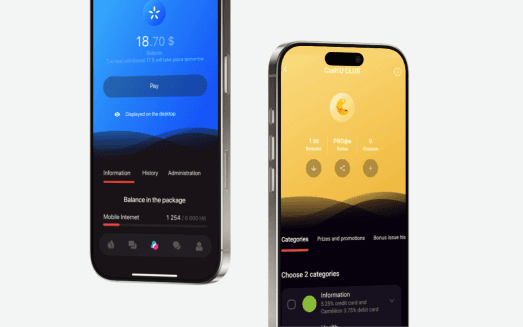
A consumer banking super app in a regulated market had to launch at scale inside a fixed regulatory and competitive window. We owned the integration architecture and mobile delivery.
View case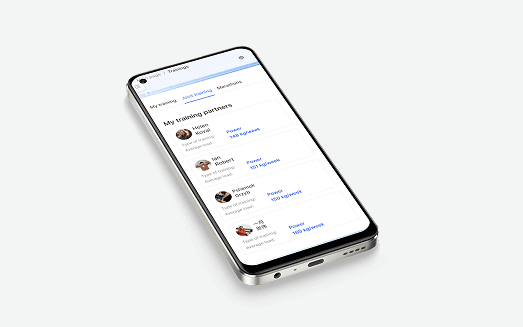
A progressive web app for independent and cooperative workouts in the gym, built for maximum accessibility.
View case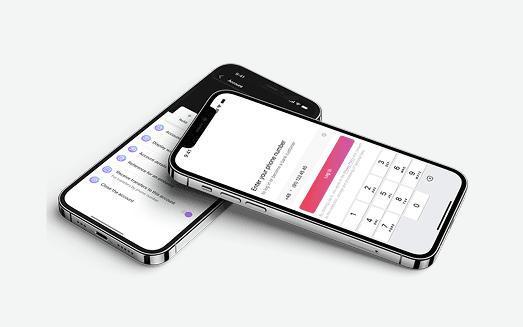
Large-scale migration from a legacy internet banking system to a modern microservices-based architecture, with stronger scalability, security and user experience, while keeping customer trust intact.
View caseThis was a very task-heavy project, mostly exploration and R&D-driven. However, by the end of WislaCode, we were left with a detailed roadmap consisting of clear milestones - able to be converted into tangible KPIs - and some neat ideas of what actionable are next. Integrating...
We collaborated with WislaCode on a product strategy development project and gave the highest marks for this contractor. The WislaCode team delivered on time and with outstanding quality.
We collaborated with WislaCode on a route-to-market optimisation project. Working with WislaCode was effective, transparent and predictable, which is especially critical for AI and ML projects. We provided them with six months of anonymised data, and within just three weeks...
Need a custom web solution on a fintech platform?
Tell us the audience and the integrations, and we will map the right shape and the first phase.