


More and more players are going into lending. What I see in Europe this year is that more and more focus goes to BNPL, and embedded lending is also in trend. Underneath both, the thing our clients keep asking for has not changed: minimise the effort a customer spends applying for credit.
The forces reshaping fintech lending in 2026
Three things are arriving at once, and they interact.
- Clients are still trying to minimise the burden on the customer during application, and are checking additional scoring schemes to do it.
- Traceability was always an issue, and now clients are far more focused on it, especially where AI-based decision-making is involved.
- Unit economics is still the main focus, which decides how much of the decision happens before the expensive sources are called.
On the first, clients try to check additional schemes such as scoring with an understanding of the mobile phone environment: the model of the phone, the cost of the phone, and similar signals. Or other ways to minimise the burden on the customer of applying for the loan. Our machine learning work usually starts at that question rather than at the model architecture.
The European constraint is specific. Directive (EU) 2023/
What I also see is that our customers are trying to connect two or three alternative KYC systems and manage them in terms of efficiency, quality and price. It helps them enable the necessary flexibility for different customers, for different traffic, and to balance between them.
Unit economics is where those decisions land. Our customers try to minimise unit cost, or loan cost, and they try to do as much pre-scoring as they can before they go to the credit bureau or other expensive sources to finally confirm the loan.
AI underwriting and alternative data: how the mechanics actually work
I am completely for AI in underwriting, but it is necessary to be careful here. Traceability should be implemented in the first place. Then a very clever implementation of human in the loop, if necessary. And everything should be tested. I believe the future is full AI implementation, although for now that is not something which matches the current legislation.
That last point is not opinion. Article 22 of the GDPR gives a person the right not to be subject to a decision based solely on automated processing where it significantly affects them, and the Court of Justice held in SCHUFA (Case C-634/
From my experience, when you implement an additional innovative source for underwriting, you should understand how to raise the volume of those decision-making mechanisms during testing. In one of our projects, when we implemented an additional specific underwriting source with algorithms from the first loans, the weight of that model in the overall scoring was not more than 1 to 2%. After successful testing, that volume can grow, specifically if it allows the customer's effort during application to be minimised.
Working out what to build into the lending product?
Our free guide collects 40-plus features we have actually shipped in banking and fintech apps, from instant onboarding and QR payments to savings mechanics and tools for sole traders. Borrow the ones that fit your roadmap.
Embedded lending and the disappearing origination interface
Embedded lending is in trend, and we have this kind of experience: we have built SDKs for embedded lending and APIs for embedded lending, embedded finance and embedded payments.
I believe the lending platform becomes a platform and orchestrates the ecosystem around it, with shops, with the network, with customers. Lending to the partner company is a wholesale relationship and it stops at the partner. Embedded lending means originating credit for that partner's own customers, at the moment they need it, inside the mobile application or the trade-network interface they are already using. That is a different product: your licence, your creditworthiness assessment and your duty to explain the decision, delivered through somebody else's screen. It is why embedded finance and embedded lending are growing in importance and should be taken into consideration from the first days of the project. The same shift is visible in SME banking and embedded finance.
Traditional digital origination | Embedded lending | |
|---|---|---|
Borrower touchpoint | Your application, your brand | The partner's interface, at a friction point |
Data ownership | Direct, from the applicant | Mediated by the partner |
Brand visibility | High | Low by design |
Acquisition cost | Paid per applicant | Carried by the partner's traffic |
Regulatory accountability | Yours | Still yours |
Compliance as a delivery constraint, not an afterthought
Usually the technical side is not so difficult to implement. In terms of technical integration and implementation it is usually five to nine months depending on the project, so it is usually not a problem. The main difficult part is to go through legislation, and through the fine-tuning and implementation of the human-in-the-loop algorithm, which from one hand will be beneficial for the performance of the service and from the other hand will not bring additional risks or stop the service itself. If we take human in the loop for every decision, it makes no sense to do that. Maybe it will speed up the decision-making, but the target should be more ambitious.
From a regulatory point of view we have seen different scenarios.
- Sometimes it stops the project even before it starts, because the customer receives a specific note from the regulator and has to solve it.
- Sometimes we find problems with growing the traffic, because there are still steps to meet the regulations, and we run in testing or pilot mode for some time before those regulations are fulfilled and adopted within the service.
- In one case the requirements came from the central bank. It was preliminarily agreed, and after that they asked for a meeting and added additional requirements.
- On another project the regulatory problems came at the end. It was a difficult agreement on all the necessary documents to correspond with the regulatory requirements. It was a new market for our customer, and that is why our technical implementation was ahead of the legislation work.
That last one is the pattern to plan against, and the only defence is to start the regulatory track in the first sprint rather than the last.
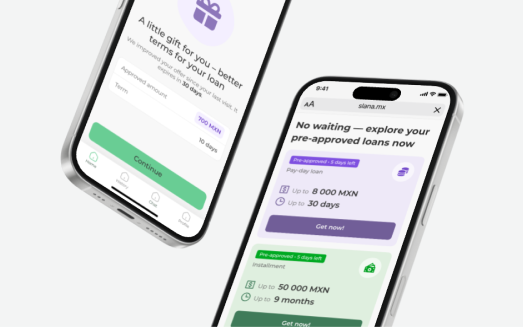
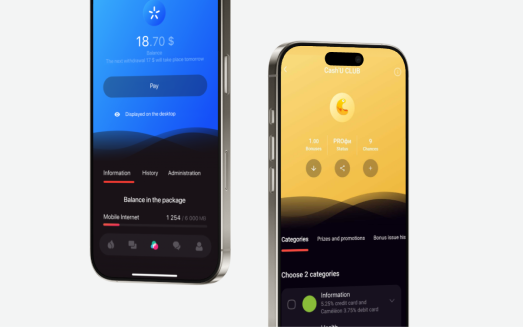
Lending platforms we have delivered

Building or rebuilding a lending product for the EU?
WislaCode builds regulated lending and payment software, from the scoring and KYC orchestration through to the SDKs that put credit inside a partner's interface.
What is changing in fintech lending in 2026?
The application itself. Lenders are working to cut the effort a borrower spends applying, which pulls in alternative data, parallel KYC providers and more pre-scoring before the expensive bureau call. Embedded lending is moving origination into someone else's interface.
Can lenders use mobile phone data for credit scoring in the EU?
It depends on what the signal is doing. From 20 November 2026, Article 18(3) of Directive (EU) 2023/2225 requires the assessment to rest on the consumer's financial and economic circumstances, necessary and proportionate to the credit, and expressly excludes special-category data and social networks as a source. A signal has to earn its place inside that frame.
Does the EU allow fully automated credit decisions?
Not as things stand. Article 22 of the GDPR gives a right not to be subject to a decision based solely on automated processing that significantly affects the person, and SCHUFA (Case C-634/21) held that generating the probability value is itself that decision where the lender relies on it. From 20 November 2026, CCD2 Article 18(8) adds a right to human intervention and an explanation.
How long does it take to build a lending integration?
On our projects, technical integration and implementation is usually five to nine months depending on the project, and that part is usually not the problem. The legislation track and the design of the human-in-the-loop step are what set the real date.
What does embedded lending change for a lender?
The borrower stops arriving through your interface. Acquisition cost falls because the partner's traffic carries it, and brand visibility and direct data access fall with it. Regulatory accountability does not move.
Is BNPL regulated in the EU?
It is about to be. Directive (EU) 2023/2225 brings small, short-term and deferred-payment credit into the consumer credit regime from 20 November 2026. The European Banking Authority has already identified BNPL growth as the main way consumer indebtedness is materialising, in what it calls debt habituation and accumulation.