


Super apps are changing how people use digital services. Instead of ten separate apps, users get one. At WislaCode we design and build super apps for banks, fintech firms and other industries. We have done this for ten years, so we know what it takes to turn an idea into a working product.
How a super app changes everyday digital habits
A super app is more than a multi-function mobile app. It is one place where users handle many tasks: order food, manage money, book an appointment. Each service sits inside a single app, so users switch less and finish more.
Key benefits for users
- One place, not ten: a single platform instead of jumping between apps.
- Personal by default: the app uses your data to tailor what it shows.
- Safer sign-in: one central login cuts the number of accounts to protect.
Advantages for businesses
- Daily engagement: one interface brings users back and builds loyalty.
- Cross-selling: linked services let you offer the right promotion at the right moment.
- Room to grow: a modular build lets you add services fast.
We specialise in creating digital ecosystems
These platforms bring together services such as mobile banking and telecommunications within a single application. This approach demonstrates how a single app can transform the way users interact with digital services.
Building a universal app that people want to use
A universal app needs both engineering skill and a clear focus on the user. That means understanding how people behave, building a solid technical base, and improving the product over time.
Design principles
- Simple interface: easy to learn, easy to use.
- Works across devices: the same experience on phone, tablet and web.
- Personalised by AI: content adapts as the app learns what each user needs.
Development process
Phase | Key Activities |
|---|---|
Planning | Define user needs and set technical requirements |
Design | Create wireframes, UI/ |
Development | Build modular components and conduct thorough testing |
Deployment | Launch the product and monitor its performance |
Optimisation | Gather feedback and ensure scalability |
Our agile process and experienced team let us react fast when requirements change. The super apps we build hold up in production and scale as needs grow.
What makes a digital ecosystem work
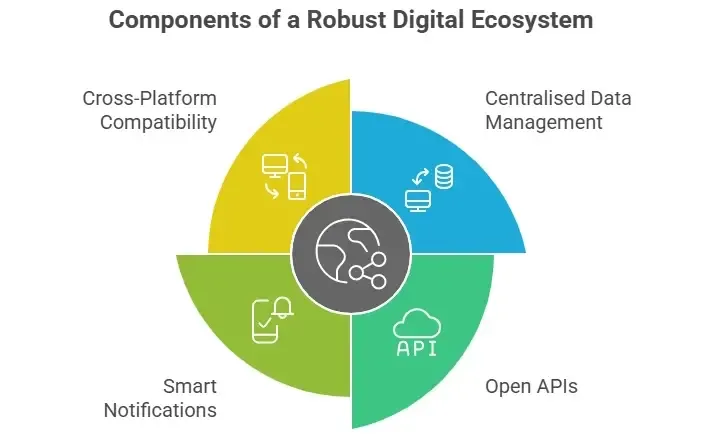
What separates a strong digital ecosystem from a weak one?
- Central data: one source of truth keeps the experience consistent.
- Open APIs: third parties can plug in, so you add services faster.
- Smart notifications: timely, relevant messages keep users active.
- Cross-platform: the service works wherever the user is.
For example, our leasing solutions automate routine tasks and bring customer contact into one place, which cuts back-office work.
Why universal apps are where things are heading
Technology is moving fast, and users want smarter, more joined-up tools. That is why universal apps matter: they bring many services together in one place and change how people deal with digital platforms.
Lower cost for businesses and developers
Building and maintaining separate apps for iOS and Android is expensive. A universal app is cheaper: frameworks like Progressive Web Apps (PWAs) and React Native let one codebase serve every platform.
This leads to:
- Lower build cost: one codebase means less time and money on updates.
- Less maintenance: central support and updates keep effort down.
With cross-platform development we have helped clients improve the experience and cut development costs by up to 30%.
A simpler, better user experience
People expect apps that are quick, clear and consistent. A universal app removes the need to switch between products, so the experience holds together. The main gains:
- One hub: a single app covers many services, from payments to messaging.
- Consistent design: the same UI across devices makes it easier to use.
- Works offline: caching keeps key features usable on a weak connection.
A universal app becomes a daily tool that cuts friction and adapts to how each person uses it.
Scale for the business
For companies that want to grow, universal apps are flexible. A modular architecture lets you:
- Add services quickly, without breaking what already works.
- Enter new markets without a separate app per region.
- Open your APIs so third parties can build with you.
We have assisted companies in implementing scalable digital ecosystems
For example, our super app supports millions of users by bringing together banking, telecommunications, and e-commerce services within a single platform.
Ready for new technology
A universal app stays useful by adopting new technology as it arrives. Here is how:
- AI and machine learning: personalise the experience and automate routine work.
- Blockchain: stronger security and decentralised options.
- Cloud infrastructure: real-time sync and easy scaling.
With these, universal apps will keep pace with what users expect.
A bigger market
Universal apps are a global shift, not just a trend. In countries where fast internet is scarce, light apps that run well on any device and network are a real advantage.
Choosing the platform to host your mini-apps?
Our free white paper, The Mini-App Platform Scorecard, scores any vendor on seven criteria - from SDK openness and runtime portability to FINMA and DORA fit - with the exact question to put to each one.
Banking, e-commerce and healthcare use universal apps too, building single platforms that meet a wide set of customer needs.
The case for universal apps
At WislaCode we have seen what these apps can do. Whether they handle payments or hold a full digital ecosystem, universal apps are becoming core tools for businesses that want to compete. With strong features, room to scale and a focus on the user, they are not the future – they are already the present for companies that want to grow.
Few successful projects of WislaCode
Bringing services together in one super app
Every super app is built on the ability to combine many services. A few approaches make that work.
API-driven development
APIs are how you bring third-party services into a super app. Open, well-documented APIs let you connect quickly to outside platforms for things like:
- Real-time payments
- Location-based services
- Dynamic content
At WislaCode we keep APIs secure, scalable and adaptable, so new features go in without disrupting the rest.
Modular architecture
A modular design lets you build and ship features on their own. You can add or update a service without touching the others. For example:
- Add a loyalty programme without changing the core banking module.
- Upgrade e-commerce features separately from messaging.
Central user management
One sign-in system gives users access to every service and keeps navigation smooth. Single sign-on (SSO) and biometric login improve both security and experience.
AI and automation
Predictive analytics and chatbots make operations better. They help you anticipate what users need and act early, which lifts satisfaction. Automation also handles routine work, so service is faster and costs less.
Picture a user who buys groceries, pays bills and books a taxi in one app, earning rewards through a single loyalty programme. That is what we build: universal apps that give real value.
Getting the most from a super app ecosystem
A super app is changing how users and businesses meet in the digital world. By bringing many services into one app, businesses raise satisfaction and cut operating effort. At WislaCode we are ready to help you build one.
What is the integration of your app ecosystem?
Integrating your app ecosystem involves combining multiple services, such as payments, messaging, and e-commerce, into a single, seamless platform. This approach, often seen in super apps, allows users to access diverse functionalities without switching between apps, enhancing convenience and efficiency.
How do consolidated app platforms benefit users?
Consolidated app platforms, like super apps, provide a unified interface where users can perform tasks such as booking services, managing finances, or shopping. By centralising these functions, they offer a streamlined experience, reduce app clutter, and personalise interactions through data-driven insights.
Why are simplified digital ecosystems important for businesses?
Simplified digital ecosystems enable businesses to deliver multiple services through one app, improving customer retention and engagement. By integrating features like loyalty programmes and targeted promotions, companies can create a cohesive user experience while reducing operational complexity.
What are mobile app integration techniques used in super apps?
Mobile app integration techniques include API-driven development, modular architectures, and centralised data management. These methods allow super apps to connect third-party services, such as real-time payments or geolocation, ensuring a seamless and scalable user experience across diverse functionalities.
How do cross-platform development tools support super app creation?
Cross-platform development tools, such as React Native or Progressive Web Apps (PWAs), enable developers to build super apps that work across iOS, Android, and web platforms. This reduces development costs and ensures consistent performance, making super apps accessible to a wider audience.
What are the benefits of super apps for businesses?
The benefits of super apps for businesses include enhanced customer loyalty, opportunities for cross-selling, and streamlined operations. By offering multiple services in one app, businesses can engage users daily, gather valuable data, and scale operations efficiently to meet market demands.
How does user-centric design in universal apps enhance super app functionality?
User-centric design in universal apps focuses on creating intuitive interfaces and personalised experiences tailored to user needs. By prioritising usability and incorporating AI-driven features, super apps ensure smooth navigation and high engagement, making them a daily companion for users.