

Managing your money has never been simpler, thanks to fintech apps that help users take control. Modern banking apps are full of tools that make saving easier, spending smarter and rewards real. This article looks at the features that help people save more through automation and tailored tools, all with a smooth experience.
Helping people build wealth with smart features
Fintech apps are changing how people handle money, with tools that encourage steady saving and smarter spending. Built around real user needs, they pair strong backends with simple interfaces. From automatic saving to clear spending trackers, they help users hit their goals without the hassle.
Piggy-bank wallet for effortless saving
One of the best tools for saving is the piggy-bank wallet, a mini-deposit feature that saves for you. You set your own rules: put aside a percentage of every payment in, or round up transactions and save the difference. Pay £9.50 for a coffee and the extra 50p is tucked away automatically. You can also schedule fixed monthly transfers, which helps people who struggle to set money aside.
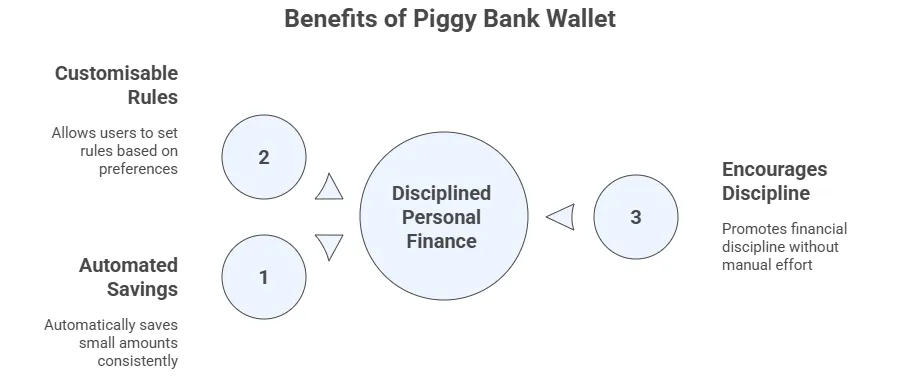
Key benefits of the piggy-bank wallet:
- Saves small amounts consistently
- Custom rules to match how you spend
- Builds the saving habit without manual effort
It runs on secure backend logic that processes transactions in real time, so funds are allocated accurately. By making saving a little like a game, it keeps users motivated.
The piggy-bank wallet turns saving into a habit, and the backend tracks and secures every penny.
Expense limits for financial control
Controlling spending matters as much as saving, and apps handle it with card expense limits. You set limits by amount, type or even location, which lowers security risk and curbs impulse buys. For example, cap a card at £100 a day for online shopping to stay on budget. Built on real-time transaction monitoring, it gives users precise control and peace of mind.
Few successful projects of WislaCode

Advanced tools for financial growth
Beyond basic saving, fintech apps offer features that add flexibility and room to grow. They fit into daily life and make money management rewarding.
Instant instalment options
For big purchases, instant instalment options spread the cost over time without leaning only on credit. When paying by credit card, you can switch to instalments in the app and pick terms that suit your budget. Dynamic payment processing works out affordable monthly payments in real time, so you manage expenses without strain.
Currency exchange at good rates
Currency exchange is another strong point. You get favourable rates in the app, without watching the markets yourself. Set a target rate and a validity window, and the app converts automatically when the bank's rate meets it. Converting GBP to EUR at your preferred rate becomes effortless, and the app handles it instantly - saving time and money.
Feature | Benefit | Technology |
Piggy Bank Wallet | Automates small savings for consistent growth | Real-time transaction processing |
Card Expense Limits | Restricts spending for better financial control | Transaction monitoring systems |
Instant Installments | Flexible payment plans for large purchases | Dynamic payment calculators |
Currency Exchange | Secures optimal rates without manual tracking | Automated rate-matching algorithms |
Personalised financial insights
Which features actually earn loyalty?
Our free guide collects 40+ features we have shipped in banking and fintech apps that keep users coming back - onboarding, payments, savings and PFM, tools for sole traders. Take the ones that fit your roadmap.
Knowing where your money goes is the key to good personal finance. Apps now include expense categorisation, such as the “My Expenses” service, which groups spending into categories like groceries, travel or entertainment. You can spot patterns and adjust - cutting back on dining out to save more, say. The backend uses machine learning to classify transactions accurately, giving clear, useful insight so you can decide with confidence.
Banking apps are WislaCode speciality
Let's start the conversation and develop a solution for your bank that allows you to grow and scale your customer experience.
Features that keep users engaged
Fintech apps add features that keep users motivated and make money management feel less like a chore.
Engaging features for saving:
- Push notifications for offers, like a higher credit limit, to encourage smart spending
- Insurance for cars, property or travel, with electronic policies delivered instantly
- Trust management for investments, so users track portfolios and pick strategies like preservation or growth
Backed by solid APIs and secure data handling, these keep users close to their goals. Push notifications fire from real-time analytics, flagging opportunities that fit a user's profile. Investment tools use web-socket connections for live portfolio updates, so users always know where they stand.
Our expense categorisation uses machine learning to turn raw data into insight, so users can take charge of their money with confidence.
Why WislaCode Solutions builds strong fintech apps
At WislaCode Solutions we build fintech apps that help people master their money. Our full-stack work brings together automatic saving, secure transactions and user-focused features that deliver real value. Contact us to turn your fintech idea into a product.
What are personal budgeting apps and how do they help manage my finances?
Personal budgeting apps are digital tools designed to help you track your income, expenses, and savings goals in one place. By connecting to your bank accounts, these apps automatically categorise your spending, highlight patterns, and provide a clear overview of your financial health. Many leading apps, such as Plum, Emma, and Snoop, offer features like spending notifications, customisable budgets, and even suggestions for cutting unnecessary subscriptions. This makes it easier to stay on top of your finances, avoid overspending, and work towards your savings targets with minimal manual effort.
How do smart savings tools automate the process of building wealth?
Smart savings tools use algorithms to analyse your spending habits and automatically set aside small amounts of money, either through round-ups on purchases or scheduled transfers. For example, if you spend €2.70 on coffee, the app might round up to €3 and save the extra €0.30. Some apps allow you to set custom rules, such as saving a percentage of every income or automating deposits into different “jars” for specific goals. This approach makes saving effortless and consistent, helping you build wealth gradually without having to think about it every day.
What is digital money management and why is it important today?
Digital money management refers to using online platforms and mobile apps to oversee all aspects of your personal finances. This includes budgeting, tracking expenses, monitoring investments, and even managing bills. The importance of digital money management lies in its convenience and real-time insights. With everything accessible from your smartphone, you can make informed decisions on the go, receive instant alerts about your spending, and adjust your habits to improve your financial wellbeing. It also enhances security, as most reputable apps use bank-level encryption and are regulated by the Financial Conduct Authority in the EU and UK.
How does expense tracking and categorisation improve financial awareness?
Expense tracking and categorisation are core features of most budgeting apps. They automatically sort your transactions into categories like groceries, transport, or entertainment, giving you a detailed breakdown of where your money goes each month. This visibility helps you identify areas where you might be overspending and spot opportunities to cut back. Over time, you can adjust your habits, set more realistic budgets, and make smarter choices that align with your financial goals. Some apps even provide weekly or monthly reports to help you stay accountable and motivated.
What are automated savings features and how do they differ from traditional savings accounts?
Automated savings features go beyond the standard savings account by actively moving money for you based on your behaviour and preferences. Unlike traditional accounts where you must remember to transfer funds, automated tools use rules or AI to save on your behalf - whether it’s rounding up transactions, setting aside a fixed amount each week, or reacting to your spending patterns. This not only increases the likelihood of consistent saving but also helps you reach your goals faster, as the process becomes seamless and less reliant on willpower.
How do real-time spending alerts help with financial discipline?
Real-time spending alerts notify you instantly when you make a purchase, approach a budget limit, or when a bill is due. These alerts act as gentle reminders, helping you stay aware of your financial activity and avoid overspending. For example, if you’re nearing your monthly dining-out budget, the app will alert you, prompting you to reconsider further spending in that category. This immediate feedback loop encourages better financial habits and helps prevent surprises at the end of the month.
What are personalised financial insights and how can they support my savings journey?
Personalised financial insights are tailored recommendations and analyses provided by budgeting apps based on your unique financial data. By using machine learning, these apps can identify trends, suggest ways to save more, and even highlight investment opportunities suited to your profile. For instance, you might receive advice on reducing utility bills, switching to a better savings account, or adjusting your spending in certain categories. These insights empower you to make smarter decisions, optimise your finances, and achieve your savings goals more efficiently.