Fintech app development
We build fintech and payment apps for regulated products: the app your customer holds, together with the identity checks, payment flows and ledger behind it, in your repositories and your cloud.
Results from work we have shipped
Shortlisting a software development partner?
The questions to ask in an RFP, three warning signs a vendor may not deliver, and a scoring matrix to compare contractors objectively.
Fintech apps we build
Paying a bill, leaving a tip, paying straight from a bank account or with a local method such as BLIK, with the provider integration behind each method.
See the serviceAn account holding electronic money on your EMI or banking licence: onboarding, top-up, balance, payments and withdrawal, on the same engineering as our banking and payment apps.
Mobile onboarding, identity checks, loan applications and payouts for consumer credit, as a PWA or a native app.
See the service Mobile banking appsNative, PWA and hybrid banking apps for banks and neobanks, built together with the core, identity and payment integrations behind the screen.
See the service Super appsBanking, lending and payments behind one mobile front, on a modular architecture that scales.
See the service Payment SDKsSDKs your partners embed in their own apps, built for the payment and certification context they live in.
See the servicePlanning a fintech, payment or wallet app?
Tell us the product and the licence it runs under. We will map the first release and where it usually breaks.
How we deliver a fintech app
The same delivery discipline on every engagement - from the first map to a handover your team runs.
Every state a payment or a balance can reach, the provider and the licence it depends on, and where your ledger has to agree. The map is the scope we hold ourselves to.
Native, PWA or hybrid, decided by a named architect on the architecture step, against the market and the budget. For $lana a PWA cut team cost by about 30% against a native build.
App, back end and integrations built together in your repositories and your cloud, with weekly demos and releases against a tracked plan.
Code, tests, runbooks and the reconciliation process stay with you, with a full handover at the end.
What shapes the work
Behind the screens of a fintech app sit identity checks, payment flows, a ledger that has to agree with the bank or the payment provider, and the rules of the licence the product runs under. When one of them is wrong, the customer sees a missing payment or a balance they cannot trust, and in a regulated product it is also a finding.
We build the whole product: the app, and the identity, payment and ledger work behind it. If you only need an app built and released to the stores, see mobile app development. Still choosing what the app should do? Our free guide collects 40+ fintech app ideas, features we have shipped in fintech and banking apps.
A payment app takes the customer's money in the method they already use, through an integration with each provider and local method. Where payment apps fail in production is state: knowing at every moment whether that money is authorised, captured, settled or refunded, and what the customer should see in between.
GlobalTips lets a guest pay the bill and leave a tip from their phone, and lets the waiter collect what they earn and split it with the team. We added BLIK, MB WAY and Pay by Account to the guest app and rebuilt staff onboarding in monthly cycles; BLIK now carries about 15% of their payments in Poland.
At the counter, the Android payment SDK we shipped for payabl. went to production in a month. On that kind of work, certification and the edge cases set the timeline.
When the job is the payment platform behind the app, with acceptance, provider integration, PCI DSS scope and settlement, see payment software development and payment gateway integration.
A digital wallet, or e-wallet, is an account that holds electronic money. The licence to issue that money stays with you, whether it is an electronic money institution (EMI) licence or your banking licence, and so do the obligations that come with it. We build everything on top of it: onboarding and KYC, top-up and withdrawal, the balance and the ledger behind it, payments between users and out to cards and bank accounts, and the mobile wallet app the customer holds.
Technically a wallet is the same work as a banking or a payment app: identity checks, money in and out, a ledger that has to reconcile, and a mobile front. We built the app and its identity checks, including eID and video KYC integrations, on the banking super app with 1.5M+ installs. On the mobile banking app used by 700,000+ customers, registration and payments moved into the app. A wallet on your licence starts from the same map: every state a balance can reach, and the point where your ledger has to agree with the bank.
We've been working with WislaCode since July 2025. What started as enhancing the loyalty program in our GlobalTips guest app grew into a broader partnership where they now handle significant frontend development across our guest app, staff app, and web products.
How is fintech app development different from mobile app development?
Mobile app development is the build of the app itself: native or cross-platform, device features and store release. A fintech app adds what makes it a financial product: identity checks, payment flows, a ledger that reconciles and the licence the product runs under. We do both, and most fintech app projects need both from the first sprint.
Can you build an e-wallet on our EMI or banking licence?
Yes. The licence and the obligations that come with it stay with you, and we build the product on top of it: onboarding and KYC, top-up and withdrawal, the balance and the ledger behind it, payments between users and out to cards and bank accounts, and the app. The engineering is the same as in the banking and payment apps we have shipped. Crypto wallets are outside this service.
How long does it take to build a fintech app?
Scope sets the timeline: the number of payment methods and providers, whether the app holds a balance or extends credit, and how many markets it serves. As a reference point from our own work, $lana (Monetech), a consumer credit platform for the Mexican market, went from scratch to first users in five months. Your own timeline is set once the money is mapped: every state a payment or a balance can reach.
Do you build payment apps with local payment methods such as BLIK?
Yes. For GlobalTips we added BLIK, MB WAY and Pay by Account to the guest app, and BLIK now carries about 15% of their payments in Poland. Each local method is an integration with the provider that offers it, and each one adds states that the app and the ledger have to handle.
Who owns the code at the end?
You do. The app, the back end and the integrations are built in your repositories and your cloud, and the engagement ends with a full handover: code, tests, runbooks and the reconciliation process.
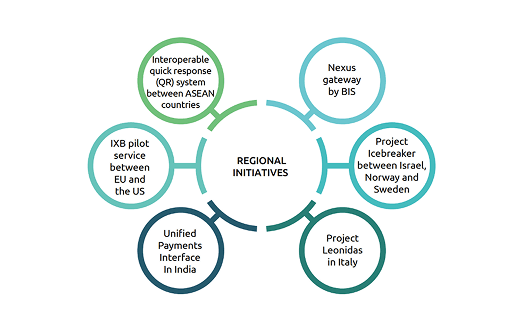
A strategy for a fintech product's market entry and growth, delivering the architecture, technology and investment plan, with a roadmap for the analysed markets.
View case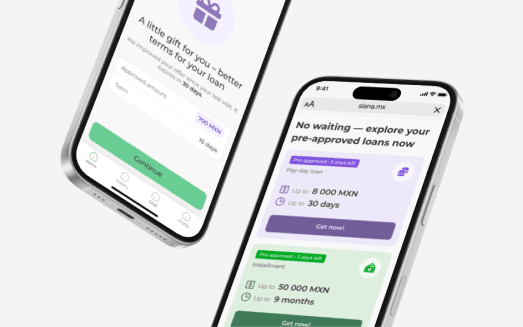
$lana (Monetech), a regulated multi-country consumer credit platform, needed its compliance and data integrations online inside a tight regulatory window. We owned the integration architecture and delivered.
View case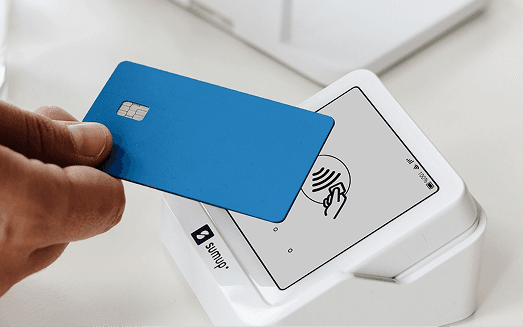
payabl., an EU-regulated merchant acquirer, had a payment SDK gap holding up merchant onboarding. We designed and shipped it inside a single sprint cycle.
View caseThis was a very task-heavy project, mostly exploration and R&D-driven. However, by the end of WislaCode, we were left with a detailed roadmap consisting of clear milestones - able to be converted into tangible KPIs - and some neat ideas of what actionable are next. Integrating...
We collaborated with WislaCode on a product strategy development project and gave the highest marks for this contractor. The WislaCode team delivered on time and with outstanding quality.
We collaborated with WislaCode on a route-to-market optimisation project. Working with WislaCode was effective, transparent and predictable, which is especially critical for AI and ML projects. We provided them with six months of anonymised data, and within just three weeks...
Have a fintech app to build or to take over?
Talk to the engineers who would build it: the product, the payment flows and what it takes to reconcile.