
Leasing app development
WislaCode offers expert leasing app development services, crafting custom lease mobile applications to streamline your leasing processes. Our solutions enhance efficiency and user experience, providing tailored leasing mobile app functionalities.
Results from work we have shipped
We turned traditional car leasing into a fully digital service: online search and booking, applications, contracts, invoices and document management, all in one place.
Looking for features that keep users coming back?
40+ features we have shipped in banking and fintech apps – from instant onboarding and QR payments to savings mechanics and tools for sole traders.
What a leasing app delivers
Approval speed is the conversion lever in leasing: a customer who applies in the morning and signs in the afternoon does not shop the deal around. We build application flows that orchestrate credit checks, identity verification and your decisioning rules in one continuous session, so straightforward applicants secure their equipment the same day while edge cases route cleanly to review.
A leasing app handles identity documents, contracts and payment instruments, so we build it to the standard of a financial product: encrypted storage and transport, strong customer authentication and audited access to sensitive data. Security is designed in at the architecture stage and verified in testing, not bolted on before release.
The app is a direct channel to every customer you have. Targeted push notifications put discounts, promotions and renewal offers in front of the right segment at the right moment, and payment reminders land before an instalment is missed. Every message is measurable, so you keep what drives incremental sales and drop what does not.
We have built leasing and fintech products before, so the work does not start from a blank page. Proven application, signing and payment components, established integration patterns and a tested delivery process shorten the path to first release - the time goes into your decisioning rules and integrations, not into already-solved problems.
The app has to write to the systems you already run - CRM, accounting, contract and asset records - without creating a second version of the truth. We integrate through a defined API layer with reconciliation built in, so data stays synchronised and nothing is lost or corrupted between the customer's screen and your back office.
Every step of the application funnel is instrumented, so you can see where customers hesitate, drop out or convert, and which offers they respond to. Dashboards turn that behaviour into decisions: which step to simplify, which segment to target, which promotion earned its cost. The same data feeds your management reporting after launch.
Leasing customers still signing on paper?
Tell us your approval and contract flow and we will scope the app that moves it into the customer's hand.
How we deliver leasing apps?
The same delivery discipline on every engagement - from the first map to a handover your team runs.
We start from your approval rules, integrations and markets, and map the customer journey from quote to signed contract. The output is a fixed first-release scope with the decisioning, document and payment flows defined before any code is written.
We design application and signing flows around completion: validation at the point of capture, honest status at every step, and an architecture that keeps the app responsive while credit, identity and payment checks run behind it.
Short iterations with working software at the end of each: the app, its API layer, and integrations with credit, identity and payment providers and your back office, each one tested against real failure states rather than the happy path.
We take the app through store review, stand up monitoring and funnel analytics, and put a working release process in place - versioned code, repeatable builds, current documentation - so the second release is easier than the first.
What shapes the work
For the customer, the application is the product. They find the vehicle or equipment, want to know the monthly payment, and want a yes - and every day between application and approval is a day to take the deal to a competitor. Most leasing journeys still break at exactly that point: a web form, an email, a wait. A leasing app closes the gap by putting the whole journey in the customer's hand - calculate the payment, apply, sign and pay in one place.
That scope is specific. We build the customer-facing side of leasing: payment calculators, lease applications with document upload, identity checks, e-signature, instalment payments and a self-service account where customers see their contracts, invoices and balances whenever they need to. And because customers complete each task themselves, the account data your team works from is exactly what the customer entered - current, structured and complete.
The result is a leasing business that sells while the office is closed: applications arrive complete, documents are validated at capture, and approvals move at the speed of your decisioning rules rather than your inbox.
We have built this end to end - see how a car leasing platform made search, applications, contracts and invoicing fully digital.
Same-day approval is easy to promise and hard to engineer. The decision depends on systems the app does not control - credit data, identity verification, document checks, your own underwriting rules - and the app's real job is to orchestrate them so the customer experiences one continuous flow instead of a queue of departments. Most of the engineering effort goes where the customer never consciously looks.
- Document capture that validates on the phone, at the moment of capture - not rejection two days later.
- Graceful behaviour when an external check is slow: a saved application and an honest status, never a dead spinner.
- KYC sequenced so legitimate applicants pass quickly while your risk controls stay intact.
- Contract generation and e-signature in the same session, so the approval turns into a signed agreement before second thoughts or a rival quote arrive.
An application flow proves itself on a poor connection, an old handset and a hesitant applicant. We design the failure states first, because in financial products the failure states are where applications - and customers - are lost.
Platform choice comes first and follows the features, not fashion. Document scanning, biometric login and push notifications argue for serious native or cross-platform mobile engineering; a web channel matters where customers apply from a desk. On the backend we favour proven, hireable stacks - the car leasing platform we built runs on Java and Spring with React in front - because a financial product should not depend on an exotic technology decision made in year one.
Two disciplines matter more than the framework. Integration: the app must synchronise with the systems you already run through a defined API layer, written once and reconciled continuously. Security: decisions about how data is held, how sessions behave and who can touch what are taken when the architecture is drawn, and every feature added later inherits them.
One decision is specific to mobile: the decisioning logic lives on the server, never in the app binary, because a rule change that has to pass app store review is a change measured in days.
The engineering discipline underneath is our mobile app development practice - the same teams, standards and review gates.
We quote a leasing app after discovery, not before, because the price is set by what the product has to do. Discovery produces a fixed first-release backlog, so you contract for a defined product rather than an open-ended estimate. The variables that move the price are concrete: how many platforms you launch on, how many external services the approval flow orchestrates, how deep the back-office integration goes, and which document and regulatory requirements apply in each market you lease in.
The team is deliberately small: each role is on the project because the release needs it, and the roster grows only when the scope does. You see working software at every iteration and the backlog stays visible, so each invoice maps to features you can open on a phone.
If you already have designs, a backend or an in-house team to embed with, the shape adjusts: we deliver full builds and we reinforce existing teams, and discovery is where we agree which engagement you are actually buying.
Launch is where the operating work starts. App store releases need maintaining against OS updates; dependencies in a payment-handling app cannot be left to age; and the application funnel needs watching, because the analytics will show exactly which step costs you applicants. We set up that monitoring before release and review it with you afterwards, so the first release is a baseline rather than an end state.
The app also matters most at the end of the lease, not the start. Every contract moves towards an end-of-term decision - return, extend or move to a new asset - and a customer who has handled the whole agreement in the app reaches that decision inside a product you run, with the contract history in front of them. In most engagements we keep developing the product release by release, with your team taking on more of the roadmap as it settles.
Compliance does not stand still either: identity and payment requirements keep changing, and a customer-facing financial app has to change with them on a planned cadence rather than as an emergency patch.
The app is the customer half of the operation - for underwriting queues, contracts and portfolio workflows, see leasing management software.
We collaborated with WislaCode on a product strategy development project and gave the highest marks for this contractor. The WislaCode team delivered on time and with outstanding quality. I want to mention the team's transparency while running the project - everything was trackable, visible and manageable.
What is included in a leasing app engagement?
Each leasing app engagement includes the work below as standard; the depth of each item follows the scope agreed at discovery. What it adds up to is a first release your customers can apply, sign and pay through from day one.
Discovery and analysis of your leasing journey, mapping every step from quote to signed contract against your approval rules and integration landscape.
UX and UI design for the application, signing and self-service flows, tested against the points where leasing applicants actually abandon.
Development of the customer app and its API layer: payment calculators, lease applications, document upload, e-signature and instalment payments.
Integration with credit, identity and payment providers and with your existing back office, with reconciliation so records never diverge.
Data protection designed for every market you operate in, so identity and payment information is collected, stored and retained the way each regulator expects.
QA across devices and failure states, including slow external checks, interrupted sessions and applications resumed days after they were started.
App store release plus monitoring, funnel analytics and a support handover your team can operate from the first day.
Source code, infrastructure configuration, documentation and the analytics setup land in your repositories as they are built, so ownership is a running fact of the project rather than a handover event.
How long does it take to launch a leasing app?
The honest answer is discovery first: the timeline is set by the complexity of the approval flow and the number of integrations, not by the screens. As a reference point, the car leasing platform in our portfolio went from start to first production release in six months, covering search, applications, contracts, invoices and document management.
Do we need to replace our back-office systems before launching a customer app?
No. The app is built to sit on top of what you already run, connected through an API layer, so you can put a modern customer experience in front of existing systems and modernise behind them at your own pace. Discovery establishes what your current systems can support and what the integration will need.
Can you take over or extend an existing leasing app?
Yes. We start with a technical audit of the code, integrations and release process, agree what to stabilise and what to rebuild, and then take over the release cycle. The aim is continuity for your customers - improvements ship release by release, not as a risky big-bang rewrite.
How do we judge whether a partner can carry a regulated leasing build?
Ask for the parts that are hard to fake. A named architect who can describe the approval flow end to end, including what the app does when the credit bureau times out. A signed, dated delivery plan rather than a range. And a clear answer on where consumer credit rules land in the product: from 20 November 2026 the Consumer Credit Directive, Directive (EU) 2023/2225, gives a consumer whose creditworthiness is assessed by automated processing the right under Article 18 to request human intervention. That has to be a real path in the software, not a clause in the contract.
Who builds and owns the integrations to credit, identity and signature providers?
We build them, and you own them afterwards. A leasing app is only as good as the four or five services behind the decision: credit data, identity verification, document checks and electronic signature. We write the adapters, agree the failure behaviour with each provider, and put the whole set behind one internal contract so a provider can be swapped later without touching the customer journey. Source code, tests and runbooks are handed over, and the integrations live in your repositories from the first commit.
Can automated scoring decide a leasing application in the EU?
It can support the decision, and the rules decide how far it goes alone. Creditworthiness evaluation of natural persons is listed as high risk in Annex III of the AI Act, Regulation (EU) 2024/1689; for standalone Annex III systems those obligations now apply from 2 December 2027 following the deferral in Regulation (EU) 2026/1744. Separately, Article 22 of the GDPR limits decisions based solely on automated processing that have legal or similarly significant effects. So we design the scoring path with a documented human review route from the start, because retrofitting one means reopening the whole approval flow.
Which parts of a leasing app carry the real security risk?
Not the login screen, which is where most of the attention goes. The exposure sits in the document store, because a leasing application collects identity documents, payslips and bank statements in one place; in the credentials that reach the credit and identity providers; and in the pipeline that builds the app. We treat all three as engineering work with a named owner: documents encrypted with access scoped per case, provider credentials in a secrets manager and rotated, and a build pipeline where nobody can ship to production from a laptop.
Can one leasing app serve customers in several EU countries?
Yes, and the work is in the rules rather than the translations. Consumer credit is still transposed nationally, so pre-contractual disclosure, withdrawal periods and the standard information form differ by market until the Consumer Credit Directive, Directive (EU) 2023/2225, applies from 20 November 2026 and narrows the spread. We model the market-specific parts as configuration - disclosure text, the calculation of the annual percentage rate, permitted contract terms - so the second country is a rule set and a translation rather than a second codebase.
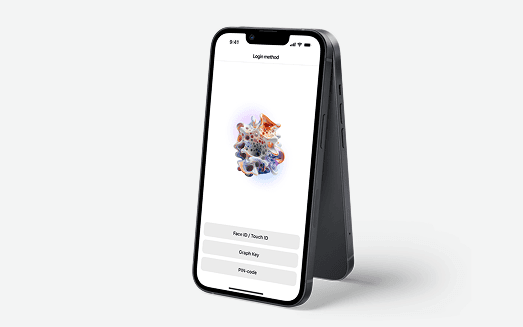
Moving from standard banking with a basic set of functions to a digital bank where everything can be done online.
View case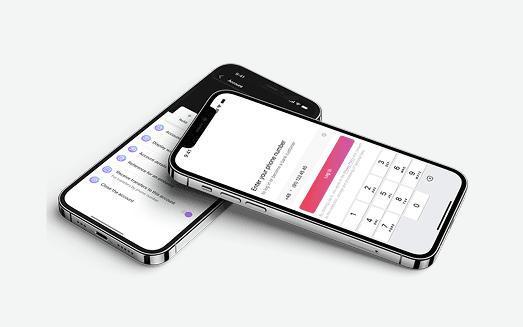
Large-scale migration from a legacy internet banking system to a modern microservices-based architecture, with stronger scalability, security and user experience, while keeping customer trust intact.
View case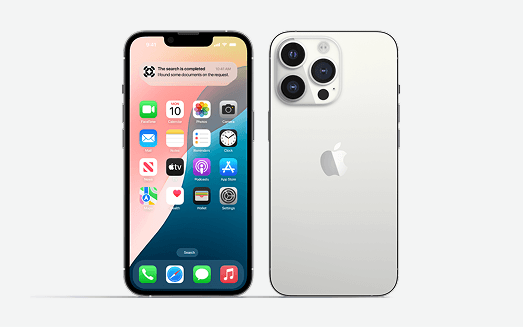
PushMaster is an enterprise-grade push notification server for reliable, multi-channel message delivery across web and mobile.
View caseWe've been working with WislaCode since July 2025. What started as enhancing the loyalty program in our GlobalTips guest app grew into a broader partnership where they now handle significant frontend development across our guest app, staff app, and web products.
This was a very task-heavy project, mostly exploration and R&D-driven. However, by the end of WislaCode, we were left with a detailed roadmap consisting of clear milestones - able to be converted into tangible KPIs - and some neat ideas of what actionable are next. Integrating...
We collaborated with WislaCode on a route-to-market optimisation project. Working with WislaCode was effective, transparent and predictable, which is especially critical for AI and ML projects. We provided them with six months of anonymised data, and within just three weeks...
Want approvals and payments in the customer's pocket?
Describe your leasing products and we will map self-service from application to final payment.