
Leasing management software development
WislaCode offers expert leasing management software development services, creating custom lease management software to streamline your leasing operations. Our solutions enhance efficiency and accuracy in lease management processes.
Results from work we have shipped
We turned traditional car leasing into a fully digital service: online search and booking, applications, contracts, invoices and document management, all in one place.
Shortlisting a software development partner?
The questions to ask in an RFP, three warning signs a vendor may not deliver, and a scoring matrix to compare contractors objectively.
What leasing management software delivers?
Track every aspect of your leases - from contract initiation to renewals and terminations. The platform provides full oversight, reducing missed deadlines and improving operational efficiency.
Gain insights into payments by geography, lease type or lessor to spot patterns and negotiate better terms. Proactive notifications and alerts ensure critical deadlines are never missed.
From asset tracking to mid‑term event management, the solution provides transparency across asset and stakeholder performance so you can optimise returns from your leasing programme.
Consolidate lease data into a unified system for better decision‑making. Support lease‑versus‑buy analysis, identify underperforming assets, track overdue items and generate KPIs to inform smarter planning.
Portfolio, contracts and end-of-term in separate silos?
Show us how the portfolio is run today and we will scope the platform to run it end to end.
How we deliver leasing management software?
The same delivery discipline on every engagement - from the first map to a handover your team runs.
We start by mapping your lease products, lifecycle events and integration landscape - what exists, what is manual and where deadlines or data are slipping. The output is a prioritised plan with a budget you can take to your board, not a generic proposal.
We design the domain model around the contract lifecycle - states, events, schedules, documents - and define the API surface your ERP, CRM and payment providers will integrate against. Significant architecture decisions are written down with their reasoning before the build begins.
A cross-functional team delivers end-to-end slices - quote-to-contract first, then servicing, then end of term - each one integrated, tested and demonstrated on your real workflows, so progress is measured in journeys that work, not percentage complete.
We launch with data migration rehearsed, monitoring in place and your team trained on day-to-day operations. Handover is structured: documentation, runbooks and a transition period in which your engineers ship changes alongside us before they ship alone.
What shapes the work
Most lessors do not have a software problem so much as a fragmentation problem. Quoting happens in spreadsheets, underwriting in email threads, contracts in a document store, servicing in an ageing back-office system and reporting in whatever finance can export. Every hand-off between those tools is a chance to miss a renewal date, mis-state residual exposure or lose the audit trail a regulator or an investor will eventually ask for.
Leasing management software, as we build it, is the lessor's operating system: one system of record that follows each contract from first quote to the final end-of-term decision. Role-based access decides who may touch a contract at each stage, workflows follow your rules rather than a vendor's defaults, and every change lands in the audit trail. The point is portfolio control - knowing at any moment what you are exposed to, which contracts reach end of term next quarter, which assets are earning their keep and where the next decision is due.
This page covers the lessor's back office; for the customer-facing side of the same business, see leasing app development.
Origination is the part every demo shows, and it is the easy part. The complexity of a leasing portfolio lives in what happens after activation: early settlements, term extensions, asset substitutions, missed payments, insurance events and the negotiation around every end-of-term decision - return, purchase or renew. A system designed around a static contract record breaks the first time a real mid-term event has to be reflected in the schedule, the ledger, the asset register and the customer's documents at once.
We model each contract as a lifecycle of events rather than a row in a table, so every change produces a consistent new state across payments, accounting and documents, together with a history of how it got there. That discipline comes from working through the realities of origination, mid-term changes and end-of-term options across vehicle and equipment portfolios, and it is what turns end-of-term management from a quarterly scramble into a managed pipeline of decisions with the data to support each one.
Where the work extends beyond leasing into the wider vehicle ecosystem, see our automotive and mobility practice.
Leasing platforms are financial systems, so we choose technology for correctness and longevity rather than novelty: a mature, strongly typed backend with real transaction guarantees, a relational core for contracts and schedules, and a documented API surface so the finance and CRM systems around the platform never reach into the database directly.
Documents and invoices are outputs of contract state, not artefacts authored by hand. When an event changes a schedule, the corrected invoice and the amended contract document are generated from the same source of truth, which removes a whole class of mismatch between what finance bills and what the contract says. The same principle governs reporting: portfolio numbers are derived from the operational data, never maintained in parallel.
The approach is proven in production. For a car leasing business we turned a traditional offline process into a fully digital service - online search and booking, applications, contracts, invoicing and document management in one place - built on Java, Spring and React, with the first release live in six months.
See how contracts and invoicing were digitised in the car leasing platform case.
We do not price leasing platforms from a rate card, because two lessors with the same headcount can need very different systems. Cost is driven by a handful of factors that we make explicit, and agree with you, before any build starts:
- Asset classes and lease structures - vehicle, equipment or both, and the variety each carries
- Integration depth across ERP, CRM, accounting and payment providers
- Migration scope - how much live contract history must move
- Reporting and audit obligations in the jurisdictions you operate in
The engagement opens with a short, fixed scoping phase that turns those drivers into a costed roadmap, so your first commercial decision is small and reversible. Delivery then runs as one team of analysts, developers, UI/
A leasing platform earns its keep over years, not at go-live, so we treat the first months of operation as part of the engagement rather than an afterthought. Early production is when real portfolio behaviour appears: which workflows your team actually uses, where arrears cases accumulate, which reports finance runs every Monday morning. We instrument the platform so those answers come from data, then tune workflows and performance against real usage instead of assumptions. Release cadence stays steady after launch, so improvements land in weeks while attention is still on the product.
After stabilisation, many clients keep a small WislaCode team for continuous evolution - new lease products, additional asset classes, changing accounting rules, deeper integrations - while their own staff run daily operations. Others take the system fully in-house; we build with that exit in mind from day one, so either path stays open. What we avoid is dependency by design: you should keep us because the roadmap is worth it, not because leaving is hard.
We collaborated with WislaCode on a product strategy development project and gave the highest marks for this contractor. The WislaCode team delivered on time and with outstanding quality. I want to mention the team's transparency while running the project - everything was trackable, visible and manageable.
What is included in a leasing management engagement?
Every engagement is scoped as a production system for a live portfolio, not a proof of concept. These are the deliverables and disciplines we commit to before a leasing management build starts.
A discovery phase that maps your lease products, approval policy and end-of-term options into an explicit domain model before any code is written.
A contract lifecycle engine covering quoting, underwriting, activation, mid-term events and end-of-term decisions, with every state change recorded for audit.
Payment schedules, invoicing and document generation produced from a single contract state, eliminating manual reconciliation between servicing and finance.
Versioned API integrations with your ERP, CRM, accounting and payment providers, plus a rehearsed migration plan for live contract data.
Portfolio reporting that joins contract, payment and asset data, so management sees exposure and performance without exporting anything to a spreadsheet.
Role-based access and approval workflows that encode your credit policy, designed with compliance involvement from the first sprint rather than retrofitted.
Automated test coverage of the financial calculations - schedules, settlements, penalties - so every release can prove the numbers still reconcile.
At handover you own everything: source code, infrastructure definitions, CI pipelines, test suites and operational runbooks, with your engineers onboarded during the build rather than briefed at the end.
How do you decide whether to modernise our current leasing system or rebuild?
We compare your roadmap with the platform’s fitness: architecture limits, debt hotspots, run costs and release cadence. If targeted refactoring enables the required headroom, we modernise - improving stability, performance and security while retaining business logic. If constraints are structural, we plan a phased replacement around well‑defined interfaces and migrate data safely to avoid a risky big‑bang cut‑over.
Can you integrate with our ERP, CRM and accounting software without downtime?
Yes. We define explicit API contracts and versioning, implement idempotent behaviours and add adapters for older endpoints. Event streaming decouples services where it helps. We use canary releases and close monitoring of latency and failures to catch and roll back issues before customers notice, preserving data integrity and SLAs.
How do you handle lease accounting, reporting and audit needs?
The platform supports granular ledgers, accruals and reconciliation workflows, with audit‑ready trails for changes and approvals. KPI dashboards cover arrears, renewals, residual value exposure and portfolio health. Exports and APIs feed finance tools, while role‑based permissions protect sensitive records during audits.
What timeline should we expect for the first usable release?
Scope and integration depth drive timing, but we typically target a usable slice in 6-12 weeks. This includes one or two high‑impact journeys such as quote‑to‑contract or renewals - wired end to end and instrumented with metrics. Subsequent iterations expand coverage, refine UX and tune performance using real‑world behaviour.
How do you ensure security and compliance for sensitive leasing data?
We embed security from design through operations: threat modelling, dependency scanning, secrets management and hardened environments. Data is encrypted in transit and at rest, access is least‑privilege, and logs are tamper‑evident. Privacy reviews, data minimisation and retention policies are documented to meet governance requirements without slowing delivery.
Can one platform support vehicle and equipment leasing together?
Yes. The domain model treats asset class as a property of the lease product, not a fork of the system. Vehicle and equipment leases share the same contract lifecycle, accounting and reporting core, while asset-specific data such as registration details, maintenance schedules or telematics lives in extensions. Car leasing companies, equipment providers and independent lessors run on the same foundation with different configuration.
How do you migrate live contracts from spreadsheets and legacy systems?
We inventory every source of contract, schedule and document data, define the target model and write repeatable migration scripts that are rehearsed against production copies until reconciliation is clean. Cut-over happens only when the rehearsed run is uneventful: counts, balances and upcoming deadlines all match. History migrates with its context, so end-of-term decisions keep their paper trail.
What do you need from our team during the build?
Three roles matter: a product owner empowered to decide lease policy questions, a finance contact for accounting and reconciliation rules, and access to the people who run servicing today. Involvement is heaviest during discovery, then settles into increment reviews and demos. We run the engagement so your operation stays informed without being interrupted.
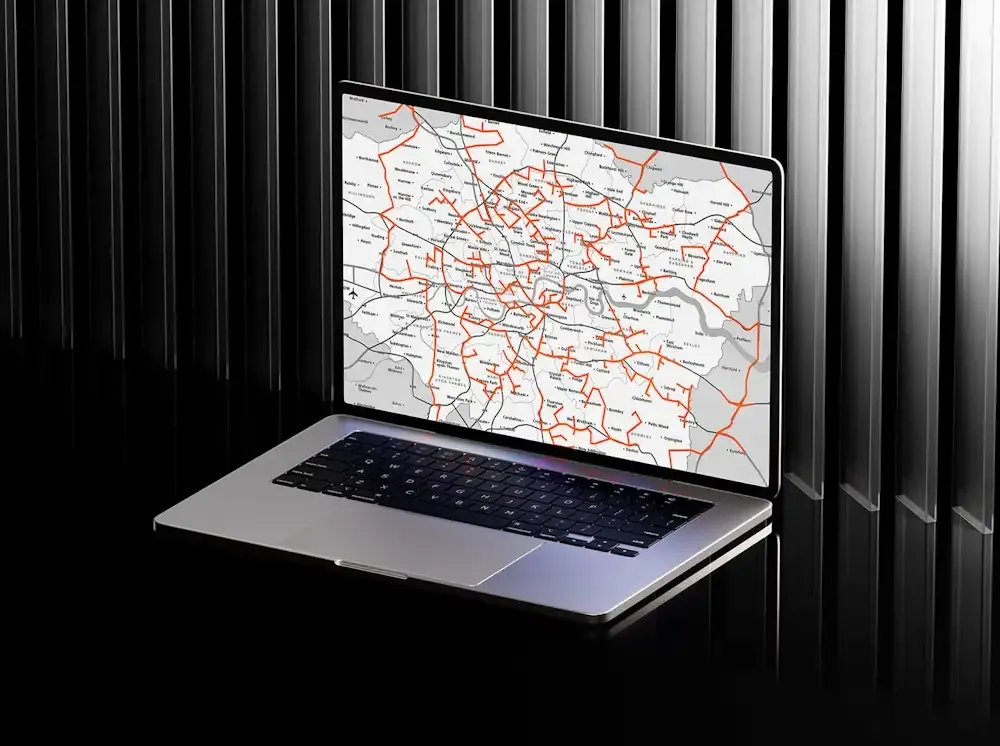
An AI-driven solution that optimises medical sales representative routes and improves field efficiency, using deep learning over visit patterns to predict the best routes.
View case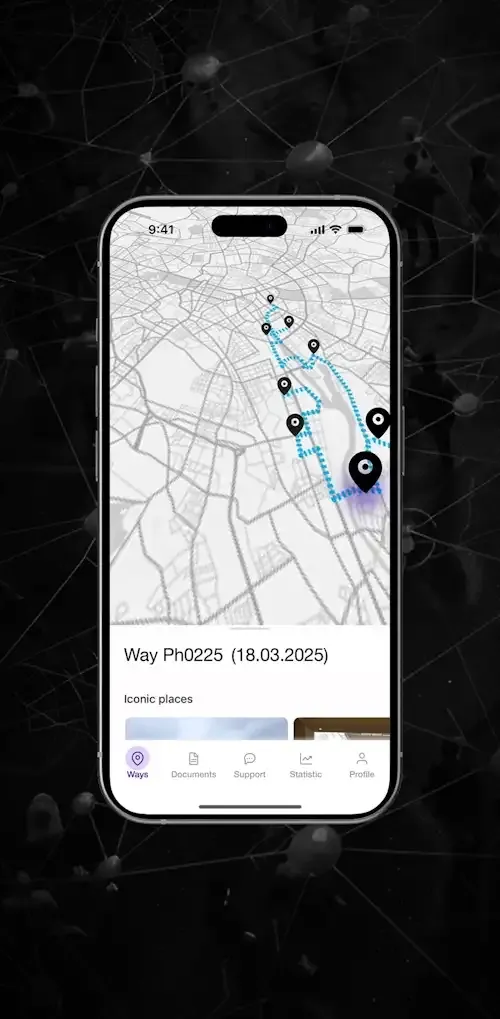
A data-driven GPS monitoring and routing system that helps sales teams work with higher efficiency and lower operating costs.
View caseThis was a very task-heavy project, mostly exploration and R&D-driven. However, by the end of WislaCode, we were left with a detailed roadmap consisting of clear milestones - able to be converted into tangible KPIs - and some neat ideas of what actionable are next. Integrating...
We collaborated with WislaCode on a route-to-market optimisation project. Working with WislaCode was effective, transparent and predictable, which is especially critical for AI and ML projects. We provided them with six months of anonymised data, and within just three weeks...
Working with WislaCode Solutions has been a great experience! We needed an Android SDK developed under a tight timeline, and their team delivered a flexible, user-friendly solution that integrated seamlessly into our ecosystem. Their transparent approach, proactive...

Ready to run the lease book on one system?
Tell us your contract volumes and end-of-term pain and we will plan the management platform.