


Neobanks are fast-growing, tech-first players in finance. With a focus on a simpler customer experience, eco-friendly options and a modern approach, they have changed how people deal with money. WislaCode helps banks, fintechs and neobanks build digital-first platforms that are both customer-centred and sustainable. Let us look at what makes neobanks different, the features behind their rise, and how we help build them.
Why neobanks are redefining modern banking
Neobanks run without physical branches, delivering everything through digital platforms. That lets them focus on a strong user experience and specialised services, which appeals to customers who value convenience, personalisation and new ideas. Recent data suggests the unbanked market will grow sharply, with millions of new users worldwide seeking financial inclusion through digital-first banks.
Key benefits of neobanks for users
- Personal banking: with advanced algorithms and big-data analytics, neobanks read spending patterns and give tailored insights.
- Access and convenience: being online lets neobanks reach more people, including those in rural or underserved areas.
- Lower cost: without branch overheads, neobanks often charge lower fees, which makes banking more affordable.
Building for neobanks takes a sharp eye for user experience and an agile, scalable backend. WislaCode's user-centred approach helps clients in this space ship platforms built for speed, security and ease of use.
Top neobank features: from eco-friendly banking to personalisation
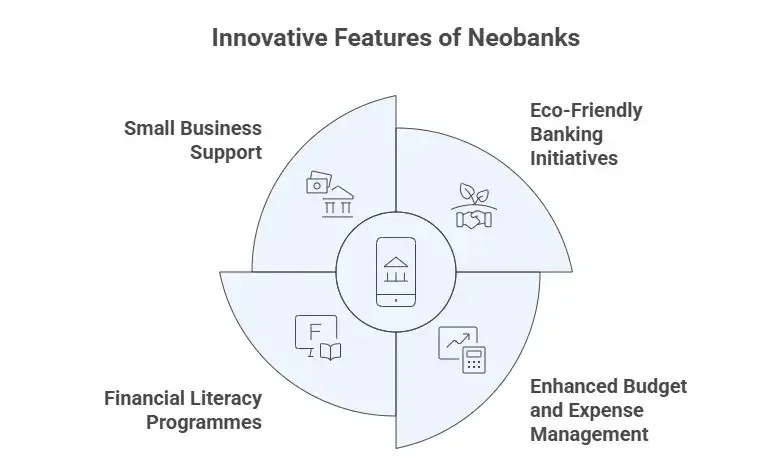
Neobanks are known for features that set them apart from traditional banks. With a focus on sustainability, user experience and small-business support, they match modern values. Here are some of the features people associate with neobanks:
- Eco-friendly banking: many neobanks work to cut their environmental footprint. Bunq, for example, plants a tree for every €100 a customer spends. Aspiration, another eco-conscious neobank, runs a Green Marketplace of like-minded brands and gives cashback for sustainable shopping.
- Better budgeting: neobanks like N26 and Chime offer budgeting tools that help users track and control spending, with real-time insights and categorisation. Chime's 50/
30/ 20 calculator helps users line up spending with their goals. - Financial literacy: for younger users, apps like Revolut Junior and Step give teens budgeting tools and money lessons with parental oversight, which builds financially responsible habits early.
- Small-business support: neobanks like Qonto and Tide offer business features such as real-time transaction tracking, invoicing and accounting integration, which makes it easier for owners to stay organised and compliant.
Eco-friendly banking: how neobanks support sustainability
Sustainability is a core value for many neobanks. With eco-friendly banking, customers can pick a bank that matches their values, and neobanks gain stronger loyalty in return.
Neobank | Eco-Friendly Feature | Impact |
|---|---|---|
Bunq | Plants a tree for every €100 spent | Millions of trees planted |
Aspiration | Green Marketplace and fossil fuel-free cards | Supports sustainable shopping |
Tomorrow Bank | Offsets carbon footprint and invests in green projects | Reduces carbon emissions |
As a software company, WislaCode has built these sustainability features into neobank platforms. Using APIs for environmental data and interfaces that highlight the initiatives, we help neobanks show their impact and engage eco-conscious customers.
Neobanks vs traditional banks: the key differences
Traditional banks are known for reliability and trust; neobanks are known for a tech-driven approach. Here is how each serves its customers:
Feature | Neobanks | Traditional Banks |
|---|---|---|
Customer Experience | Personalised and digital-first | In-branch and digital |
Cost Structure | Lower fees, less overhead | Higher fees due to operational costs |
Sustainability | Eco-friendly initiatives | Limited focus on sustainability |
Business Support | Tailored tools for SMBs | Standardised business solutions |
Financial Literacy | Apps for youth and financial tips | Less emphasis on digital education |
Neobanks focus on a smooth digital experience, which draws tech-savvy and eco-conscious users. Traditional banks still hold an edge with clients who value established security and face-to-face service.
Few successful projects of WislaCode

Neobank features that make banking simple and smart
What exactly makes neobanks appealing? Here are functions they offer that traditional banks often lack:
- Instant account setup: open an account in minutes.
- Real-time notifications: stay updated on every transaction.
- Clear spending insights: track spending and get alerts to manage money well.
- Personal recommendations: from transaction data, neobanks offer tailored services and discounts.
WislaCode's platform work helps clients add these features, using AI and machine learning for personal experiences that respond to what customers need.
Neobank or traditional bank: which is right for you?
Choosing between a neobank and a traditional bank comes down to your needs. Are you after eco-friendly options, advanced tools, or quick remote access?
Consider a neobank if you
- Want convenience and flexibility in managing money.
- Value digital tools for spending, savings and budgeting.
- Want a bank that matches your environmental values.
Choose a traditional bank if you
- Prefer in-person service.
- Feel safer with a well-established institution.
- Need a wider range of investment or credit options.
Banking mobile apps are WislaCode speciality
Let's start the conversation and develop your own neo-banking application. We can create a solution that aligns with your strategic vision.
The future of neobanks and traditional banks
As banking evolves, both models bring value. Neobanks lead a customer-centred, eco-friendly, tech-driven approach that suits digital and environmentally minded users. Traditional banks appeal to customers who value security, trust and in-person service.
The future may not be one over the other, but how the two coexist. Traditional banks are adopting neobank ideas such as clean mobile apps, budget tracking and remote account management. Neobanks, in turn, may lean into the deeper trust that traditional banks hold, from established reputations to broader product ranges.
In the end, banking may blend both as each adapts to what customers expect. For any bank, digital or traditional, thoughtful, responsive development is what makes the difference. With WislaCode's work on custom banking solutions, institutions have a partner to build future-ready features.
Ready to explore what is next for your banking model? WislaCode can help you build a smarter, more adaptable, customer-friendly platform.
What are the advantages of digital banks compared to traditional banks?
Digital banks, or neobanks, offer many benefits over traditional banks. They are cost-efficient, accessible, and provide personalised services. Without physical branches, neobanks like N26 and Chime cut overhead costs. This leads to lower fees and affordable banking. Their digital-first model allows easy access through mobile apps, making banking simple for users in rural areas. Advanced algorithms analyse spending habits and give tailored financial insights. Neobanks send real-time alerts about transactions. They also offer budgeting tools. This helps users manage their money better. Unlike traditional banks, which depend on in-person services, neobanks focus on convenience and innovation, attracting tech-savvy customers. However, some may prefer traditional banks for wider investment options or face-to-face support. Neobanks adapt quickly to user needs and market trends, making them a strong choice for modern banking.
How does sustainable online banking work with neobanks?
Sustainable online banking is a key part of neobanks. It combines finance with caring for the environment. Neobanks like Bunq and Aspiration promote eco-friendly practices, such as planting trees for every €100 spent or offering fossil fuel-free cards. These actions help reduce carbon footprints and encourage sustainable shopping, building loyalty among eco-conscious users. Using open banking APIs, neobanks track and show their environmental impact, boosting transparency. For example, Tomorrow Bank invests in green projects to offset emissions, appealing to users who value sustainability. Unlike traditional banks, which often lack eco-focus, neobanks embed these efforts into their platforms, highlighting contributions like tree-planting. This strategy not only attracts environmentally aware customers but also sets a new benchmark for banking, combining financial services with a commitment to reducing environmental harm, as supported by WislaCode’s sustainable platform development.
How do digital banks for businesses support small enterprises?
Digital banks for businesses, such as Qonto and Tide, provide tools to simplify financial management for small firms. These neobanks offer real-time transaction tracking, invoicing, and integration with accounting software like QuickBooks. Unlike traditional banks that offer standard solutions, neobanks focus on customer needs with features like expense categorisation and automated reporting, saving time and ensuring compliance. For instance, Tide helps small businesses manage cash flow efficiently, while Qonto allows multi-user access for team collaboration. By using fintech innovations, these platforms provide cost-effective solutions with lower fees, ideal for startups and SMEs. Neobanks also promote financial inclusion by serving small businesses in underserved areas, giving them access to essential banking services. WislaCode’s expertise in building integrated platforms ensures these features are robust and scalable, helping entrepreneurs concentrate on growth instead of financial admin.
How do neobanks promote financial inclusion through their features?
Financial inclusion is a key goal for neobanks, supported by their digital-first approach and mobile banking apps. Neobanks like Revolut and Chime operate online. This helps them reach underserved groups, such as people in rural areas or those without access to traditional banks. Features like instant account setup, low fees, and easy spending insights make banking accessible and affordable. For example, neobanks offer budgeting tools and financial literacy programs, such as Revolut Junior, which teaches teens about money management with parental oversight. These efforts help users develop financial skills, filling gaps left by traditional banks. Open banking APIs also enhance inclusion by connecting to third-party services, offering tailored solutions like micro-loans or savings plans. Neobanks’ focus on customer-centric banking ensures diverse audiences can access services, driving financial empowerment and inclusion, supported by WislaCode’s scalable platform for global reach.
What role do fintech innovations play in neobank functionality?
Fintech innovations are crucial for neobanks to provide advanced functionality. By using open banking APIs, neobanks connect with third-party platforms to offer services like real-time transaction tracking and personalised recommendations. For example, neobanks apply AI and big data to analyse spending patterns, giving tailored financial advice. Features like quick account setup and instant alerts improve user experience and help with financial awareness. Neobanks also include eco-friendly initiatives, such as carbon offset programs, using APIs to monitor environmental impact. Unlike traditional banks, which may struggle to adopt new technologies, neobanks prioritise agility and innovation, keeping their platforms responsive to user needs. WislaCode knows how to create tech-driven solutions. This helps neobanks adopt new ideas and build smart, flexible platforms that change modern banking.